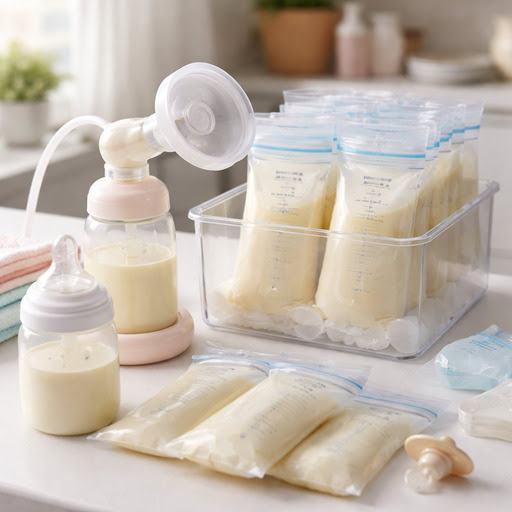
- Breast Milk Storage Guidelines: The Ultimate Guide for Modern Parents
- Understanding the Importance of Safe Breast Milk Storage
- Preparing to Express: First Steps in the Breast Milk Storage Guidelines
- Choosing Containers According to Breast Milk Storage Guidelines
- Temperature-Specific Breast Milk Storage Guidelines
- The Science of Freezing Human Milk
- Thawing and Warming within Breast Milk Storage Guidelines
- Feeding Your Baby: Final Stages
- Traveling and Emergency Protocols
- Advanced Breast Milk Storage Guidelines for Vulnerable Infants
- Frequently Asked Questions
- Scientific Resources
Breast Milk Storage Guidelines: The Ultimate Guide for Modern Parents
Navigating the journey of parenthood is filled with countless decisions, but one of the most critical aspects of infant care revolves around feeding. For mothers who choose to pump and store their milk, adhering to strict Breast Milk Storage Guidelines is absolutely essential. Human milk is a dynamic, living fluid packed with vital nutrients, antibodies, enzymes, and hormones that are perfectly tailored to support a baby’s growth and immune system. However, improper storage can quickly degrade these essential components, leading to a loss of nutritional value and increasing the risk of harmful bacterial growth. Therefore, understanding and implementing the correct protocols for expressing, storing, freezing, thawing, and warming is paramount. In this comprehensive guide, we will delve deeply into the science and practicalities of preserving your milk, ensuring that every drop retains its life-giving properties. By strictly following established recommendations, you can confidently provide your baby with the safest and most nutritious food possible, even when you cannot be physically present for a feeding.
Understanding the Importance of Safe Breast Milk Storage
When you express milk, you are collecting a precious biological fluid that is highly susceptible to environmental factors. The primary purpose of these safety protocols is to provide a scientifically backed framework that helps parents maintain the chemical innocuity and biological integrity of human milk. Breast milk is the only milk that meets both the nutritional and immunological needs of infants, making its safe preservation a top public health priority. Because human milk contains anti-infective ingredients that limit the growth of unwanted bacteria, it has a surprisingly robust shelf life compared to formula or cow’s milk. However, this natural defense system is not foolproof. If milk is left at incorrect temperatures or stored in improper containers, its bacterial load can increase rapidly, posing a severe health risk, especially to premature or medically vulnerable infants.
How Proper Storage Protocols Protect Your Baby
The preservation of human milk is not just about preventing spoilage; it is heavily focused on maintaining the complex cellular structure of the milk. Implementing correct storage practices ensures that the essential macronutrients—such as lipids, proteins, and carbohydrates—remain intact. Furthermore, micronutrients and immunological factors like Secretory IgA, lactoferrin, and lysozyme are highly sensitive to temperature fluctuations. Research clearly indicates that the longer you store human milk, whether in the refrigerator or the freezer, the greater the potential loss of vital nutrients, such as Vitamin C and overall antioxidant activity. By meticulously following the recommended Breast Milk Storage Guidelines, you minimize these losses, guaranteeing that your baby receives milk that is as close to its freshly expressed state as physically possible.
The Role of Breast Milk Storage Bags in Safe Preservation
When it comes to selecting the right vessel for your milk, breast milk storage bags are incredibly popular due to their convenience and space-saving design. These specially designed bags are pre-sterilized and created specifically to handle the expansion that occurs when milk freezes. You must never use standard household sandwich bags or disposable bottle liners, as they are not designed to withstand freezing temperatures and can easily tear, leading to heartbreaking spills and dangerous contamination. High-quality breast milk storage bags feature secure double-zipper seals and thick, food-grade plastic that prevents the absorption of external odors from your freezer.
Preparing to Express: First Steps in the Breast Milk Storage Guidelines
Before a single drop of milk is collected, you must establish a highly sanitary environment. The most critical preliminary step in any set of milk preservation rules involves personal hygiene and equipment sterilization. Whether you are expressing by hand, using a manual pump, or operating a hospital-grade electric pump, the cleanliness of your hands and equipment dictates the initial bacterial load of the milk. High initial bacterial counts will drastically shorten the storage life of the milk, regardless of how cold your refrigerator or freezer is. Therefore, meticulous preparation is the foundation of successful breast milk storage.
Hygiene and Sanitation Standards
According to universally accepted Breast Milk Storage Guidelines, the absolute first step before expressing or handling any milk is to wash your hands thoroughly. You must wash your hands with soap and warm water for at least 20 seconds. If soap and running water are absolutely unavailable, utilizing an alcohol-based hand sanitizer containing at least 60% alcohol is an acceptable temporary substitute. Beyond personal hygiene, the environment where you pump should be reasonably clean. If you are using a shared pump, such as those found in workplace lactation rooms, you must use a disinfectant wipe to clean the pump dials, power switches, and the surrounding countertop before you begin.
Adhering to cdc breast milk storage guidelines for Cleanliness
The Centers for Disease Control and Prevention (CDC) provides highly specific cdc breast milk storage guidelines regarding the sanitation of pumping equipment. After every single use, you must carefully wash all disassembled pump and feeding parts in a clean wash basin dedicated solely to infant feeding items. You should never wash pump parts directly in the kitchen sink, as sinks harbor a massive amount of household germs that can easily cross-contaminate your equipment. Rinse all parts thoroughly under running water and allow them to air-dry completely on a clean dish towel or paper towel. Trapped moisture in pump tubing can quickly lead to mold growth; if you ever spot mold in your tubing, you must replace it immediately.
Choosing Containers According to Breast Milk Storage Guidelines
The material you choose to store your milk in has a profound impact on its longevity and nutritional quality. Following established protocols requires parents to select containers that are specifically manufactured for human food storage. The debate over which material is best—glass, hard plastic, or flexible bags—is ongoing, but all recognized authorities agree that the container must be sterile, easily sealable, and free of harmful chemical additives.
Glass vs. Plastic vs. Bags
When evaluating storage vessels under strict safety standards, tempered glass is often considered the gold standard. Glass containers are non-porous, meaning they do not absorb fats or antibodies from the milk, nor do they leach chemicals into the fluid. If you feed your baby using mostly expressed milk, tempered glass is arguably the best for preserving the immunological properties of the milk. However, glass is heavy and can break if dropped or subjected to extreme temperature shocks.
Hard plastics are the next best option. If you choose plastic, you must ensure it is a food-grade, rigid container that is absolutely free of Bisphenol A (BPA) and Bisphenol S (BPS). Polypropylene is widely regarded as a safe alternative.
Exploring Breast Milk Storage Options for Working Mothers
For mothers who pump at work, carrying heavy glass bottles is rarely practical. This is where specialized breast milk storage solutions come into play. Many mothers opt to pump directly into hard plastic collection bottles that fit their pump flanges, and then transfer the milk into lighter bags for transportation and freezing. When utilizing any storage option, you must always leave about one inch of empty space at the top of the container, because human milk expands significantly as it freezes.
Why you should consider specific breastmilk storage bags?
Using dedicated breastmilk storage bags is highly advantageous for creating a “freezer stash.” Because these bags can be laid flat to freeze, they take up a fraction of the space that bulky bottles require. Furthermore, flatter packages will thaw much more quickly and evenly when it is time to feed your baby. Always remember to squeeze out the excess air at the top of the storage bag before sealing it, as this helps prevent freezer burn and preserves the lipid structure of the milk.
Temperature-Specific Breast Milk Storage Guidelines
The core of all Breast Milk Storage Guidelines revolves around temperature management. Human milk is highly reactive to heat and cold. To slow down the proliferation of naturally occurring bacteria and preserve antioxidant activity, milk must be chilled or frozen as rapidly as possible if it is not going to be consumed immediately.
Room Temperature Parameters
Freshly expressed milk is remarkably resilient due to its living cellular composition. According to standard recommendations, fresh human milk can safely remain at room temperature for a specific window of time. If the room temperature is 77°F (25°C) or colder, freshly expressed breast milk can safely sit out for up to 4 hours. However, some organizations, such as the Academy of Breastfeeding Medicine, suggest that under very clean conditions, 6 to 8 hours may be acceptable, though 4 hours remains the safest optimal standard. If you do not plan to feed your baby within this 4-hour window, you must immediately transfer the milk to a refrigerator or freezer.
Applying new breast milk storage guidelines for countertop safety
Recent updates in public health policies often emphasize caution. When applying new breast milk storage guidelines, it is highly recommended to err on the side of safety, especially in warmer climates or during summer months. If your home is warmer than 77°F, the safe window for room temperature storage decreases drastically. Never leave milk out in direct sunlight or near heat sources like stoves or radiators.
Refrigerator Timelines
The refrigerator is the most common storage location for milk that will be used within a few days. The Breast Milk Storage Guidelines dictate that milk stored in a refrigerator running at 40°F (4°C) or colder is optimally safe for up to 4 days. To maintain the lowest and most consistent temperature, you must always store your milk containers at the very back of the refrigerator shelf, preferably above the vegetable crisper. You must never store breast milk in the refrigerator door, as the constant opening and closing of the door exposes the milk to significant temperature fluctuations that will accelerate spoilage.
Deep dive into cdc guidelines for breast milk storage for refrigeration
When reviewing the strict cdc guidelines for breast milk storage, it is noted that while up to 4 days is the optimal safe period in a standard refrigerator, some older studies suggested up to 8 days might be acceptable in extremely controlled, clinical-grade refrigerators running strictly below 4°C. However, for domestic home use, the 4-day rule is the absolute standard. If you know you will not use the refrigerated milk within the 4-day limit, it is imperative that you transfer it to the freezer immediately to protect its quality and halt bacterial growth.
Freezer Storage Duration
For long-term preservation, freezing is required. Experts state that freshly expressed milk can be stored in a standard freezer (0°F or -18°C) optimally for 6 months, and up to 12 months is considered acceptable. While freezing keeps the milk biologically safe almost indefinitely from a bacterial standpoint, the recommended storage times are critically important to follow for the best nutritional quality. Over many months in the freezer, the lipids (fats) in the milk begin to break down, and the vitamin C content gradually diminishes.
Finding a breast milk storage guidelines printable for your freezer door
Keeping track of expiration dates can be overwhelming for sleep-deprived parents. A highly effective strategy is to utilize a breast milk storage guidelines printable chart and attach it magnetically to your refrigerator or freezer door. Always label every single bottle or bag with the exact date the milk was expressed, and if the milk is going to a childcare facility, ensure your child’s name is boldly written on the label. When organizing your freezer stash, implement a “First In, First Out” (FIFO) system, ensuring that the oldest milk is positioned at the front to be used next.
The Science of Freezing Human Milk
The physical and chemical changes that occur when human milk is subjected to sub-zero temperatures are profound. When we look deeply into the scientific reasoning behind these rules, we find that freezing, while necessary for long-term storage, does compromise certain aspects of the milk. For instance, the freezing process ruptures the milk fat globule membranes and destroys living immune cells, such as macrophages, which are plentiful in fresh milk.
Antioxidant Activity and Cold Storage
A fascinating medical study conducted by Hanna et al. specifically examined the effect of storage on the antioxidant activity of human milk. Antioxidants in breast milk are crucial because they protect the infant’s vulnerable gastrointestinal tract and overall physiology from oxidative stress—a major factor in diseases like necrotizing enterocolitis. The study revealed that the antioxidant activity of human milk significantly decreases when exposed to both refrigeration and freezing. Interestingly, freezing the milk at -20°C resulted in a far greater decrease in total antioxidant capacity than merely refrigerating it at 4°C.
According to these specific scientific findings, if you intend to use the milk within a couple of days, it is biochemically superior to keep it in the refrigerator rather than freezing and subsequently thawing it. To preserve the maximum antioxidant activity and immunological potency of human milk, storage time should ideally be limited to 48 hours in the refrigerator, avoiding the freezer entirely if possible. Of course, building a freezer stash is still a highly valid and necessary practice for working mothers, but offering fresh or merely refrigerated milk whenever possible yields the highest nutritional benefits.
Thawing and Warming within Breast Milk Storage Guidelines
The manner in which you transition milk from a frozen solid back to a drinkable liquid is heavily regulated by safety protocols. Mishandling the thawing process can easily destroy the remaining nutrients, render the milk unsafe due to rapid bacterial growth, or even cause physical burns to your infant’s delicate mouth.
Step-by-Step Defrosting
The absolute safest method for thawing frozen milk, as mandated by all major Breast Milk Storage Guidelines, is to transfer the frozen container into the refrigerator the night before you intend to use it. It typically takes about 12 hours for a standard bag of milk to completely defrost in the refrigerator. If you are in a rush and need the milk immediately, you can safely thaw it by placing the sealed container in a bowl of warm water or holding it continuously under running lukewarm water.
You must never, under any circumstances, use a microwave to thaw or heat human milk. Microwaves heat fluids unevenly, creating dangerous “hot spots” that can severely scald your baby’s throat. Furthermore, the intense, localized heat of a microwave will instantly denature the delicate proteins and destroy the vital anti-infective properties of the milk.
Managing defrosted milk under cdc breast milk storage guidelines
Once the milk has been brought completely to a liquid state, a new set of rules applies. According to the cdc breast milk storage guidelines, previously frozen milk that has been completely thawed in the refrigerator must be used within 24 hours. The 24-hour clock begins the moment the milk is completely liquid, not from the moment you removed it from the freezer. Most importantly, you must NEVER refreeze human milk after it has been thawed. Refreezing introduces a massive risk of bacterial contamination and further degrades the remaining nutritional components.
Feeding Your Baby: Final Stages
When it is time to feed, you may notice that stored milk looks different from fresh milk. It is completely normal for human milk to separate during storage, with the thick, creamy fat layer rising to the top and the watery, thinner milk settling at the bottom. Before feeding, gently swirl the bottle to mix the fat back into the fluid. Never vigorously shake the bottle, as harsh shaking can damage the fragile protein chains and cellular components within the milk.
Milk does not strictly need to be warmed; many babies happily drink milk straight from the refrigerator or at room temperature. If your baby prefers warm milk, ensure the water bath you use for heating is warm, not boiling. Always test the temperature of the milk by sprinkling a few drops onto the sensitive skin of your inner wrist before offering the bottle to your baby; it should feel comfortably lukewarm, never hot.
Managing Leftover Milk
Infants are unpredictable eaters, and they will frequently leave milk at the bottom of the bottle. Breast Milk Storage Guidelines are very strict regarding leftover milk that has come into contact with a baby’s mouth. When a baby drinks from a bottle, bacteria from their saliva invariably wash back into the milk. Once your baby has begun drinking from a bottle, you must use any leftover milk within 1 to 2 hours after the feeding is finished. If the milk is not consumed within this short window, you must throw it away. Do not put a half-eaten bottle back into the refrigerator for a later feed, as the introduced bacteria will multiply rapidly, potentially causing illness.
Traveling and Emergency Protocols
Modern parenthood often involves travel, which complicates milk preservation. When moving milk between locations, adhering to these rules ensures the milk remains in a safe temperature zone.
Maintaining Safety On the Go
If you are traveling, you can safely store expressed milk in a high-quality insulated cooler bag packed securely with deep-frozen ice packs. According to standard Breast Milk Storage Guidelines, milk can remain safely chilled in a heavily iced cooler for up to 24 hours. You must ensure the cooler remains closed as much as possible to maintain the internal temperature. When you reach your final destination, immediately transfer the milk to a refrigerator or freezer. Take extreme care to ensure the milk bags do not come into direct contact with the bare ice packs, as this can cause accidental, localized freezing of refrigerated milk.
In the event of a power outage, keep your freezer doors closed securely. A full deep freezer can maintain safe temperatures for up to 48 hours without power. If the milk in the freezer still contains visible ice crystals, it is still considered frozen and is safe to remain in the freezer once power returns. If the milk has completely thawed into a liquid state, it must be moved to a working refrigerator and consumed within 24 hours or discarded.
Advanced Breast Milk Storage Guidelines for Vulnerable Infants
While standard Breast Milk Storage Guidelines apply perfectly to healthy, full-term infants, situations involving premature or medically fragile babies require a more stringent approach. If your baby is in the Neonatal Intensive Care Unit (NICU), you must consult directly with your healthcare providers, as hospital preservation protocols are significantly stricter than home use guidelines. NICU protocols often require the use of sterile collection bottles, strictly limit room temperature exposure to one hour, and heavily restrict the duration of refrigerated storage to minimize even microscopic bacterial loads.
Furthermore, a critical commentary from Canadian public health experts highlights the necessity of using the correct containers. In some hospital settings, mothers were found to be using plastic specimen containers (designed for urine or tissue samples) to store breast milk. A health technology assessment determined that because these specimen containers are not legally marketed for infant feeding, their chemical safety regarding the leaching of plastics into human milk is completely unknown. Therefore, hospitals and parents must strictly adhere to the precautionary principle: never use arbitrary plastic containers to store milk. Always invest in proper, food-grade storage systems to protect your child from unknown chemical hazards.
In conclusion, while the rules may seem daunting at first, integrating these practices into your daily routine quickly becomes second nature. By prioritizing impeccable hygiene, selecting safe containers, mastering temperature control, and safely thawing your milk, you are providing your baby with the absolute best nutritional start in life.
Frequently Asked Questions
Who created the breast milk storage guidelines?
The widely accepted Breast Milk Storage Guidelines are developed and continuously updated by leading global public health organizations and medical bodies. The Centers for Disease Control and Prevention (CDC) provides the primary framework used in the United States. Additionally, organizations like the Academy of Breastfeeding Medicine (ABM), the World Health Organization (WHO), La Leche League International, and the National Health Service (NHS) in the UK conduct extensive research to formulate these critical safety protocols.
How long is breast milk good for after thawing?
Once frozen breast milk has been completely thawed into a liquid state, the biological clock begins ticking rapidly. According to strict recommendations, fully defrosted milk can be safely kept in the refrigerator for up to 24 hours. You must count this 24-hour period from the exact moment the milk is completely thawed, not from when you initially transferred it from the freezer. It is crucial to remember that you must never refreeze human milk after it has thawed.
How long does breast milk last at room temperature?
Freshly expressed human milk is remarkably robust due to its active immune cells, but it has distinct limits. Under standard Breast Milk Storage Guidelines, fresh milk can safely remain at room temperature—defined as 77°F (25°C) or colder—for up to 4 hours. If the environment is particularly pristine and cool, some medical protocols cautiously allow up to 6 hours, but 4 hours is the universally recommended safe limit. If you do not intend to feed your baby within this 4-hour window, the milk must be refrigerated immediately.
How to use refrigerated breast milk?
Using refrigerated milk safely is a straightforward process when following proper procedures. First, remove the container from the refrigerator and gently swirl it to remix the milk fat that has naturally separated and risen to the top. You can serve the milk cold straight from the fridge, or you can warm it gently by placing the sealed bottle in a bowl of warm water for a few minutes. Always test the temperature on your wrist before feeding, and never use a microwave to heat the milk.
What is the 5 rule for breast milk storage?
The “5 rule” is a highly popular, easy-to-remember mnemonic created by lactation consultants to help sleep-deprived parents recall basic Breast Milk Storage Guidelines. This rule suggests that breast milk is safe for 5 hours at room temperature, safe for 5 days in the refrigerator, and safe for 5 months in a standard freezer. While the CDC officially recommends 4 hours, 4 days, and 6 months respectively, the 5-5-5 rule is generally considered a safe and practical baseline for healthy, full-term infants.
What is the 4 4 4 rule for breast milk?
Similar to the 5-5-5 rule, the “4-4-4 rule” is another mnemonic device used to simplify storage rules, but it aligns slightly more closely with conservative medical recommendations. The 4-4-4 rule stands for keeping milk safe for up to 4 hours at room temperature, up to 4 days in the refrigerator, and up to 4 months in the freezer. While milk can actually be frozen safely for up to 6-12 months, using the 4-month benchmark ensures the milk retains a higher quality of lipids and essential vitamins.
How long does breast milk last in the freezer?
When stored at 0°F (-18°C) or colder, freezing effectively pauses bacterial growth, keeping the milk safe for a remarkably long time. Current guidelines state that it is optimal to use frozen breast milk within 6 months. However, storing it for up to 12 months is considered medically acceptable for healthy, full-term babies. Keep in mind that the longer milk remains frozen, the more its nutritional quality—specifically vitamin C content and antioxidant capacity—degrades over time.
How long can breast milk last in the fridge?
The refrigerator is the ideal storage location for milk you plan to use within the same week, as it preserves antioxidant activity better than freezing. According to rigorous Breast Milk Storage Guidelines, freshly expressed milk can be safely stored in the back of a standard refrigerator (at 40°F/4°C or colder) for up to 4 days. It is essential to store the containers deep inside the fridge rather than on the door shelves, to protect the milk from warm air drafts every time the door is opened.
The following posts may interest you
How Long Should a Baby Be Breastfed?
Breast Milk Boosts Premature Babies’ Brain Development
What medications are safe while breastfeeding: Expert Guide
Fear of Childbirth: Impact on Breastfeeding Success
Sources
How US Mothers Store and Handle Their Expressed Breast Milk
https://journals.sagepub.com/doi/abs/10.1177/0890334412453876
GUIDELINES FOR THE ESTABLISHMENT AND OPERATION OF HUMAN MILK BANKS IN THE UK
https://ep.bmj.com/content/89/1/ep27.short
Specimen plastic containers used to store expressed breast milk in neonatal care units: A case of precautionary principle
https://link.springer.com/article/10.17269/cjph.105.4369
Effect of storage on breast milk antioxidant activity
https://fn.bmj.com/content/89/6/F518.abstract
HANDLING AND STORAGE OF EXPRESSED BREAST MILK: KNOWLEDGE AND PRACTICE AMONG WORKING LACTATING MOTHERS AT A SELECTED PRIVATE WOMEN & CHILDREN’S HOSPITAL
https://jis.iou.edu.gm/article/view/96
Physiology, Breast Milk
https://www.ncbi.nlm.nih.gov/books/NBK539790
Guidelines for the establishment and operation of human milk banks in the UK.
https://pmc.ncbi.nlm.nih.gov/articles/PMC1511365
Principles for Maintaining or Increasing Breast Milk Production
https://www.sciencedirect.com/science/article/abs/pii/S0884217515310261
The Effects of Different Storage Conditions on Leukocytes in Human Breast Milk
https://pmc.ncbi.nlm.nih.gov/articles/PMC10906764
Developing global guidance on human milk banking