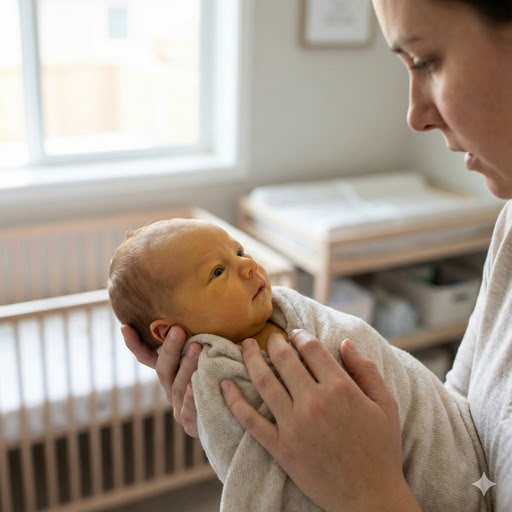
- Jaundice in Newborns: A Complete Guide for Parents and Caregivers
- Understanding the Basics: What is Jaundice in Newborns?
- The Physiology of Bilirubin Metabolism in Jaundice in Newborns
- Neonatal Jaundice Symptoms and Signs
- Causes
- Diagnosing
- Treatments
- Signs of Recovery from Jaundice in Newborns
- Complications of Untreated Jaundice in Newborns
- Prevention
- Special Considerations: Late Preterm Infants
- Conclusion
- Frequently Asked Questions
- Scientific Sources
Jaundice in Newborns: A Complete Guide for Parents and Caregivers
Jaundice in newborns is a very common condition that affects a significant percentage of infants in the first few days of life. It manifests as a yellowing of the skin and the whites of the eyes, caused by an accumulation of a substance called bilirubin in the blood. While it can be alarming for new parents to see their yellow newborn, in most cases, it is a temporary and harmless condition that resolves on its own or with simple treatment. However, understanding the nuances of jaundice in newborns, monitoring jaundice levels in newborns, and knowing when to seek professional medical advice is crucial for ensuring the health and safety of the baby. This extensive guide will explore the Symptoms, Causes, Treatment, and Prevention of this condition, drawing upon current medical literature and guidelines.
Understanding the Basics: What is Jaundice in Newborns?
To truly understand jaundice in newborns, one must first understand the biology behind the color change. The yellow tint is due to elevated bilirubin in newborn blood. Bilirubin is a yellow pigment produced during the normal breakdown of red blood cells. In older children and adults, the liver processes this bilirubin, which then passes through the intestinal tract and is excreted.
However, a newborn’s liver is still immature. It often cannot process bilirubin quickly enough to keep up with the rapid breakdown of red blood cells that occurs after birth. This leads to hyperbilirubinemia, or high bilirubin in newborn infants. As the bilirubin levels rise, it settles in the skin, mucous membranes, and eyes, resulting in the characteristic yellow appearance known as jaundice in newborns.
Statistics indicate that approximately 60% of full-term babies and 80% of premature babies develop clinical jaundice within the first week of life. While infant jaundice is often physiological (normal), it requires careful monitoring to ensure it does not progress to dangerous levels that could cause neurological damage, a rare but serious condition known as kernicterus.
The Physiology of Bilirubin Metabolism in Jaundice in Newborns
Before diving into the specific types of jaundice in newborns, it is helpful to grasp the metabolic process.
- Production: Red blood cells carry oxygen. Newborns have a high number of red blood cells, and these cells have a shorter lifespan than those in adults. When they break down, they release heme, which is converted into unconjugated bilirubin.
- Transport: This unconjugated bilirubin binds to albumin in the blood and travels to the liver.
- Conjugation: In the liver, an enzyme converts unconjugated bilirubin into conjugated bilirubin (water-soluble).
- Excretion: Conjugated bilirubin is excreted into bile and moves into the intestines.
- Elimination: It is eventually removed from the body via stool.
In many cases of jaundice in newborns, this process is bottlenecked at the liver (immature processing) or in the intestines (reabsorption of bilirubin), leading to elevated bilirubin in newborn circulation.
Neonatal Jaundice Symptoms and Signs
Identifying neonatal jaundice symptoms early is key to effective management. The most obvious sign is the yellowing of the skin. This usually begins on the face and, as levels increase, spreads downwards to the chest, abdomen, arms, and legs.
Visual and Physical Signs
- Yellow Skin and Eyes: The whites of the eyes (sclera) may look yellow. In babies with darker skin tones, yellowing may be harder to see on the skin but can be observed in the eyes, the palms of the hands, or the soles of the feet.
- Press Test: If you gently press on the baby’s nose or forehead, the skin should turn white for a moment. If it looks yellow where you pressed, it is a sign of jaundice in newborns.
- Changes in Urine and Stool: A newborn’s urine should be colorless. Dark, yellow urine or pale-colored poo (it should be mustard yellow or orange) can be indicators of jaundice in newborns.
Behavioral Symptoms
In more severe cases, or if jaundice levels in newborns are rising rapidly, the baby may exhibit:
- Poor Feeding: The baby may have difficulty latching or seem uninterested in food.
- Lethargy: Excessive sleepiness and being hard to wake for feeds.
- High-Pitched Cry: A sign of irritation in the nervous system.
- Floppiness or Stiffness: Changes in muscle tone.
- Irritability: The baby may seem restless or jittery.
If any of these severe symptoms of jaundice in a newborn are present, immediate medical attention is required.
Causes of Jaundice in Newborns
There are several causes for jaundice in newborns, ranging from benign physiological processes to more serious pathological conditions.
Physiological Jaundice
This is the most common form of jaundice in newborns. It typically appears on the second or third day of life and is caused by the baby’s immature liver. Physiological jaundice usually peaks between days 3 and 7 and gradually disappears as the liver matures. It is generally harmless.
Breastfeeding and Breast Milk Jaundice
- Breastfeeding Jaundice: This occurs in the first week of life and is often due to suboptimal intake. If the baby is not latching well or the mother’s milk has not fully come in, the baby may become dehydrated and urinate/defecate less. This delays the excretion of bilirubin, leading to jaundice in newborns.
- Breast Milk Jaundice: This is different and occurs later, typically after the first week. Substances in breast milk may inhibit the liver’s ability to process bilirubin. This can persist for several weeks but is usually not harmful.
Pathological Jaundice in Newborn
Pathological jaundice in newborn infants is more concerning. It often appears within the first 24 hours of life or lasts longer than two weeks. Causes include:
- Blood Group Incompatibility (ABO or Rh): If the mother and baby have different blood types, the mother’s antibodies may attack the baby’s red blood cells, causing them to break down rapidly. This leads to a sudden spike in high bilirubin in newborn.
- Enzyme Deficiencies: Conditions like G6PD deficiency can cause hemolysis (breakdown of red blood cells).
- Infections: Sepsis or urinary tract infections can trigger jaundice in newborns.
- Liver Disease: Biliary atresia or hepatitis are rare but serious causes involving conjugated hyperbilirubinemia.
- Polycythemia: An abnormally high number of red blood cells.
- Cephalohematoma: A collection of blood under the scalp from delivery can break down and release bilirubin.
Diagnosing Jaundice in Newborns
Healthcare providers routinely screen for jaundice in newborns before discharge from the hospital.
Visual Exam and Transcutaneous Bilirubinometer
Doctors first perform a visual check. They may use a device called a transcutaneous bilirubinometer, which measures the reflection of light from the skin to estimate the bilirubin level. This is non-invasive and provides a quick result.
Blood Tests
If the transcutaneous reading is high, or if the baby appears significantly jaundiced within the first 24 hours, a blood test (Total Serum Bilirubin – TSB) is performed. This is the gold standard for determining jaundice levels in newborns.
Newborn Baby Jaundice Level Chart
Doctors use a newborn baby jaundice level chart (nomogram) to determine if treatment is necessary. This chart plots the baby’s bilirubin level against their age in hours.
- Low Risk Zone: Levels are expected to drop or stay stable.
- High Intermediate/High Risk Zone: Levels are approaching the threshold for jaundice treatments in newborns and require close monitoring.
- Treatment Threshold: If the level crosses a specific line based on the baby’s gestational age and risk factors, phototherapy is initiated.
For example, a normal value of jaundice in newborn at 24 hours might be below 5-6 mg/dL. However, a level of 15 mg/dL at 24 hours would likely require immediate intervention. The newborn baby jaundice level chart is a critical tool in preventing undertreatment or overtreatment.
Treatments for Jaundice in Newborns
The goal of newborn jaundice treatment is to reduce the level of unconjugated bilirubin to prevent brain toxicity. The method of treatment depends on the severity of the jaundice in newborns and the underlying cause.
1. Phototherapy
This is the most common form of neonatal jaundice treatment.
- How it works: The baby is placed under special blue-green lights. The light waves alter the shape and structure of bilirubin molecules in a process called photo-oxidation. This converts the bilirubin into a water-soluble form that can be excreted in urine and stool without passing through the liver.
- Procedure: The baby wears only a diaper and protective eye patches. The light source can be overhead lamps or a fiber-optic blanket (Biliblanket) placed under the baby.
- Duration: Treatment continues until jaundice levels in newborns drop to a safe range. This usually takes 1 to 2 days.
- Side Effects: Generally safe, but can cause temporary skin rashes or loose stools.
2. Exchange Transfusion
In severe cases of pathological jaundice in newborn infants where phototherapy is ineffective or bilirubin levels are dangerously high, an exchange transfusion may be necessary.
- Procedure: Small amounts of the baby’s blood are withdrawn and replaced with donor blood. This rapidly removes bilirubin and maternal antibodies.
- Indication: Usually reserved for cases of severe hemolysis (like Rh disease) or when signs of kernicterus are present.
3. Intravenous Immunoglobulin (IVIg)
If jaundice in newborns is caused by blood type differences (Rh or ABO incompatibility), IVIg may be administered. This protein reduces the levels of antibodies attacking the baby’s red blood cells and may reduce the need for an exchange transfusion.
4. Enhanced Nutrition
Increasing the frequency of feeds is a simple but effective newborn jaundice treatment. More frequent breastfeeding or formula feeding produces more bowel movements, which helps eliminate bilirubin from the body. In cases of breastfeeding jaundice, temporary supplementation with expressed breast milk or formula may be recommended by a doctor, but breastfeeding should usually continue.
Signs of Recovery from Jaundice in Newborns
Parents often ask how they can tell if the treatment is working. Signs of recovery from jaundice in newborns include:
- Skin Color: The yellow tint begins to fade, usually starting from the legs and moving up towards the head (reverse of how it appeared). The whites of the eyes become clearer.
- Feeding: The baby becomes more alert, wakes up for feeds on their own, and feeds vigorously.
- Stool Color: Stools transition from dark meconium to a lighter, mustard-yellow color, indicating bilirubin is being excreted.
- Lower Bilirubin Levels: The definitive sign is a drop in TSB levels confirmed by blood tests.
Complications of Untreated Jaundice in Newborns
While infant jaundice is common and usually benign, failure to manage elevated bilirubin in newborn infants can lead to devastating consequences.
Acute Bilirubin Encephalopathy
This is the acute phase of bilirubin toxicity affecting the brain. Symptoms include extreme lethargy, poor muscle tone (hypotonia), and a high-pitched cry. Immediate neonatal jaundice treatment is critical at this stage to prevent permanent damage.
Kernicterus
If acute bilirubin encephalopathy is not treated, it can progress to kernicterus, a permanent form of brain damage. This is a preventable tragedy. Kernicterus can cause:
- Cerebral palsy (athetoid type).
- Hearing loss.
- Vision problems (upward gaze palsy).
- Intellectual disabilities.
- Dental enamel defects.
Because of these severe risks, hospitals adhere to strict guidelines regarding jaundice in newborns to ensure no baby falls through the cracks.
Prevention of Jaundice in Newborns
Complete prevention of jaundice in newborns is not always possible because the physiological rise in bilirubin is a natural process. However, parents and caregivers can take steps to prevent it from becoming severe.
- Adequate Feeding: This is the most effective preventative measure. Newborns should be fed 8 to 12 times a day for the first several days. This prevents dehydration and promotes the clearance of bilirubin.
- Blood Typing: Pregnant people should have their blood type and Rh status tested. If there is a risk of incompatibility, the baby needs close monitoring for jaundice in newborns.
- Monitoring: Parents should observe their baby in natural light daily. Knowing what to look for regarding newborn jaundice symptoms empowers parents to act fast.
- Pre-discharge Screening: Ensure the baby has a bilirubin check before leaving the hospital.
- Follow-up: A follow-up appointment with a pediatrician within 2 to 3 days of discharge is vital, as jaundice levels in newborns often peak after the baby goes home.
Special Considerations: Late Preterm Infants
Infants born between 34 and 36 weeks (late preterm) are more susceptible to jaundice in newborns than full-term babies. Their livers are less mature, and they may have difficulty feeding. Therefore, the threshold for starting jaundice treatments in newborns is lower for this group. They require vigilant monitoring of their weight, feeding, and bilirubin levels.
Conclusion
Jaundice in newborns is a phenomenon that most parents will encounter. While the sight of a yellow newborn can be worrying, modern medicine provides excellent tools for monitoring and neonatal jaundice treatment. By understanding the Symptoms, Causes, Treatment, and Prevention, parents can navigate this period with confidence. Remember that jaundice in newborns is highly manageable, and with timely intervention, the prognosis is excellent. Always consult healthcare professionals if you notice symptoms of jaundice in a newborn or if you have concerns about high bilirubin in newborn levels.
Frequently Asked Questions
What causes jaundice in newborns?
Jaundice in newborns is primarily caused by an excess of bilirubin in the blood, a condition known as hyperbilirubinemia. Newborns produce more bilirubin than adults due to the rapid breakdown of red blood cells, and their immature livers are often not efficient enough to remove it quickly. Other causes can include blood type incompatibilities between mother and baby, infections, enzyme deficiencies, or issues related to breastfeeding.
How common is jaundice in newborns?
Jaundice in newborns is extremely common, affecting approximately 60% of full-term babies and up to 80% of premature babies. It is arguably the most common condition requiring medical attention in newborns. Because it is so frequent, hospitals have routine screening protocols in place to ensure that jaundice levels in newborns do not reach dangerous heights.
Does blood type affect jaundice in newborns?
Yes, blood type can significantly affect jaundice in newborns. If a mother and baby have different blood types (for example, mother is O and baby is A or B, or mother is Rh-negative and baby is Rh-positive), the mother’s immune system may produce antibodies that attack the baby’s red blood cells. This causes the cells to break down faster, leading to a rapid rise in bilirubin and potentially severe pathological jaundice in newborn infants.
How to prevent jaundice in newborns?
While you cannot prevent the natural bodily processes that cause physiological jaundice in newborns, you can prevent it from becoming severe. The best way to do this is through frequent and adequate feeding (8-12 times a day for breastfed babies), which encourages bowel movements that eliminate bilirubin. Additionally, ensuring proper medical screening before hospital discharge and attending follow-up appointments can prevent complications associated with high bilirubin in newborn infants.
When to worry about jaundice in newborns?
You should worry about jaundice in newborns if the yellow coloring appears within the first 24 hours of life, as this often indicates a more serious issue. Furthermore, if the jaundice spreads to the stomach, arms, or legs, or if the baby becomes listless, hard to wake, is not feeding well, or has a high-pitched cry, you must seek immediate medical help. These could be signs that jaundice levels in newborns are dangerously high.
How long does jaundice last in newborns?
In breastfed infants, physiological jaundice in newborns can last for a month or occasionally longer (breast milk jaundice), though levels are usually safe. For formula-fed babies, it typically resolves within two weeks. If jaundice in newborns persists beyond 2 to 3 weeks, doctors may perform additional tests to rule out other causes like liver disease.
How do you treat jaundice in newborns?
Mild jaundice in newborns often resolves on its own without treatment as the baby’s liver matures. Moderate to severe cases require newborn jaundice treatment, most commonly phototherapy, where the baby is placed under special lights that help break down bilirubin. In rare, critical cases, an exchange transfusion or intravenous immunoglobulin (IVIg) may be used to rapidly lower elevated bilirubin in newborn blood.
The following posts may interest you
How do I know if my baby has jaundice? Signs & Guide
Why Does My Baby Have Green Poop?
Sources
Jaundice in the newborns
https://link.springer.com/article/10.1007/s12098-008-0024-7
Jaundice: Newborn to Age 2 Months
National guidelines for treatment of jaundice in the newborn
https://onlinelibrary.wiley.com/doi/abs/10.1111/j.1651-2227.2010.02104.x
Jaundice in Newborn Monitoring using Color Detection Method
https://www.sciencedirect.com/science/article/pii/S1877705812001956
Neonatal jaundice: aetiology, diagnosis and treatment
https://www.magonlinelibrary.com/doi/abs/10.12968/hmed.2017.78.12.699
Neonatal jaundice
https://pmc.ncbi.nlm.nih.gov/articles/PMC2943774
Neonatal jaundice
https://pmc.ncbi.nlm.nih.gov/articles/PMC3217664
Managing the jaundiced newborn: a persistent challenge