- Comprehensive Guide to Understanding Multiple Hyperdontia and Supernumerary Teeth
- What is Multiple Hyperdontia?
- Causes
- Syndromes Associated with Multiple Hyperdontia
- Classification and Morphology in Multiple Hyperdontia
- Signs and Diagnosis
- Risks and Complications
- Treatment Strategies
- Differentiating Hyperdontia from Other Anomalies
- Historical and Cultural Perspectives
- Conclusion
- Frequently Asked Questions
- Scientific Resources
Comprehensive Guide to Understanding Multiple Hyperdontia and Supernumerary Teeth
The human dentition is a marvel of biological engineering, typically following a strict numerical blueprint. A standard primary dentition consists of 20 deciduous teeth, while the permanent dentition in adults is comprised of 32 teeth, including the third molars (wisdom teeth). However, deviations from this standard count occur, leading to a condition known as Multiple hyperdontia. This dental anomaly involves the presence of one or more extra teeth in the dental arch, exceeding the normal formula. While having a single extra tooth is relatively common, appearing in approximately 0.1% to 3.8% of the population, Multiple hyperdontia—defined as the presence of several supernumerary structures—is a rarer and often more complex condition that requires significant dental intervention. The presence of Multiple hyperdontia can lead to aesthetic concerns, functional problems, and complications with the eruption of regular permanent teeth.
What is Multiple Hyperdontia?
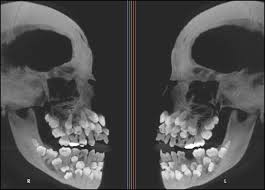
Multiple hyperdontia is characterized by the development of multiple supernumerary teeth (teeth in excess of the normal number). In the general population, the prevalence of hyperdontia is significantly higher in permanent dentition compared to primary (baby) teeth, and it is observed approximately twice as frequently in males as it is in females. While a single extra tooth (often called a mesiodens when located between the front teeth) is the most frequent presentation, Multiple hyperdontia involves the eruption or impaction of several extra calcified structures. Rare cases have been documented where patients present with thirty or more extra teeth, creating a complex “medical and dental puzzle” for practitioners.
The condition is not merely a cosmetic issue. Multiple hyperdontia represents a significant deviation in oral development. These extra teeth can form in any region of the dental arch—maxilla (upper jaw) or mandible (lower jaw)—though they are most frequently found in the anterior maxillary region or the mandibular premolar area. When a patient presents with Multiple hyperdontia, the extra teeth may resemble normal teeth (supplemental) or have abnormal shapes (rudimentary), complicating the diagnosis and treatment plan.
The Etiology and Causes of Multiple Hyperdontia
The exact cause of Multiple hyperdontia is not fully understood, but dental researchers and geneticists have proposed several theories to explain why the body produces extra teeth. The etiology is generally considered multifactorial, involving a combination of genetic and environmental influences.
Theories of Tooth Formation
One of the most widely accepted theories involves the hyperactivity of the dental lamina. The dental lamina is a band of epithelial tissue responsible for tooth formation during the embryonic stage. Under normal circumstances, this lamina initiates the formation of tooth buds that eventually develop into the 20 primary and 32 permanent teeth. However, if the dental lamina becomes overactive, it produces extra tooth buds, resulting in supernumerary teeth. Another theory, the dichotomy of the tooth bud, suggests that a single tooth germ splits into two or more parts, leading to two teeth developing from a source meant for one.
There is also the atavism theory, which proposes that Multiple hyperdontia is an evolutionary throwback. Our ancestors had more teeth than modern humans (for example, three incisors in each quadrant compared to the two we have today). This theory suggests that the genes responsible for these ancestral teeth are still present in our DNA and can be reactivated. However, this theory is less favored in modern dentistry compared to the dental lamina hyperactivity theory.
Genetic Factors Influencing Multiple Hyperdontia
Genetics play a pivotal role in the development of Multiple hyperdontia. Evidence suggests that this condition can run in families, indicating an autosomal dominant pattern of inheritance with incomplete penetrance in some cases. Research on non-syndromic families has shown that if a parent has a history of extra teeth, there is a higher likelihood of their children developing Multiple hyperdontia. For instance, studies have identified families where multiple siblings and a parent all exhibited varying degrees of hyperdontia, confirming a hereditary link.
Specific genes, such as MSX1 and RUNX2, are critical for tooth development. Mutations or disruptions in the signaling pathways regulated by these genes can lead to dental anomalies. While isolated cases of non-syndromic Multiple hyperdontia exist, they are rare. Most instances of multiple supernumerary teeth are associated with specific genetic syndromes or developmental disorders.
Environmental and Developmental Factors
Although genetics are the primary driver, environmental factors during tooth development may also contribute to Multiple hyperdontia. Trauma to the dental region during development or disruptions in the signaling pathways that regulate tooth number can trigger the formation of extra teeth. However, in the vast majority of Multiple hyperdontia cases, a genetic predisposition is the underlying culprit.
Syndromes Associated with Multiple Hyperdontia
While a single extra tooth often occurs in healthy individuals, the presence of Multiple hyperdontia is frequently a red flag for underlying systemic conditions. Dentists often serve as the first line of defense in diagnosing these syndromes based on the oral manifestation of supernumerary teeth hyperdontia.
Cleidocranial Dysplasia and “Dustin Multiple Hyperdontia”
One of the most well-known conditions associated with Multiple hyperdontia is Cleidocranial Dysplasia (CCD). This genetic disorder affects the development of bones and teeth. Individuals with CCD often have hypoplastic (underdeveloped) clavicles, allowing them to bring their shoulders together in front of their chest. A hallmark oral feature is the retention of primary teeth and the presence of numerous supernumerary teeth impacting the permanent dentition.
In popular culture, the search term dustin multiple hyperdontia often refers to the actor Gaten Matarazzo, who plays Dustin Henderson in the series Stranger Things. Matarazzo has Cleidocranial Dysplasia and has been open about his experience with Multiple hyperdontia, helping to raise awareness about the condition. In CCD, patients may have multiple hyperdontia images revealing a jaw full of unerupted teeth, often described as having extra teeth growing in gums that block normal eruption.
Gardner’s Syndrome
Gardner’s Syndrome is a serious condition linked to Multiple hyperdontia. It is a variant of Familial Adenomatous Polyposis (FAP) and is characterized by the triad of multiple osteomas (benign bone tumors), skin cysts (epidermoid cysts), and intestinal polyps. The intestinal polyps in Gardner’s Syndrome have a very high potential to become malignant (colon cancer). Therefore, the early detection of Multiple hyperdontia by a dentist can lead to a referral for genetic testing and colonoscopy, potentially saving the patient’s life.
Cleft Lip and Palate
Children born with cleft lip and palate often exhibit dental anomalies. While hypodontia (missing teeth) is common in the cleft area, these patients can also experience Multiple hyperdontia. The disruption in the formation of the palate can cause the dental lamina to fragment, leading to the development of extra teeth in the vicinity of the cleft.
Trichorhinophalangeal Syndrome
This is a rare genetic disorder characterized by distinctive facial features (such as a bulbous nose), bone abnormalities (cone-shaped epiphyses), and thin, sparse hair. Multiple hyperdontia is a known oral manifestation of this syndrome. Case studies have shown patients with this syndrome presenting with numerous supernumerary teeth that require complex multidisciplinary management.
Other Associated Conditions
Other conditions less frequently associated with Multiple hyperdontia include:
- Ehlers-Danlos Syndrome: A group of disorders that affect connective tissues, causing overly flexible joints and stretchy skin.
- Fabry Disease: A rare genetic lysosomal storage disease.
- Down Syndrome: While more commonly associated with missing teeth, extra teeth can occur.
- Nance-Horan Syndrome: A rare X-linked disorder characterized by cataracts and dental anomalies.
Classification and Morphology in Multiple Hyperdontia
When a clinician diagnoses Multiple hyperdontia, they classify the extra teeth based on their shape and location. This classification is vital for planning the surgical and orthodontic approach, as the morphology of the tooth often dictates its eruption potential and the difficulty of extraction.
Shapes of Supernumerary Teeth
In cases of Multiple hyperdontia, the teeth can manifest in various forms:
- Supplemental (Eumorphic): These extra teeth resemble normal teeth in both size and shape. They are most common in the lateral incisor or premolar regions. Because they look like normal teeth, they can sometimes cause confusion in diagnosis, requiring careful counting of the dentition.
- Rudimentary (Dysmorphic): These teeth have abnormal shapes and are smaller than normal teeth. They are sub-classified as:
- Conical: These are peg-shaped teeth, often found as a mesiodens between the upper central incisors. They usually have a single root and are the most likely to erupt naturally.
- Tuberculate: These are barrel-shaped teeth with more than one cusp or tubercle. They rarely erupt and are frequently responsible for delaying the eruption of permanent teeth because their roots may not fully form.
- Odontoma: While technically a tumor of dental origin, odontomas are composed of dental tissue (enamel, dentin, cementum).
- Compound Odontoma: Looks like a cluster of small, tooth-like structures (denticles). Patients might describe these as extra teeth in mouth that are very small and numerous.
- Complex Odontoma: A disorganized mass of dental tissue that does not resemble a tooth but is radiographically distinct.
Locations of Extra Teeth
Multiple hyperdontia can occur anywhere, but specific locations are more common:
- Mesiodens: The most common supernumerary tooth, located in the midline of the upper jaw (maxilla). It can cause a gap (diastema) between the front teeth.
- Paramolars: An extra tooth situated buccally (cheek side) or lingually (tongue side) to a molar.
- Distomolars: Extra teeth located behind the third molars (wisdom teeth). In extreme cases of Multiple hyperdontia, a patient might have fourth or even fifth molars.
- Parapremolars: Extra teeth located in the premolar region, which is a common site for multiple supernumeraries, particularly in the lower jaw (mandible).
Signs and Diagnosis of Multiple Hyperdontia
Diagnosing Multiple hyperdontia usually occurs during routine dental check-ups. Since many supernumerary teeth remain impacted (buried within the bone), they may not be visible to the naked eye.
Clinical Signs
Visible signs of Multiple hyperdontia include the eruption of extra teeth into the oral cavity, overcrowding, or the displacement of permanent teeth. In some severe presentations, patients may describe having hyperdontia multiple rows of teeth, resembling a shark’s dentition where a second row of teeth appears behind the primary arch. Another tell-tale sign is the failure of a permanent tooth to erupt on schedule; often, an extra tooth is blocking its path. In some instances, retained primary teeth that fail to fall out at the expected age can indicate the presence of an underlying supernumerary blocking the permanent successor.
Radiographic Identification
X-rays are essential for confirming Multiple hyperdontia. A standard Panoramic radiograph (OPG) provides a broad view of the jaws and is usually the first step in identifying supernumerary teeth. However, 2D images have limitations; they show the presence of teeth but not their exact depth or relationship to other structures.
For more complex cases of Multiple hyperdontia, Cone Beam Computed Tomography (CBCT) is the gold standard. CBCT provides a 3-D view, allowing the surgeon to see the exact position of the extra teeth growing in gums relative to nerves, roots of adjacent teeth, and the sinus floor. This is crucial for planning the extraction of teeth growing in gums that cannot erupt naturally, minimizing the risk of damage to vital structures during surgery.
Risks and Complications of Multiple Hyperdontia
Leaving Multiple hyperdontia untreated can lead to a cascade of oral health issues. While some extra teeth are asymptomatic, the presence of multiple supernumerary structures poses specific risks that necessitate intervention.
Crowding and Malocclusion
The most immediate consequence of Multiple hyperdontia is crowding. The dental arch has limited space, designed to accommodate 32 permanent teeth. The presence of extra teeth creates severe competition for space, causing rotation, displacement, and severe misalignment of the normal dentition. This malocclusion can affect chewing efficiency, speech articulation, and facial aesthetics.
Cyst Formation and Root Resorption
Impacted supernumerary teeth associated with Multiple hyperdontia can develop pathology. The follicle surrounding an unerupted tooth can degenerate into a dentigerous cyst. These cysts can expand, destroying the surrounding bone and damaging the roots of adjacent healthy teeth. Furthermore, the pressure exerted by an extra tooth pressing against the root of a permanent tooth can cause root resorption, a process where the body dissolves the root structure of the permanent tooth, potentially leading to its loss.
Eruption Disturbances
Multiple hyperdontia is a leading cause of delayed eruption or impaction of permanent incisors and canines. Tuberculate supernumerary teeth are particularly notorious for preventing the natural eruption process. If a child’s permanent front tooth has not erupted a year after the expected time, or if there is a significant asymmetry in eruption between the left and right sides, Multiple hyperdontia should be suspected.
Neurological Symptoms
Although rare, impacted extra teeth can sometimes press against nerve trunks, leading to paresthesia (numbness) or pain radiating to other parts of the face.
Treatment Strategies for Multiple Hyperdontia
The management of Multiple hyperdontia is complex and often requires a multidisciplinary team including an oral surgeon, orthodontist, and pediatric dentist. The treatment plan depends on the number of extra teeth, their location, whether they are causing symptoms, and the patient’s age.
Surgical Management
In most cases of Multiple hyperdontia, the extraction of the supernumerary teeth is the treatment of choice. The timing of the surgery is a subject of debate and careful planning.
- Immediate Removal: If the extra teeth are delaying the eruption of permanent teeth or causing cysts, immediate removal is often recommended.
- Delayed Removal: For teeth growing in gums that are deeply impacted and not damaging adjacent structures, a “wait and see” approach might be adopted. This is often done to allow the roots of the adjacent permanent teeth to develop further, reducing the risk of accidental damage during the extraction of the supernumerary.
Case Studies in Multiple Hyperdontia
Medical literature provides striking examples of this condition. One reported case involved an 11-year-old girl who presented with a total of 81 teeth: 18 deciduous, 32 permanent, and 31 supernumerary teeth. Radiographs revealed a chaotic arrangement of dental structures. Genetic analysis showed a pericentric inversion of chromosome 9, highlighting the genetic complexity of Multiple hyperdontia. In such extreme cases, treatment involves staged surgeries to remove the extra teeth without compromising the jawbone’s integrity. Another case report detailed a non-syndromic 29-year-old woman with 10 supernumerary teeth located in all four quadrants of her mouth, a rare occurrence as most supernumeraries are located in the anterior maxilla.
Orthodontic Intervention
Following the removal of supernumerary teeth, orthodontic treatment is almost always required to correct the alignment of the remaining teeth. Multiple hyperdontia often leaves gaps (diastemas) or causes rotations that braces or aligners must correct. In cases where Multiple hyperdontia has prevented a permanent tooth from erupting, the orthodontist may need to expose the impacted tooth surgically and use a gold chain to pull it into the correct position in the dental arch. This process, known as forced eruption, can take months but is essential for restoring a functional bite.
Terminology Notes
In medical literature, you may occasionally encounter the term hyperdontie multiple, which is the French translation for the condition, or other variations like “polydontia”. Regardless of the language used, the clinical implications of Multiple hyperdontia remain consistent across populations. Whether referred to as supernumerary teeth hyperdontia or simply having an extra tooth, the pathology involves the same developmental disturbances.
Differentiating Hyperdontia from Other Anomalies
It is important to distinguish Multiple hyperdontia from hypodontia. While Multiple hyperdontia refers to an excess of teeth, hypodontia is the congenital absence of teeth. Interestingly, both conditions can sometimes appear in the same patient or within the same family, suggesting a complex genetic interplay regulating tooth number. This phenomenon is known as “concomitant hypohyperdontia”. Additionally, patients researching their symptoms might look for multiple hyperdontia images to compare with their own condition, often confusing extra teeth with retained baby teeth that have not yet fallen out. A professional diagnosis utilizing radiographic imaging is the only way to confirm Multiple hyperdontia.
Historical and Cultural Perspectives
The phenomenon of Multiple hyperdontia has been noted throughout history. Historical figures and folklore often mention individuals with “double rows of teeth.” For instance, Agrippina the Younger, mother of Emperor Nero, was rumored to have an extra tooth, which was considered a sign of good fortune in Ancient Rome. In more modern times, Freddie Mercury, the lead singer of Queen, had four extra teeth in his upper jaw (mesiodens/paramolars). He attributed his extraordinary vocal range to the extra space in his mouth and refused to have them removed or the crowding corrected, fearing it would alter his voice. While his condition was technically hyperdontia causing crowding, it highlights how extra teeth can impact facial structure and function. These historical anecdotes remind us that Multiple hyperdontia has been a part of the human experience for millennia, long before modern dentistry could explain or treat it.
Conclusion
Multiple hyperdontia is a fascinating but challenging dental anomaly that goes beyond simply having an extra tooth. It serves as a window into the complex genetic and developmental processes of the human body. From its association with syndromes like Cleidocranial Dysplasia—often searched as dustin multiple hyperdontia—to the functional challenges of extra teeth in mouth, Multiple hyperdontia requires careful diagnosis and skilled management.
Early detection through radiographic screening is vital. By identifying Multiple hyperdontia early, dental professionals can plan interventions that prevent cysts, crowding, and damage to the permanent dentition. Whether dealing with a single mesiodens or hyperdontia multiple rows of teeth, modern dentistry offers effective solutions to restore function and aesthetics to the patient’s smile. If you suspect you or your child has extra teeth, consulting a dental specialist is the first step toward managing Multiple hyperdontia effectively.
Frequently Asked Questions
Is multiple hyperdontia real?
Yes, Multiple hyperdontia is a very real and documented dental condition. It involves the presence of one or more supernumerary teeth in addition to the standard set of dentition. While rare, occurring in less than 4% of the population, severe cases have been reported in medical literature, including a notable case of a young girl with 81 teeth. The condition is recognized globally by dental associations and requires professional medical management.
Is hypodontia linked to autism?
While hypodontia (missing teeth) is a dental anomaly, current research does not establish a direct, definitive causal link between hypodontia and autism spectrum disorder (ASD) as a primary symptom. However, some studies suggest that children with developmental disorders, including autism, may have a higher prevalence of dental anomalies, including both hypodontia and hyperdontia, due to overlapping genetic or developmental factors. It is not considered a diagnostic feature of autism itself, but dental professionals often monitor for such anomalies in neurodivergent populations.
Is having all 32 teeth rare?
No, having all 32 permanent teeth is not considered rare in terms of biological development; it is the biological standard for a complete adult human dentition. This count includes eight incisors, four canines, eight premolars, and twelve molars (including the four wisdom teeth). However, because many people have their wisdom teeth removed due to impaction or crowding, it is common for adults to have only 28 functional teeth in their mouth. Biologically, developing 32 teeth is the norm, but retaining all of them is less common in modern populations due to diet and jaw size evolution.
How rare is it to have 5 extra teeth?
Having 5 or more extra teeth is classified as Multiple hyperdontia and is extremely rare in the general population, especially in individuals who do not have an associated genetic syndrome. Most cases of hyperdontia involve only one or two supernumerary teeth. When a patient presents with five or more extra teeth, clinicians strongly suspect underlying conditions such as Cleidocranial Dysplasia or Gardner’s Syndrome, although rare non-syndromic familial cases have been documented.
Is it normal to have 14 teeth on top?
In a complete set of primary (baby) teeth, a child normally has 10 teeth on the top and 10 on the bottom. In a complete set of permanent (adult) teeth, an individual typically has 16 teeth on the top (including wisdom teeth). Therefore, having 14 teeth on the top is not the standard “full” count for either dentition. It likely implies a mixed dentition stage (where baby teeth are lost and adult teeth are coming in) or that two teeth (often wisdom teeth) are missing or haven’t erupted yet. If an adult has 14 teeth on top, it is a common variation usually meaning the wisdom teeth are missing or extracted.
The following posts may interest you
Teething Symptoms: How to Soothe Your Baby During Teething
Teeth Grinding in Kids (Bruxism): Causes and Treatment
Infant Oral Health: Expert Guide for Parents
Baby Drooling: Causes, Remedies, and When to Worry
Disclaimer: The content provided on BabyKidsHealth.com is for informational purposes only and is not intended as a substitute for professional medical advice, diagnosis, or treatment. Always seek the advice of your physician or other qualified health provider with any questions you may have regarding a medical condition.
Sources
Multiple supernumerary teeth not associated with complex syndromes: a retrospective study
https://roderic.uv.es/items/33272554-a799-495c-bcab-2935a92e1b59
Non-syndromic multiple supernumerary teeth in a family unit with a normal karyotype: case report
https://pmc.ncbi.nlm.nih.gov/articles/PMC2974166
Prevalence and presentation of hyperdontia in a non-syndromic, mixed Nigerian population
https://pmc.ncbi.nlm.nih.gov/articles/PMC6797466
Orthodontic management of non-syndromic multiple supernumerary teeth
Prevalence of hyperdontia, hypodontia, and concomitant hypo-hyperdontia
https://www.sciencedirect.com/science/article/pii/S1991790220302105
Prevalence of hyperdontia in nonsyndromic South Indian population: An institutional analysis
https://pmc.ncbi.nlm.nih.gov/articles/PMC4558748
Non-syndromic multiple supernumerary teeth in permanent dentition: a rare phenomenon
https://casereports.bmj.com/content/2013/bcr-2013-009026.short
Non-syndromic multiple supernumerary teeth: a rare entity
https://casereports.bmj.com/content/2013/bcr-2012-007796.short
Surgical management of multiple supernumerary teeth and an impacted maxillary permanent central incisor
https://casereports.bmj.com/content/2013/bcr-2013-009995.short