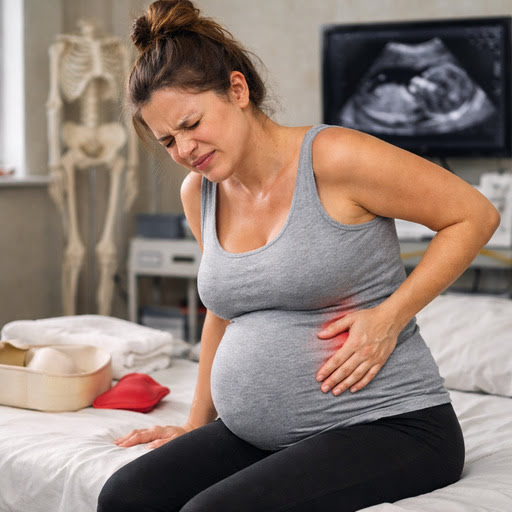
Understanding Round ligament pain symptoms During Pregnancy
Pregnancy is a transformative journey with many physiological changes. For most expectant mothers, these pregnancy-related aches represent a common yet distressing milestone. These sensations typically appear during the second trimester because the body must adapt to the growing fetus. Consequently, this condition often feels like a sharp jab or a dull ache in the lower abdomen. The medical community often uses “Round Ligament Pain” (RLP) as a catch-all term for unexplained discomfort. However, recent research suggests some cases actually relate to the abdominal wall. Therefore, understanding Round ligament pain symptoms helps parents distinguish between normal changes and issues requiring clinical care.
The Clinical Reality of Ligament Pain
During the second trimester, the uterus expands rapidly. Furthermore, the round ligaments support the uterus. These two rope-like bands must stretch and thicken to accommodate the increasing volume. This mechanical stretching primarily drives most abdominal discomfort. These ligaments contract and relax much more slowly than muscle tissue. As a result, sudden movements cause them to pull against sensitive nerve endings. This results in a sharp, stabbing sensation. Although the pain typically lasts only a few seconds, it often startles the patient.
Moreover, recent pilot studies in New Zealand highlight a “void” in scientific literature regarding this condition. Medical carers often cite these conditions without concrete evidence. Research shows that approximately 68.5% of pregnant individuals experience unexplained abdominal pain. Interestingly, 98.6% of these patients use descriptors that overlap with Abdominal Wall Pain (AWP). Consequently, this suggests that many dismissed cases involve complex neurological interactions rather than simple stretching.
Identifying Discomfort and Typical Round ligament pain symptoms
Expectant parents should recognize specific triggers for these sensations. Usually, these issues occur in the lower pelvis or groin. They often appear on the right side. This happens because the enlarging uterus naturally rotates to the right.
Common triggers include:
- Abrupt positional changes: Transitioning from sitting to standing too quickly.
- Nocturnal movements: Rolling over in bed or reaching for objects.
- Abdominal pressure: Sneezing, coughing, or intense laughter.
- Physical exertion: Standing for long hours without rest.
In addition, if a sharp pain disappears immediately after you rest, you likely have standard ligament sensations. This discomfort is a musculoskeletal response to mechanical stress. Importantly, it does not usually arise from internal organs.
Differentiating Ligament Pains from Other Conditions
Obstetrics often labels any non-visceral abdominal discomfort as RLP. However, clinicians now look deeper into the problem. Standard pregnancy cramps can mask other treatable issues. For example, medical teams often under-recognize Abdominal Wall Pain (AWP) and Anterior Cutaneous Nerve Entrapment Syndrome (ACNES). If walking or bending worsens your pain, you might have peripheral nerve irritation instead of standard Round ligament pain symptoms.
Furthermore, scientific inquiry suggests that persistent, localized pain might indicate Pregnancy-Related Abdominal Wall Neuropathy (PRAWN). This condition involves nerve entrapment in the abdominal wall fascia. Distinguishing between a simple spasm and PRAWN is vital. For instance, doctors can treat PRAWN with ultrasound-guided blocks. Conversely, standard Round ligament pain symptoms generally respond best to rest and support.
When to Consult a Provider About Pregnancy Spasms
Most pregnancy spasms are harmless. They show the body’s natural resilience. However, you should not overlook “red flag” indicators. Contact your provider immediately if your Round ligament pain symptoms include:
- Vaginal bleeding: Any unusual spotting or discharge.
- Systemic symptoms: Fever, chills, or persistent malaise.
- Gastrointestinal distress: Nausea and vomiting unrelated to morning sickness.
- Urinary changes: Pain during urination or cloudy urine.
- Unrelenting pain: Discomfort that does not improve after 60 minutes of rest.
Moreover, rhythmic patterns might indicate preterm labor rather than typical Round ligament pain symptoms. Therefore, open communication with your midwife ensures safety. They can address any deviation from the norm promptly.
Exploring Nerve Entrapment
Specialists investigate ACNES when pelvic discomfort becomes chronic. This involves specific nerve entrapment. While experts frequently misidentify this as ligament issues, the cause lies in the abdominal wall rings.
Managing Pelvic Girdle Discomfort
Lower abdominal sensations often pair with pelvic girdle pain (PGP). Consequently, a high-quality maternity support belt can stabilize pelvic joints. This reduces the sharp spasms associated with pregnancy.
The Role of Round Ligament Lipomas
Sometimes, groin pain during pregnancy stems from a round ligament lipoma. These are fat protrusions in the inguinal canal. They can mimic the pulling sensation of pregnancy discomfort. Thus, doctors may use ultrasound to differentiate them from RLP.
Effective Relief for Round ligament pain symptoms
Expectant mothers can use several strategies to alleviate the discomfort of pregnancy. Management focuses on stabilizing the abdomen. This prevents the “snap” caused by rapid ligament contraction.
Relief strategies include:
- Strategic Rest: Horizontal rest immediately alleviates tension on uterine supports.
- Belly Support: A maternity belly band offloads weight from the ligaments.
- Hydrotherapy: A warm bath relaxes connective tissues and soothes the nerves.
- Mindful Transitions: Move slowly when standing to avoid sudden traction.
- Pre-emptive Flexing: Lean forward and support your belly before you sneeze.
Stretching and Exercises for Comfort
Gentle physical activity strengthens core muscles. In addition, it improves pelvic elasticity. This reduces the recurrence of Round ligament pain symptoms. Physical therapists often recommend “pelvic tilts” for daily comfort.
Guide for the pelvic tilt:
- Position yourself on your hands and knees on a soft mat.
- Inhale and let your back flatten while looking forward.
- Exhale and tuck your tailbone to arch your back toward the ceiling.
- Hold the stretch briefly to release localized tension that contributes to Round ligament pain symptoms.
Moreover, practicing prenatal yoga helps the body adjust its center of gravity. This minimizes the mechanical shocks that lead to acute spasms.
Optimal Sleeping Positions and Round ligament pain symptoms
Side-sleeping with a pregnancy pillow between your knees prevents sharp jolts. This alignment reduces lateral strain. Furthermore, it prevents the uneven pulling that worsens Round ligament pain symptoms at night.
Conclusion on Managing Round ligament pain symptoms
While these pregnancy sensations are nearly universal, management requires a nuanced approach. Most instances signal that your body is adapting well to fetal development. However, identifying triggers and using relief techniques help most women navigate this phase.
Medical science is now questioning the traditional reliance on RLP as a generic diagnosis. Understanding the link between pregnancy aches and AWP empowers patients. If your pain feels atypical, share your concerns with your healthcare team. This ensures a safe and comfortable experience.
The following post may interest you
Pneumonia in Babies: Causes, Symptoms, and Treatment
Infant Reflux: Causes, Symptoms, and Treatments
Sources
Lipomas of the Cord and Round Ligament
https://pmc.ncbi.nlm.nih.gov/articles/PMC1422475/pdf/20020400s00018p586.pdf
Spontaneous inflammation and necrosis of the falciform and round ligaments: a case report and review of the literatüre
https://link.springer.com/content/pdf/10.1186/s13256-019-2335-x.pdf
Unexplained abdominal pain in pregnancy and the use of the term ‘Round Ligament Pain’: a single-centre New Zealand pilot cohort study
https://www.researchsquare.com/article/rs-1795986/latest.pdf
Interrogating ‘Round Ligament Pain’ and introducing ‘Pregnancy-Related Abdominal Wall Neuropathy’: a cohort study.
https://www.authorea.com/doi/pdf/10.22541/au.170669458.85667877