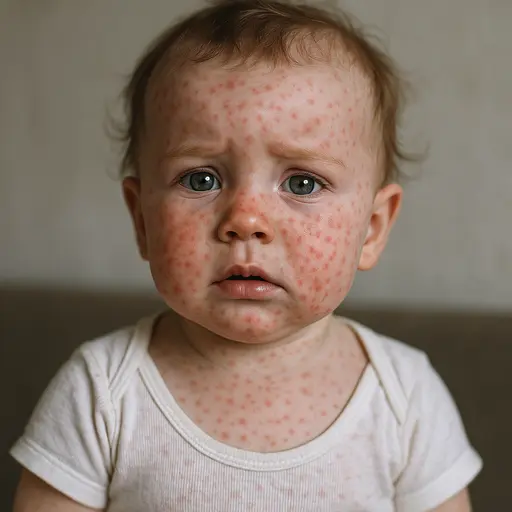
Sixth Disease (Roseola): The Complete Guide for Parents and Caregivers
Sixth Disease (Roseola) is a very common and generally mild viral illness that is a near-universal experience of early childhood. Also known by its medical names, roseola infantum or exanthema subitum (meaning “sudden rash”), this infection is famous for its highly characteristic and dramatic presentation: a sudden, high fever that lasts for several days, followed by an abrupt return to normal temperature and the appearance of a distinctive pinkish-red rash. While the sudden high fever can be alarming for parents, Sixth Disease (Roseola) is typically a self-limiting condition, and understanding its symptoms and progression is key to managing it calmly and effectively. This comprehensive guide will explore every aspect of Sixth Disease (Roseola), from its causes and symptoms to its diagnosis, treatment, and potential complications.
Understanding the Identity of Sixth Disease (Roseola)
What is Sixth Disease (Roseola) in Detail?
Sixth Disease (Roseola) is a benign viral syndrome that primarily affects infants and toddlers. The vast majority of cases (over 90%) occur in children between the ages of 6 months and 2 years, with the peak incidence seen in those between 7 and 13 months old. This timing is not coincidental; it often corresponds to the period when the passive immunity (antibodies) passed from mother to baby begins to wane, leaving the infant susceptible to new infections.
The illness is not considered a major public health threat, but it is a significant cause of febrile illnesses and emergency room visits in infants. In the United States, primary infection with the virus responsible for Sixth Disease (Roseola) is estimated to cause between 10% and 45% of all febrile illnesses in infants. It is so common that nearly all children are believed to have been infected with the virus by the time they enter kindergarten, even if they never showed the classic symptoms.
Why Is It Called “Sixth Disease (Roseola)”?
The name “sixth disease” might seem odd, but it originates from a historical classification system for common childhood rash-causing illnesses (exanthems). In the early 20th century, medical professionals numbered these diseases as they were clinically differentiated:
- First Disease: Measles (Rubeola)
- Second Disease: Scarlet Fever
- Third Disease: Rubella (German Measles)
- Fourth Disease: Dukes’ Disease (a condition no longer widely recognized as distinct)
- Fifth Disease: Erythema Infectiosum (caused by Parvovirus B19, also known as “slapped cheek syndrome”)
- Sixth Disease: Roseola Infantum (Exanthema Subitum)
This historical numbering system is why Sixth Disease (Roseola) carries its numerical name, which remains in common use today.
The Causes and Transmission of Sixth Disease (Roseola)
The Primary Culprit: The Roseola Virus
Sixth Disease (Roseola) is not caused by a single virus but by two closely related members of the human herpesvirus family. It is important to note that these are not the same herpesviruses that cause cold sores (HSV-1) or genital herpes (HSV-2). The viruses responsible for Sixth Disease (Roseola) belong to the Roseolovirus genus.
Human Herpesvirus 6 (HHV-6)
The overwhelming majority of cases of Sixth Disease (Roseola) are caused by Human Herpesvirus 6 (HHV-6). This virus has two main variants, HHV-6A and HHV-6B. Research has definitively identified HHV-6B as the primary cause of roseola infantum in children. Like other herpesviruses (such as chickenpox), HHV-6 establishes a lifelong latent infection after the primary illness resolves, meaning the virus remains dormant in the body’s cells (specifically in lymphocytes and monocytes) and can potentially reactivate later in life, particularly in individuals with severely weakened immune systems.
Human Herpesvirus 7 (HHV-7)
A smaller number of Sixth Disease (Roseola) cases are caused by Human Herpesvirus 7 (HHV-7). HHV-7 is structurally similar to HHV-6 and produces an almost identical clinical illness. Infection with HHV-7 also typically occurs in early childhood, often slightly later than HHV-6.
How Sixth Disease (Roseola) Spreads
Sixth Disease (Roseola) is a contagious illness. The viruses (HHV-6 and HHV-7) are transmitted from person to person, primarily through contact with respiratory secretions or saliva.
- Mode of Transmission: The roseola virus spreads when an infected person talks, coughs, or sneezes, releasing tiny droplets into the air that can be inhaled by others. It can also be spread through direct contact with an infected person’s saliva, such as by sharing cups or utensils, or when a child puts a contaminated toy in their mouth.
- Contagious Period: A crucial aspect of Sixth Disease (Roseola) is its contagious period. A child is most contagious during the high-fever phase, before the characteristic rash appears. This makes prevention extremely difficult, as the child is often spreading the virus before anyone knows they have Sixth Disease (Roseola). Many adults, who were infected as children, can be asymptomatic carriers and shed the virus in their saliva, unknowingly passing it to infants.
- De-escalation of Contagion: Once the fever has been gone for a full 24 hours (even if the rash is present), the child is generally considered no longer contagious.
Understanding the Sixth Disease Incubation Period
The sixth disease incubation period—the time from exposure to the virus to the onset of the first symptoms—is typically between 9 and 10 days. However, it can range anywhere from 5 to 15 days. This long incubation period means a child may have been exposed to the virus at a daycare or playgroup more than a week before the fever suddenly spikes.
Key Symptoms of Sixth Disease (Roseola)
The clinical presentation of Sixth Disease (Roseola) is its most defining feature. It almost always follows a distinct, two-stage pattern.
The Two-Stage Presentation of Sixth Disease (Roseola)
Phase 1: The Sudden High Fever (Sixth Disease Symptoms)
The illness typically begins abruptly with a sudden, high fever.
- Temperature: The fever is often very high, frequently reaching 103°F to 105°F (39.5°C to 40.5°C).
- Duration: This febrile phase lasts for three to five days.
- Child’s Demeanor: Despite the high fever, many infants with Sixth Disease (Roseola) are surprisingly well-appearing, active, and alert. They may be more irritable than usual, but they often do not appear as “sick” as the high temperature would suggest.
- Resolution: After 3-5 days, the fever breaks abruptly. This rapid defervescence (return to normal temperature) is a hallmark of the illness.
Phase 2: The Characteristic Sixth Disease Rash
Within 12 to 24 hours after the fever suddenly subsides, the second stage begins: the appearance of the rash. This sixth disease rash (or roseola infantum rash) has very specific characteristics:
- Appearance: The rash consists of small, pinkish-red spots (macules) or slightly raised bumps (maculopapules). These spots are typically 2-5 mm in diameter.
- Blanching: The rash is blanching, meaning if you press on a spot, it will turn white and then return to its pink-red color when you release the pressure.
- Location: The rash characteristically starts on the trunk (chest, back, and abdomen) and then spreads outwards to the neck, arms, and (less commonly) the face and legs.
- Symptoms: The skin rash roseola is not itchy (non-pruritic) and not uncomfortable. The child is usually no longer febrile and feels much better by the time the rash appears.
- Duration: The rash is often fleeting. It can last anywhere from a few hours to two days before fading away completely. In some mild cases, the rash may be so faint that it is not even noticed.
For parents wanting to compare, searching for sixth disease rash pictures online can be helpful, but it’s important to note the key features: non-itchy, starts on the trunk after the fever is gone, and blanches with pressure.
Other Associated Sixth Disease Symptoms
While fever and rash are the main events, other symptoms can accompany the febrile phase of Sixth Disease (Roseola):
- General Irritability: The child may be fussy or restless, especially during the fever.
- Swollen Lymph Nodes: Mild swelling of the lymph nodes (glands) in the neck (cervical) or behind the ears (post-auricular) is common.
- Mild Respiratory Symptoms: A runny nose, sore throat, or a mild cough may be present.
- Swollen Eyelids: Some children experience mild puffiness around the eyes.
- Decreased Appetite: The child may not want to eat as much as usual.
- Mild Diarrhea: A small percentage of children may have loose stools.
- Nagayama Spots: In some cases, small, reddish spots or ulcers may appear on the soft palate and uvula (the fleshy part at the back of the throat). This is a specific finding associated with exanthema subitum sixth disease.
Diagnosing Sixth Disease (Roseola)
Clinical Diagnosis: The Role of Observation in Sixth Disease (Roseola)
There is no specific rapid test for Sixth Disease (Roseola) performed in a typical clinic setting. The diagnosis is almost always made clinically, based on the classic, tell-tale history of:
- A child in the typical age group (6-24 months).
- A sudden high fever for 3-5 days.
- An abrupt end to the fever.
- The appearance of the characteristic non-itchy, trunk-first rash after the fever has resolved.
Laboratory tests, such as blood work to detect antibodies (serology) or identify the virus (PCR), are available but are rarely necessary. They are typically reserved for atypical cases or for patients who are immunocompromised. During the febrile phase, blood tests might show a decrease in white blood cells (leukopenia), which can be a clue pointing toward a viral infection like Sixth Disease (Roseola).
Differential Diagnosis: Ruling Out Other Rashes
The main challenge in diagnosing Sixth Disease (Roseola) is that during the first few days, it’s just a “fever without a source.” Only when the fever breaks and the rash appears does the diagnosis become clear.
A common scenario is that a parent takes the febrile child to the doctor. The doctor, suspecting a possible bacterial infection, prescribes an antibiotic. By coincidence, the Sixth Disease (Roseola) fever breaks, the rash appears, and the event is mistakenly diagnosed as an allergic reaction (a “drug rash”) to the antibiotic. However, a true antibiotic-allergy rash is typically very itchy (pruritic) and often looks different (more like hives), whereas the sixth disease rash is not itchy.
Other conditions that must be differentiated include:
- Measles (Rubeola): The measles rash starts on the face and spreads down, is accompanied by high fever (not after it), and involves a cough, runny nose, and conjunctivitis (the “3 Cs”), as well as Koplik spots in the mouth.
- Rubella (German Measles): This is a much milder illness with a rash that starts on the face and is accompanied by a low-grade fever.
- Scarlet Fever: This rash is caused by a Streptococcus bacteria, feels like “sandpaper,” and is accompanied by a sore throat and fever.
Medical Coding: Sixth Disease (Roseola) ICD-10
For medical billing and classification purposes, Sixth Disease (Roseola) is coded in the International Classification of Diseases, 10th Revision (ICD-10).
The Sixth disease icd 10 code
The specific sixth disease icd 10 code is B08.2 (Exanthema subitum [sixth disease]). This code ensures that public health records and medical charts accurately reflect the diagnosis.
Sixth Disease (Roseola) Treatment and Management
Home Care for Sixth Disease (Roseola)
Since Sixth Disease (Roseola) is a viral infection, antibiotics are not effective and are not used. There is no specific antiviral medication recommended for otherwise healthy children. The sixth disease treatment is entirely supportive, focusing on comfort and safety.
Managing Fever (Roseola Treatment)
The primary goal during the febrile phase is to manage the fever and prevent dehydration.
- Antipyretics: Use over-the-counter fever reducers such as acetaminophen (e.g., Tylenol) or ibuprofen (e.g., Advil, Motrin) as directed for your child’s age and weight. Never give aspirin to a child due to the risk of Reye’s syndrome, a rare but serious condition.
- Lukewarm Bath: A lukewarm sponge bath can help bring the temperature down. Avoid cold water, as this can cause shivering, which actually raises the body’s core temperature.
- Light Clothing: Dress your child in light, breathable clothing and avoid heavy blankets.
Hydration and Comfort (Roseola Infantum Treatment)
- Encourage Fluids: Offer plenty of fluids, such as water, breast milk, formula, or oral rehydration solutions (like Pedialyte) to prevent dehydration.
- Rest: Allow the child to rest as much as they need.
- Rash Care: The roseola infantum rash requires no treatment. It will fade on its own without creams or lotions and does not cause discomfort.
Is There a Sixth Disease Vaccine?
A common question from parents is whether the illness can be prevented.
The status of a Sixth disease vaccine
Currently, there is no Sixth disease vaccine available to protect against HHV-6 or HHV-7. Because the illness is so common and typically very mild, it has not been a high-priority target for vaccine development, unlike more dangerous diseases like measles.
When to See a Doctor for Sixth Disease (Roseola)
While most cases of Sixth Disease (Roseola) are harmless, you should contact your healthcare provider in the following situations:
- Your child has a fever of 103°F (39.4°C) or higher that doesn’t respond to fever-reducing medication.
- Your child is lethargic, difficult to wake, or seems very ill.
- The fever lasts for more than five days.
- The rash lasts for more than three days or appears to be itchy or painful.
- Your child shows signs of dehydration (e.g., no wet diapers for 6-8 hours, dry mouth, no tears when crying).
- Your child has a weakened immune system (e.g., due to chemotherapy or an immune disorder) and is exposed to or develops symptoms of Sixth Disease (Roseola).
- Your child has a febrile seizure (see below).
Complications and Prognosis of Sixth Disease (Roseola)
The Most Common Complication: Febrile Seizures
The most common complication of Sixth Disease (Roseola) is a febrile seizure (or convulsion). This occurs in approximately 10% to 15% of children with the illness.
- Cause: Febrile seizures are triggered by the rapid spike in body temperature, not by the virus itself infecting the brain.
- Symptoms: During a febrile seizure, a child may lose consciousness, and their arms or legs may twitch or jerk. The seizure typically lasts for a few minutes.
- What to do: While terrifying for parents to witness, febrile seizures are almost always harmless and do not cause brain damage or lead to epilepsy. If your child has a seizure, lay them on their side on a safe surface (like the floor), do not put anything in their mouth, and time the seizure. You should seek immediate medical evaluation after your child’s first febrile seizure to rule out other, more serious causes.
Rare Complications in Immunocompromised Patients
For the vast majority of healthy children, the prognosis for Sixth Disease (Roseola) is excellent, with a full recovery.
However, in severely immunocompromised patients (such as children who have had an organ transplant or are undergoing cancer treatment), the primary HHV-6 infection or a reactivation of the latent virus can be very serious. In these rare cases, complications can include encephalitis (inflammation of the brain), pneumonia, or hepatitis (inflammation of the liver). This population requires close medical supervision if infected.
Prognosis for Infantum Roseola
For the average child, infantum roseola is a once-in-a-lifetime, mild illness. Once they have had Sixth Disease (Roseola), they develop lifelong immunity to that specific virus. Since there are two viruses that can cause it (HHV-6B and HHV-7), it is technically possible to have two separate, similar illnesses, but this is rare. The illness resolves completely, leaving no scars or long-term effects.
Navigating Information on Sixth Disease (Roseola)
Using Resources like Sixth Disease Dermnet
When parents search for information about their child’s rash, they often encounter medical websites. Resources like Sixth Disease Dermnet (DermNet New Zealand) are valuable for providing clinical images and descriptions of skin conditions. These sites confirm the dermatological presentation of Sixth Disease (Roseola): a non-pruritic, maculopapular exanthem that follows a high fever. Using such reputable sources can help parents differentiate this benign rash from more serious, itchy, or persistent skin conditions.
Understanding Roseola Infantum Sixth Disease
The terms roseola infantum sixth disease are often used interchangeably, and this is correct. They all refer to the same clinical syndrome. Whether your doctor calls it Sixth Disease (Roseola), roseola infantum, or exanthema subitum, they are all describing this classic fever-then-rash illness of infancy. The term sixths disease is also a common colloquial spelling.
Frequently Asked Questions
What is sixth disease?
Sixth Disease (Roseola), also known as roseola infantum or exanthema subitum, is a very common viral illness that primarily affects infants and young children, typically between 6 months and 2 years of age. It is famously characterized by a classic two-stage presentation. The illness begins with a sudden, very high fever that lasts for three to five days, which then disappears abruptly, and is immediately followed by a distinctive pinkish-red rash.
Can adults get sixth disease?
It is extremely rare for an adult to get Sixth Disease (Roseola) as a primary infection. This is because more than 95% of the population is infected with the causative virus (HHV-6) by adulthood, providing lifelong immunity. An adult who somehow avoided infection in childhood could theoretically get it, but it’s highly unlikely. More commonly, an adult might experience a reactivation of the latent HHV-6 virus if their immune system becomes severely compromised, which can present as a fever and rash.
Why roseola infantum called sixth disease?
It is called “sixth disease” because of its place on a historical list of the six most common childhood rash-causing illnesses. This list was standardized by pediatricians in the early 20th century to help differentiate these infections clinically. The list included measles as the first disease, scarlet fever as the second, rubella as the third, and roseola infantum as the sixth disease.
What is the sixth disease caused by?
Sixth Disease (Roseola) is caused by a virus, specifically a member of the human herpesvirus family. The vast majority of cases (over 90%) are caused by Human Herpesvirus 6 (HHV-6), particularly the HHV-6B variant. A smaller number of cases are caused by the closely related Human Herpesvirus 7 (HHV-7). These are not the same viruses that cause cold sores or genital herpes.
How do you get rid of roseola fast?
You cannot “get rid of” Sixth Disease (Roseola) fast, as it is a viral infection that must run its course. There is no specific cure, vaccine, or antiviral medicine for it. The roseola treatment is focused on supportive care: managing the fever with acetaminophen or ibuprofen, ensuring the child drinks plenty of fluids to stay hydrated, and allowing them to rest. The illness is self-limiting and will resolve on its own in about a week.
Is roseola serious?
For most healthy children, Sixth Disease (Roseola) is not serious. It is a mild, self-limiting illness that resolves completely without any long-term problems. The most common complication is a febrile seizure, which is caused by the rapid rise in temperature; while scary, these seizures are typically harmless. The illness can be serious, however, for children or adults who are severely immunocompromised, as the virus can cause severe complications like encephalitis or pneumonia in this group.
how long does roseola rash last? The sixth disease rash is typically very brief. It usually appears 12-24 hours after the high fever has completely disappeared. The rash itself generally lasts for one to two days. In some children, it can be so fleeting that it fades within just a few hours and may not even be noticed.
is roseola contagious?
Yes, Sixth Disease (Roseola) is contagious. The virus spreads through the saliva and respiratory droplets of an infected person. A child is most contagious during the 3-5 day fever phase, before the rash appears. Once the fever has been gone for 24 hours, the child is generally considered no longer contagious, even if the rash is still present.
The following post may interest you
Pink Eye (Conjunctivitis): Symptoms, Causes & Treatment
Sources
Roseola infantum and other syndromes associated with acute HHV6 infection
https://adc.bmj.com/content/65/12/1297.short
Roseola Infantum
https://pmc.ncbi.nlm.nih.gov/articles/PMC2061730
Exanthem subitum (roseola infantum) misdiagnosed as measles or rubella
https://pmc.ncbi.nlm.nih.gov/articles/PMC2349746
Evaluation of Roseola Infantum Cases in Terms of Demographic Properties and Laboratory Values
https://www.proquest.com/openview/a3c5e7964ebebd27f60252a27965b038/1?pq-origsite=gscholar&cbl=106060
Measles and rubella misdiagnosed in infants as exanthem subitum (roseola infantum)