The Ultimate Guide to Homemade Sweet Potato Puree
There is nothing quite as comforting and versatile in the kitchen as a batch of silky smooth puree. Whether you are looking for the perfect first food for your infant or a sophisticated side dish for a holiday dinner, this vibrant orange root vegetable delivers on all fronts. This guide will teach you how to make sweet potato puree that is creamy, naturally sweet, and packed with essential nutrients. While there are countless recipes with sweet potatoes, mastering the basic recipe is the foundation for everything from baby food to a fancy side dish fit for a dinner party.
Why This Sweet Potato Puree Recipe is Perfect for Your Baby
For many parents, navigating the world of solids can be daunting, but a simple sweet potato recipe is often the best place to start. Sweet potatoes are naturally sweet, which makes them palatable to babies who are used to the sweetness of breast milk or formula. Unlike store-bought versions, making your own batches at home ensures there are no added preservatives or sugars—just the pure goodness of the vegetable.
Health Benefits of Sweet Potato Pure
Sweet potatoes are a nutritional powerhouse. They are incredibly rich in beta-carotene, which the body converts into Vitamin A, essential for your baby’s developing eyesight and immune system. Additionally, they are a great source of fiber, which aids in healthy digestion. A single serving of sweet potato puree can provide a significant portion of a child’s daily nutritional needs, making it a “superfood” in the world of baby weaning.
Age Recommendation
You might be wondering when to introduce this dish. Generally, sweet potatoes are recommended as a Stage 1 food, suitable for babies around 4 to 6 months old. Because of their soft texture and low allergen risk, they are an ideal starter solid. As your baby grows into Stage 2 (6-8 months), you can make the texture slightly chunkier or mix it with other sweet potatoes recipes like apple or carrot blends.
How to Make Sweet Potato Puree: Methods and Techniques
Creating the perfect puree depends on your cooking method. While you can boil or steam them, roasting brings out the natural sugars, resulting in a richer flavor profile.
- Roasting (Recommended): Preheat your oven to 400°F (200°C). Prick washed sweet potatoes with a fork and roast for 45-60 minutes until tender. Peel the skin (it should look wrinkly) and blend.
- Boiling: Peel and cube the potatoes. Boil in water until fork-tender. This method is faster but may result in a less intense flavor.
- Steaming: Keeps the most nutrients intact. Steam cubed potatoes for about 15 minutes.
For a unique twist, you can try using Japanese sweet potatoes, which offer a chestnut-like flavor and a dryer, fluffier texture compared to the standard orange variety. This variety is also a wonderful option if you want to introduce different flavor profiles early on.
Elevating the Dish: Fine Dining Style
If you aren’t cooking for a baby, you can transform this humble dish into fine dining quality. To achieve a Michelin-quality texture, pass the cooked potatoes through a tamis or fine-mesh sieve to remove any fibrous strings. Mount it with high-quality butter and a splash of heavy cream. This technique creates a fancy puree that pairs beautifully with roasted meats or scallops.
Storage & Freezing: A Guide for Busy Moms
One of the biggest advantages of sweet potato recipes is how well they store. Batch cooking is a lifesaver for parents.
- Refrigeration: Store the puree in an airtight container in the fridge for up to 3-4 days.
- Freezing: This is key for meal prep. Spoon the cooled puree into an ice cube tray. Once frozen, pop the cubes out and store them in a freezer-safe bag. This allows you to defrost small, single-serving portions as needed.
- Thawing: Thaw a cube in the refrigerator overnight or gently warm it on the stovetop.
Sweet Potatoes Recipes and Variations
Once you have mastered the base, you can expand into other recipe with sweet potato ideas. Mix the puree with maple syrup and ginger for a side dish, or use it as a base for sweet potatoes recipe baking, like muffins or pies. The versatility of sweet potatoes means you are never limited to just one style of serving.
Frequently Asked Questions
How long does the puree last?
The homemade puree typically lasts for 3 to 4 days when stored in an airtight container in the refrigerator. It is important to let the puree cool completely before sealing the container to prevent bacterial growth. If you notice any sour smell or discoloration, discard it immediately.
Can you freeze sweet potato puree?
Yes, you absolutely can freeze it, and it freezes very well. For the best results, portion the puree into silicone ice cube trays or small freezer-safe jars. Once frozen solid, the cubes can be transferred to a freezer bag for up to 3 months, making it incredibly convenient for quick meals.
The following post may interest you
What Are the Best First Foods for a Baby: A Comprehensive Guide
Infant Nutrition Guidelines: Essential Advice for Healthy Growth
How to Increase a Baby’s Appetite – Proven Tips for Parents
Source
Extend the emphasis to encompass sweet potatoes health advantages, industrial applications, and nutritional qualities
https://www.tandfonline.com/doi/full/10.1080/19476337.2024.2390994
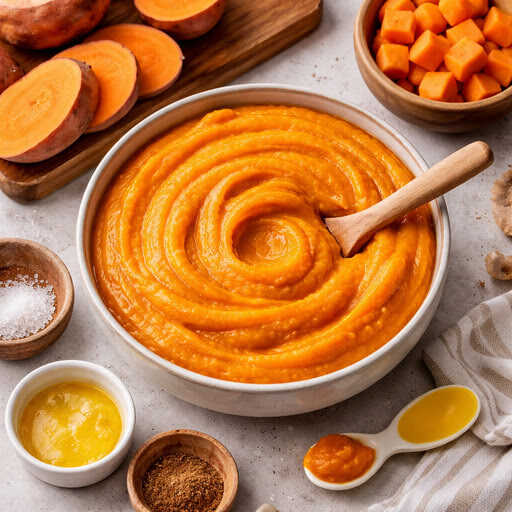
Ingredients
- 2 large sweet potatoes (orange-fleshed varieties like Garnet or Jewel are best)
- Optional: Breast milk, formula, or water (to adjust consistency for babies)
- Optional: A pinch of cinnamon (for babies 6+ months) or a drizzle of olive oil (if roasting skins-on)
Instructions
-
Preheat and Prep: Preheat your oven to 400°F (200°C). Line a baking sheet with parchment paper or foil for easy cleanup.
-
Clean the Potatoes: Scrub the sweet potatoes thoroughly under cold running water to remove any dirt. Pat them dry with a paper towel.
-
Poke Holes: Using a fork, prick holes all over the sweet potatoes (about 4-5 times each). This allows steam to escape and prevents them from exploding in the oven.
-
Roast: Place the sweet potatoes on the baking sheet. Roast for 45 to 60 minutes, or until they are very tender and a knife slides into the center with no resistance. The skin should look wrinkly.
-
Cool and Peel: Remove from the oven and let them cool for at least 10-15 minutes until they are safe to handle. Peel off the skin; it should slip off easily. Discard the skins.
-
Puree: Place the cooked sweet potato flesh into a food processor or high-speed blender. Blend until completely smooth.
-
Adjust Consistency: If the puree is too thick for your baby, add water, breast milk, or formula, one tablespoon at a time, blending until you reach the desired consistency.
-
Serve or Store: Serve lukewarm or store for later use.
Notes
Age Recommendation: This is a Stage 1 food, generally suitable for babies 4-6 months and older. Always consult your pediatrician before introducing solids. Storage: Store in an airtight container in the refrigerator for up to 3-4 days. Freezing: Spoon the puree into silicone ice cube trays. Once frozen solid, transfer the cubes to a freezer-safe bag. Keep frozen for up to 3 months. Thaw overnight in the fridge. Why Roast? Roasting caramelizes the natural sugars in the sweet potato, making the puree much more flavorful compared to boiling or steaming. Nutrition: Sweet potatoes are rich in Beta-carotene (Vitamin A), fiber, and potassium.