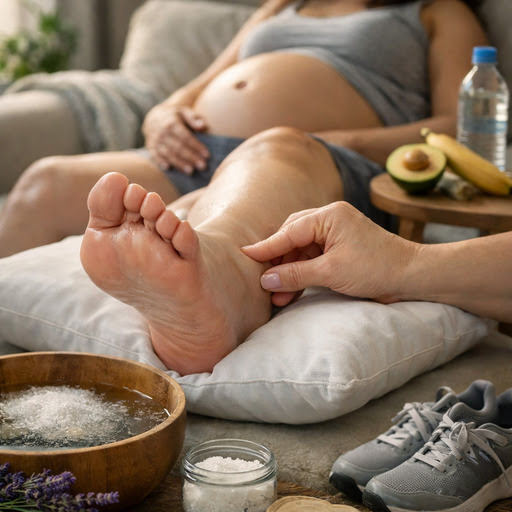
Comprehensive Guide to Swollen feet during pregnancy
Pregnancy is a remarkable journey characterized by profound physiological and psychological transformations. Among the various changes an expectant person undergoes, one of the most frequently reported and visually evident discomforts is Swollen feet during pregnancy. Statistically, nearly 80% of pregnant people encounter some degree of edema, a condition where excess fluid gathers in the body’s tissues. While this puffiness is typically a normal biological response to the demands of supporting a developing fetus, it can lead to significant physical discomfort, a feeling of heaviness in the limbs, and reduced mobility. Understanding the biological triggers and implementing evidence-based management strategies is crucial for ensuring a comfortable and healthy experience throughout the gestational period.
Understanding the Physiology of Swollen feet during pregnancy
The onset of Swollen feet during pregnancy is not a random occurrence but rather the result of complex biological processes. As the body prepares to nourish a new life, it undergoes a massive expansion in total fluid volume. To sustain both the pregnant person and the growing baby, the total blood volume increases by approximately 50%. This surge in fluid, combined with the relaxing effect of hormones on the walls of the blood vessels, makes it easier for liquid to leak into the surrounding tissues, particularly in the lower extremities due to the relentless pull of gravity.
The Impact of Relaxin and Structural Changes
During gestation, the endocrine system releases a specific hormone known as relaxin. As the name suggests, its primary function is to prepare the body for birth by relaxing the ligaments in the pelvis. However, relaxin is not site-specific; it also affects the connective tissues and ligaments in the feet. This leads to a loosening of the foot’s structural integrity, often causing the arches to flatten and the feet to widen. These structural shifts, when paired with the additional weight of the growing womb, significantly exacerbate the occurrence of Swollen feet during pregnancy. People often find that their shoes no longer fit, not just because of fluid, but because their foot structure has physically altered to accommodate the shift in center of gravity.
Pressure on the Venous System
Another critical factor in the development of Swollen feet during pregnancy is mechanical pressure. As the uterus expands, it begins to press against the inferior vena cava, which is the large vein responsible for transporting blood from the lower half of the body back to the heart. This compression acts like a bottleneck, slowing down the return of blood and causing it to pool in the legs and ankles. This vascular congestion forces fluid out of the capillaries and into the interstitial spaces, resulting in the characteristic swelling that many people notice primarily toward the end of a long day.
Identifying the Symptoms of Swollen feet during pregnancy
Distinguishing between normal physiological changes and potential medical concerns is a vital skill for any pregnant person. Normal Swollen feet during pregnancy typically manifests as a gradual puffiness that fluctuates based on activity levels and environmental temperature.
- Pitting Edema: A common way to assess the severity is through the “pitting” test. If you press your thumb into the swollen skin for a few seconds and a persistent indentation remains, this is known as pitting edema.
- Bilateral Presentation: Physiological swelling usually occurs symmetrically in both feet and ankles.
- Diurnal Variation: Most people find that Swollen feet during pregnancy are most pronounced in the evening or after standing for several hours, and often improve significantly after a night of horizontal rest.
Best Ways to Overcome Swollen feet during pregnancy
Managing the discomfort associated with Swollen feet during pregnancy requires a holistic approach that integrates dietary habits, physical therapy, and lifestyle adjustments. By following research-backed methods, most people can find substantial relief without the need for pharmacological intervention.
1. The Therapeutic Benefits of Saltwater Soaks
Scientific research has highlighted the effectiveness of soaking the feet in warm salt water to reduce the degree of edema. Immersing the lower legs in a mixture of warm water and Epsom salts (magnesium sulfate) for 15 to 20 minutes can work wonders. The warmth of the water encourages vasodilation, which improves blood flow, while the magnesium in the salt may help soothe tired muscles and draw out excess fluid through osmotic pressure. This simple, cost-effective remedy is one of the most recommended ways to alleviate the heaviness of Swollen feet during pregnancy.
2. The Hydration Paradox
It may seem counter-intuitive to drink more liquid when your body feels like it is holding too much, but increased water intake is a primary defense against Swollen feet during pregnancy. When the body detects a state of mild dehydration, it triggers a survival mechanism to retain as much fluid as possible. By consistently drinking about 10 cups (2.3 liters) of water daily, you signal to your system that there is an abundance of fluid, which encourages the kidneys to flush out excess sodium and waste products. Proper hydration keeps the circulatory system moving efficiently and prevents the “pooling” effect.
3. Physics-Based Relief: Elevation and Positioning
To combat the effects of gravity on Swollen feet during pregnancy, one must utilize the principles of elevation. Raising the feet above the level of the heart for 20-minute intervals several times a day allows the accumulated fluid to drain naturally back toward the torso.
Optimizing Sleep Positions
Furthermore, the position in which a pregnant person sleeps can influence the degree of swelling. Sleeping on the left side is the gold standard during the second and third trimesters. This specific position prevents the heavy uterus from compressing the inferior vena cava, thereby ensuring an unobstructed path for blood to return to the heart. Utilizing a body pillow to support the legs can further enhance this effect and reduce the morning onset of Swollen feet during pregnancy.
4. Active Management and Foot Exercises
Staying mobile is essential for vascular health. Even when feeling fatigued, performing simple foot and ankle exercises can stimulate the “calf pump” mechanism.
- Ankle Circles: Rotate the ankles 10 times in each direction while sitting.
- Point and Flex: Stretch the toes toward the shins and then point them away 30 times. These rhythmic contractions help move fluid through the lymphatic and venous systems, preventing the stagnation that leads to severe Swollen feet during pregnancy.
5. Nutritional Support and Potassium Balance
Dietary choices significantly impact fluid dynamics. To minimize Swollen feet during pregnancy, individuals should focus on reducing sodium and caffeine intake. High salt levels lead to immediate water retention, while caffeine can act as a stressor on the circulatory system.
On the other hand, potassium-rich foods are highly beneficial because potassium helps the body maintain a healthy sodium-to-water ratio. Integrating the following into your daily meals can help balance your internal environment:
- Bananas and Avocados: Excellent sources of natural potassium.
- Spinach and Leafy Greens: Help with overall mineral balance.
- Yogurt and Salmon: Provide essential proteins and electrolytes that support healthy blood pressure.
Scientific Insights into Skin Thickness and Edema
Modern medicine has introduced tools like portable ultrasonography to measure skin thickness in the lower legs accurately. Studies have shown that the dermal and subcutaneous layers are significantly thicker in people experiencing Swollen feet during pregnancy compared to those who are not pregnant. Interestingly, research indicates that heavier people or those in higher-weight bodies tend to experience a more dramatic increase in skin thickness and fluid volume, suggesting that body mass index (BMI) plays a role in the severity of edema. These scientific findings underscore the importance of individualized care plans and early monitoring to manage the symptoms effectively.
When Swollen feet during pregnancy Becomes a Medical Concern
While the majority of cases are harmless, it is vital to know when Swollen feet during pregnancy signals a more dangerous underlying condition like preeclampsia. This condition involves a sudden rise in blood pressure and can be life-threatening if ignored. You should seek urgent medical advice if you notice any of the following “red flag” symptoms:
- A sudden and extreme increase in swelling, especially in the face, hands, or around the eyes.
- A persistent, severe headache that does not respond to rest.
- Visual disturbances, such as blurred vision or seeing flashing lights.
- Severe pain located just below the ribs on the right side.
- Significant swelling that occurs in only one leg, which could indicate a deep vein thrombosis (DVT).
Choosing Supportive Footwear and Compression
The clothes you wear can either help or hinder your circulation. For anyone dealing with Swollen feet during pregnancy, it is wise to avoid tight socks or bands that create a “tourniquet” effect. Instead, consider graduated compression stockings (15-20 mmHg). These specialized socks apply the most pressure at the ankle and gradually decrease it further up the leg, physically assisting the veins in moving blood upward. Additionally, investing in shoes with proper arch support and breathable mesh materials can provide the necessary room for feet to expand without causing painful friction or ingrown toenails.
Conclusion: Emphasizing Comfort and Care
In summary, managing Swollen feet during pregnancy is a vital aspect of prenatal self-care. By understanding that this condition is a result of hormonal shifts, increased fluid volume, and mechanical pressure, pregnant people can take proactive steps to minimize their discomfort. Through a combination of proper hydration, saltwater soaks, and regular elevation, the physical burden of edema can be greatly reduced.
As you navigate the final trimesters, remember to listen to your body’s signals and prioritize rest. While the structural changes and fluid retention of Swollen feet during pregnancy are usually temporary, the care you take now ensures a smoother recovery after the birth. Always keep a close line of communication with your healthcare team to ensure that your swelling remains within the normal physiological range for a safe and healthy pregnancy journey.
The following posts may interest you
Taking Medicine During Pregnancy: Safe Practices and Guidelines
Foods to avoid during pregnancy: A Complete Safety Guide
Sources
Dimensional changes of the feet in pregnancy
https://www.uvm.edu/~istokes/pdfs/footdim.pdf
The Effectiveness of Soaking the Feet in Salt Water to Reduce the Degree of Edema in Pregnant People Trimester
https://journal.stikep-ppnijabar.ac.id/index.php/jkk/article/download/347/217
A Quantitative Method to Measure Skin Thickness in Leg Edema in Pregnant People U
https://pmc.ncbi.nlm.nih.gov/articles/PMC6327782/pdf/medscimonit-25-1.pdf