- Comprehensive Guide to Umbilical Cord Infection (Omphalitis) in Newborns
- Understanding the Umbilical Cord and the Healing Process
- Normal vs Infected Umbilical Cord: How to Spot the Difference
- Symptoms
- Causes
- Risk Factors
- Diagnosis
- Complications
- Treatment
- Prevention
- Umbilical Cord Infection (Omphalitis) vs. Umbilical Granuloma
- Summary
- Frequently Asked Questions
- Scientific Sources
Comprehensive Guide to Umbilical Cord Infection (Omphalitis) in Newborns
Bringing a newborn home is a time of immense joy and discovery, but it also comes with a heightened sense of responsibility regarding the infant’s health. One of the first areas of care that parents must navigate is the healing of the umbilical cord of newborn. While this process is typically natural and uneventful, complications can arise. The most significant of these is Umbilical Cord Infection (Omphalitis). Understanding this condition is vital because, although it is relatively rare in developed nations—affecting approximately 1 in 200 newborns—it requires immediate medical attention to prevent serious complications. Umbilical Cord Infection (Omphalitis) occurs when bacteria invade the umbilical stump, turning a normal healing process into a potential medical emergency. This guide will provide an in-depth look at Umbilical Cord Infection (Omphalitis), covering everything from normal vs infected umbilical cord distinctions to effective umbilical stump care.
The journey of the umbilical cord from a vital lifeline to a detached stump is a fascinating physiological process. However, this transition period creates a temporary vulnerability in the newborn’s defense system. The umbilical stump serves as a potential entry point for pathogens until it is completely healed and epithelialized. In regions with advanced healthcare and sterile delivery practices, the incidence is low, estimated at less than 1%. However, in community settings or developing regions where hygienic practices vary, the rate can be significantly higher. Regardless of the setting, early detection remains the cornerstone of successful management. By educating themselves on the subtle and overt signs of infection, parents can act as the first line of defense for their children.
Understanding the Umbilical Cord and the Healing Process
To truly understand Umbilical Cord Infection (Omphalitis), one must first appreciate the role and lifecycle of the umbilical cord itself. During pregnancy, the umbilical cord is the lifeline connecting the fetus to the placenta, delivering essential nutrients and oxygen while removing waste products. Structurally, it contains one vein, which carries oxygenated blood to the fetus, and two arteries, which return deoxygenated blood to the placenta. These vessels are surrounded by a gelatinous substance called Wharton’s jelly, which protects them from compression.
After birth, this cord is clamped and cut, leaving behind a small stump. This stump is destined to dry up and fall off, usually within one to three weeks. The process of separation is mediated by the infiltration of leukocytes (white blood cells) at the base of the cord, which facilitate the detachment of the necrotic tissue. This is a form of “dry gangrene,” a sterile and natural process where the tissue loses its blood supply, shrivels, turns black, and eventually detaches.
The term omphalos is the Greek word for navel, which gives us the medical prefix omphalo used in various conditions affecting the belly button. In a healthy scenario, the stump goes through this process of dry gangrene without issue. However, this necrotic tissue serves as an excellent medium for bacterial growth. If the bacterial load becomes too high or if pathogenic bacteria are introduced due to poor hygiene or environmental factors, the delicate balance tips from colonization to infection. This is when newborn umbilical cord infection can develop.
Parents often ask what to do after umbilical cord falls off. Once the stump detaches, there may be a small raw spot or a tiny amount of blood, which typically heals quickly over a few days. Proper umbilical cord care involves keeping this area clean and dry to promote epithelialization (skin growth) over the site. However, if bacteria infiltrate the stump before or just after it falls off, Umbilical Cord Infection (Omphalitis) can occur. It is important to note that the umbilical vessels inside the abdomen may remain patent (open) for a short period even after the external cord has dried, providing a direct highway for bacteria to travel from the skin surface to the internal organs if infection sets in.
Normal vs Infected Umbilical Cord: How to Spot the Difference
Distinguishing between a normal vs infected umbilical cord is one of the most stressful tasks for new parents. The natural decomposition of the cord tissue can sometimes mimic signs of infection, leading to unnecessary anxiety. It is common for a healing stump to look a bit “gooey” or have a slight, musky odor as it decomposes. This does not necessarily mean there is an infected umbilical cord.
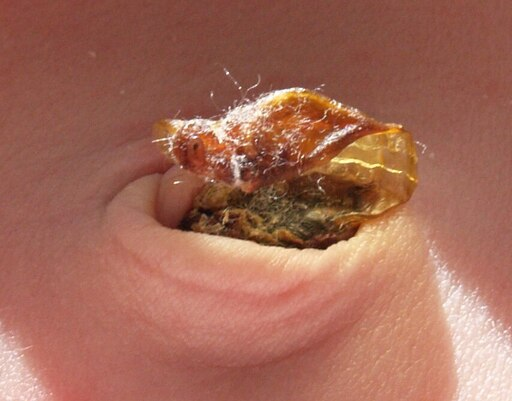
A normal umbilical cord stump will undergo a predictable color change. It starts as a translucent yellow-green immediately after birth, then transitions to brown, and finally becomes hard and black as it desiccates. It should feel dry and firm to the touch, much like a scab. In contrast, an infected umbilical cord will often appear moist, red, and angry. Parents searching for umbilical cord infection pictures online will often see images showing distinct redness spreading from the base of the stump onto the abdominal skin, which is the most critical differentiator.
Characteristics of a Normal Stump:
- Appearance: Shriveled, dark (brown or black), and progressively drying out. It may look like a dried grape or raisin.
- Odor: Minimal to no odor. A very faint smell of decaying tissue can be normal if one gets very close, but it should not be overpowering or fill the room.
- Skin: The skin surrounding the base of the stump (the peri-umbilical skin) is the normal color of the baby’s abdomen. There is no ring of redness.
- Discharge: Little to no discharge; perhaps a tiny amount of clear or dried mucus at the base where it separates.
- Sensation: The baby does not show signs of pain when the cord is touched or cleaned (remember, the stump has no nerve endings, but the surrounding skin does).
Characteristics of Umbilical Cord Infection (Omphalitis):
- Appearance: The stump may look swollen, hypertrophic, or fail to dry properly. It may appear persistently wet or slimy rather than dry and gangrenous.
- Odor: A distinct, foul-smelling odor is a hallmark of infected umbilical cord newborn issues. This smell is often described as rotting or purulent and is noticeable without needing to get very close.
- Skin: Redness (erythema) that spreads outward from the navel is a critical warning sign. If the redness extends more than 5mm from the base of the stump, it is highly suggestive of significant infection.
- Discharge: Pus or purulent discharge (yellow, green, or white fluid) oozing from the base of the stump or the navel itself.
- Sensation: The area is tender. The baby may cry, pull away, or grimace when the area around the cord is touched, cleaned, or even when a diaper rubs against it.
If you suspect an infected umbilicus in newborn, it is always safer to consult a pediatrician immediately than to “wait and see,” as omphalitis newborn cases can escalate from a local skin infection to a systemic issue with alarming speed.
Symptoms of Umbilical Cord Infection (Omphalitis)
Recognizing the Symptoms of Umbilical Cord Infection (Omphalitis) early is the key to effective treatment and preventing long-term damage. The infection is essentially a cellulitis (skin infection) of the abdominal wall that originates at the umbilicus. Omphalitis newborn symptoms can range from mild local inflammation in the early stages to severe systemic signs as the infection progresses.
Local Symptoms
The earliest signs are usually localized to the immediate belly button area and are often detected during diaper changes or baths:
- Redness and Swelling (Erythema and Edema): The primary indicator of Umbilical Cord Infection (Omphalitis) is redness around the umbilical stump. Unlike the mild irritation from a diaper or friction, this redness feels warm to the touch and involves the deeper tissues. The swelling may make the navel area look protruded or puffy.
- Foul Discharge: An infected umbilical cord often produces frank pus. This discharge is different from the scant serous (clear) fluid seen in normal separation. It can be foul-smelling and may be yellow, green, or even bloody. Continuous bleeding that doesn’t stop with gentle pressure can also be a sign of infection or a clotting disorder.
- Tenderness and Pain: The skin around the umbilicus is rich in nerve endings. If the infection has caused inflammation in the surrounding skin, the baby will exhibit signs of pain. This might manifest as crying during cord care or arching the back when the abdomen is touched.
- Delayed Separation: While not always a sign of infection, a cord that stays attached significantly longer than three weeks (delayed cord separation) can sometimes be associated with underlying immunological issues (like Leukocyte Adhesion Deficiency) or low-grade infection that prevents normal detachment processes.
Systemic Symptoms
If the Umbilical Cord Infection (Omphalitis) spreads beyond the local tissue, the baby may exhibit systemic signs of illness. These are dangerous red flags indicating that the bacteria may have entered the bloodstream (sepsis) and require emergency care:
- Fever: A rectal temperature of 100.4°F (38°C) or higher is a major warning sign in any newborn. Conversely, in some severe cases, especially in premature infants, the temperature may drop (hypothermia) rather than rise.
- Lethargy: The baby appears unusually sleepy, floppy, “out of it,” or is difficult to wake for feeds. There is a noticeable decrease in activity levels.
- Poor Feeding: The infant may refuse to breastfeed or take a bottle, or may tire very easily during feeding.
- Irritability: Inconsolable crying, fussiness, or a high-pitched cry that is different from their normal hunger cry.
- Abdominal Distension: The belly may look swollen, tight, or shiny, indicating that the infection might have spread to the abdominal lining (peritonitis).
When researching newborn belly button infection, parents must understand that these systemic symptoms suggest the bacteria may have entered the bloodstream, leading to sepsis. Umbilical Cord Infection (Omphalitis) is not a condition that can be treated with home remedies alone once it has advanced to this stage; it requires hospital-based intervention.
Causes of Umbilical Cord Infection (Omphalitis)
The Causes of Umbilical Cord Infection (Omphalitis) are primarily bacterial, though the environment plays a massive role in whether these bacteria thrive. The umbilical stump is necrotic (dead) tissue, which makes it an ideal culture medium for bacteria if not kept clean and dry. In a sterile environment, the risk is low, but various factors can introduce pathogens.
Bacterial Culprits
The infection is often polymicrobial, meaning multiple types of bacteria are involved. The most common bacteria responsible for Umbilical Cord Infection (Omphalitis) include:
- Staphylococcus aureus: This is the most common pathogen involved. It is a skin bacterium that can cause severe infection if it invades open wounds. Methicillin-resistant Staphylococcus aureus (MRSA) is an increasing concern in hospital settings.
- Streptococcus species: Including Group A Streptococcus and Group B Streptococcus, which are known for causing rapidly spreading infections.
- Escherichia coli (E. coli) and other Gram-negative bacteria: These are often associated with fecal contamination from diapers, as the umbilicus is in close proximity to the diaper area. Klebsiella pneumoniae and Pseudomonas aeruginosa are other examples.
- Anaerobes: Such as Clostridium species (including the bacteria that causes tetanus) and Bacteroides fragilis. These are particularly dangerous and are more common in environments where unsterile tools or traditional practices (like applying cow dung or ash) are used.
Pathophysiology
To understand why this infection is so dangerous, one must look at the anatomy. The omphalo region has direct access to the bloodstream via the umbilical vessels. Even after the cord is cut, the umbilical vein and arteries remain patent (open) internally for a short period. The umbilical vein connects directly to the portal venous system of the liver. If bacteria colonize the stump and invade the surrounding tissue, they can travel through these vessels into the liver and the general circulation. This anatomical vulnerability is why Umbilical Cord Infection (Omphalitis) is taken so seriously—it is a direct highway to the body’s vital organs.
Risk Factors for Umbilical Cord Infection (Omphalitis)
While any newborn can develop Umbilical Cord Infection (Omphalitis), certain factors increase the likelihood. Understanding these risks helps in Prevention and vigilance.
- Improper Hygiene: The most significant modifiable risk factor. Poor hand hygiene by caregivers or exposing the cord to dirty diapers or urine increases the bacterial load and the risk of newborn umbilical cord infection.
- Home Births in Unsterile Conditions: Deliveries where the cord is cut with non-sterile instruments (like household scissors or knives) or tied with unclean materials significantly raise the risk of infected umbilical cord newborn cases, particularly for tetanus.
- Low Birth Weight and Prematurity: Premature infants have weaker immune systems and thinner, more permeable skin, making them more susceptible to all infections, including omphalitis newborn.
- Prolonged Rupture of Membranes: If the amniotic sac breaks 18-24 hours or more before delivery, the risk of intrauterine infection (chorioamnionitis) increases. This maternal infection can colonize the cord before the baby is even born, leading to Umbilical Cord Infection (Omphalitis).
- Umbilical Catheterization: Babies in the Neonatal Intensive Care Unit (NICU) who require umbilical catheters for medications or monitoring are at a slightly higher risk due to the presence of a foreign object in the vessel and the manipulation of the site.
- Cultural Practices: In some cultures, there is a tradition of applying substances to the stump, such as ash, oil, clay, or cow dung. These non-sterile substances are a major cause of Umbilical Cord Infection (Omphalitis) in developing regions as they directly introduce harmful bacteria to the open wound.
- Immune Deficiencies: Although rare, conditions like Leukocyte Adhesion Deficiency (LAD) prevent the white blood cells from traveling to the site of infection. A classic sign of LAD is delayed cord separation combined with severe omphalitis.
Diagnosis of Umbilical Cord Infection (Omphalitis)
Diagnosing Umbilical Cord Infection (Omphalitis) is primarily clinical, meaning doctors rely on what they see and the history provided by the parents. A pediatrician will examine the umbilical cord of newborn and the surrounding skin carefully.
Physical Examination
The doctor will look for the hallmark signs: redness, warmth, swelling, and purulent discharge. They will specifically assess the extent of the redness (erythema). Is it just a thin rim around the stump (mild), or does it extend significantly onto the abdominal wall (severe)? They will also check for signs of lymphangitis (red streaks) radiating from the navel. If parents have taken umbilical cord infection pictures of the progression at home, these can be very helpful for the doctor to assess the speed of change.
Laboratory Tests
If Umbilical Cord Infection (Omphalitis) is suspected, the doctor may order specific tests to determine the severity and the causative organism:
- Swab Culture: A sample of the pus or discharge is taken and sent to a lab to grow the bacteria. This identifies the specific bacteria causing the infected umbilicus in newborn and determines the best antibiotic Treatment (sensitivity testing).
- Blood Tests: A Complete Blood Count (CBC) is standard to check for elevated white blood cells (leukocytosis) or a shift in the type of cells, which indicates an active infection. Markers of inflammation like C-Reactive Protein (CRP) may also be checked.
- Imaging: In severe cases, or if the infection doesn’t respond to treatment, an abdominal ultrasound might be used. This is to check for internal complications like a liver abscess, retroperitoneal infection, or anatomical defects like a patent urachus (a connection between the bladder and navel) that might be mimicking or complicating the infection.
Complications of Umbilical Cord Infection (Omphalitis)
If left untreated or if the bacteria are particularly aggressive, Umbilical Cord Infection (Omphalitis) can lead to devastating complications. Because the umbilical vessels connect directly to the liver and systemic circulation, the infection can spread rapidly from the surface to the core.
- Sepsis: This is the most common and feared complication. It is a life-threatening systemic response to infection where bacteria enter the bloodstream, potentially leading to septic shock and organ failure.
- Necrotizing Fasciitis: A rare but severe “flesh-eating” infection that spreads along the fascial planes of the abdominal wall muscles. The skin may turn purple or blue, and the tissue underneath dies rapidly. This is a surgical emergency with a high mortality rate.
- Peritonitis: If the infection travels inward through the abdominal wall, it can cause inflammation of the peritoneum, the lining of the abdominal cavity.
- Portal Vein Thrombosis: The infection can travel up the umbilical vein to the portal vein in the liver, causing a blood clot. This can lead to long-term liver issues, including portal hypertension.
- Liver Abscess: Bacteria traveling through the umbilical vein can seed in the liver, causing a pocket of pus (abscess) that requires drainage and prolonged antibiotics.
Given these risks, distinguishing a normal vs infected umbilical cord early and seeking help for Umbilical Cord Infection (Omphalitis) is crucial for the baby’s survival and long-term health.
Treatment for Umbilical Cord Infection (Omphalitis)
The Treatment for Umbilical Cord Infection (Omphalitis) depends on the severity of the infection. Unlike minor skin scrapes, this condition is treated aggressively due to the potential for rapid spread.
Mild Infections
For very mild cases where there is only a tiny amount of purulence but no spreading redness, no fever, and the baby is acting normal, a doctor might consider outpatient management with close follow-up.
- Topical Antibiotics: An antibiotic ointment (like mupirocin) may be applied directly to the infected umbilical cord.
- Close Monitoring: Parents will be instructed to watch the baby closely for any spread of redness or systemic symptoms. If the condition worsens even slightly, hospitalization is required.
Moderate to Severe Infections
Most true cases of Umbilical Cord Infection (Omphalitis) require hospital admission.
- Intravenous (IV) Antibiotics: This is the standard of care. Because the infection is often polymicrobial, broad-spectrum antibiotics are given initially (empiric therapy) to cover Staphylococcus, Streptococcus, and Gram-negative bacteria like E. coli. Common regimens include a combination of an anti-staphylococcal penicillin (like oxacillin or flucloxacillin) and an aminoglycoside (like gentamicin). If MRSA is suspected, Vancomycin may be used. If anaerobes are suspected (foul smell), Clindamycin or Metronidazole is added.
- Duration: Treatment typically lasts 10 to 14 days, depending on the response and culture results.
- Supportive Care: The baby may need IV fluids to prevent dehydration, oxygen if they are having trouble breathing due to sepsis, and pain management.
Surgical Intervention
In rare and severe cases where Umbilical Cord Infection (Omphalitis) leads to necrotizing fasciitis or an internal abscess, surgery is lifesaving. The surgeon may need to debride (remove) dead skin and muscle tissue or drain an abscess in the abdominal wall or liver. This is why early umbilical stump care and detection are so important—to catch the infection before it necessitates surgery.
Prevention of Umbilical Cord Infection (Omphalitis)
Prevention is always better than cure. Preventing Umbilical Cord Infection (Omphalitis) begins at birth and continues until the stump is fully healed. The “Six Cleans” of the World Health Organization for childbirth (clean hands, clean delivery surface, clean cord cutting instrument, clean cord tie, clean perineum, clean cord care) are designed specifically to prevent this condition.
Umbilical Cord Care Basics
Modern guidelines, such as those from the World Health Organization (WHO) and the American Academy of Pediatrics, generally recommend “dry cord care” for hospital births in developed settings where bacterial loads are low.
- Keep it Clean and Dry: The most important rule of umbilical cord care. Allow the stump to air dry. Do not cover it with bandages or plasters, as this creates a moist environment where bacteria thrive.
- Hand Hygiene: Always wash your hands thoroughly with soap and water before touching the umbilical cord of newborn or the surrounding area.
- Diaper Management: Fold the front of the diaper down below the navel so that urine and feces do not come into contact with the stump. Many newborn diapers now come with a “cord cutout” for this purpose. If the diaper covers the cord, it acts like an occlusive dressing, keeping it wet and warm—perfect for bacteria.
- Avoid Submersion: Stick to sponge baths rather than tub baths until the cord falls off and the area heals completely. This prevents the stump from staying wet and soft, which invites Umbilical Cord Infection (Omphalitis).
- No Alcohol (Usually): Historically, alcohol or triple dye was used to clean the cord. However, research suggests that alcohol can kill the beneficial commensal bacteria that help the cord separate naturally, potentially delaying healing. Dry care (leaving it alone) is now preferred in high-resource settings. In low-resource settings with high neonatal mortality, chlorhexidine application may be recommended. Always follow your pediatrician’s specific advice.
- Loose Clothing: Dress the baby in loose-fitting clothes that allow air to circulate around the tummy. Avoid tight onesies that press on the stump.
Umbilical Stump Care After Separation
Once the cord falls off, parents often wonder what to do after umbilical cord falls off. The answer is to continue good hygiene until the base is completely dry and skin-colored.
- Continue to keep the area clean.
- If there is a small amount of dried blood or secretions, gently wipe it away with a damp cloth or a cotton swab dipped in water.
- Do not pick at any scabs that form; let them fall off naturally.
- Watch for signs of granuloma (a small pink lump of tissue that produces clear fluid), which is different from Umbilical Cord Infection (Omphalitis) but may require treatment with silver nitrate by a doctor to help it heal.
Umbilical Cord Infection (Omphalitis) vs. Umbilical Granuloma
It is important not to confuse Umbilical Cord Infection (Omphalitis) with an umbilical granuloma, as they are managed very differently.
- Omphalitis: An acute infection with spreading redness, swelling, significant pain, fever, and purulent (pus) discharge. It poses a systemic threat and requires antibiotics.
- Granuloma: A small, pink/red, moist mass of tissue that persists at the base of the navel after the cord falls off. It is essentially overgrowth of healing tissue. It may ooze clear or yellowish sticky fluid, but it does not usually cause redness of the surrounding skin, fever, or severe pain. It is not an acute emergency but can be a portal for entry for bacteria if ignored. It is typically treated by cauterization (burning it off chemically with silver nitrate) in the doctor’s office or sometimes with salt application at home under medical guidance.
Summary: Protecting Your Baby from Umbilical Cord Infection (Omphalitis)
Umbilical Cord Infection (Omphalitis) is a serious condition, but with vigilance and proper umbilical cord care, it is highly preventable. By keeping the stump clean and dry and observing the principles of umbilical stump care, parents can ensure a smooth healing process. Remember to look for the warning signs: spreading redness, foul odor, and pus. If you suspect your baby has a newborn belly button infection, seek immediate medical help. The distinction between a normal vs infected umbilical cord can sometimes be subtle, so professional evaluation is always the safest route. Your quick action can prevent the complications associated with Umbilical Cord Infection (Omphalitis) and ensure your newborn remains healthy and thriving.
Frequently Asked Questions
What does infected umbilical cord look like?
An infected umbilical cord typically looks red, swollen, and angry. Unlike a normal drying stump, which becomes dark, hard, and shriveled like a raisin, an infected one may appear moist, thickened, and have a discharge of pus that is yellow, green, or white. The most telling sign is often the redness (erythema) that spreads from the base of the cord onto the surrounding abdominal skin, sometimes accompanied by red streaks.
What does an infected umbilical cord look like?
When trying to identify Umbilical Cord Infection (Omphalitis), look for inflammation around the navel area. The skin around the stump will be red, warm to the touch, and possibly hardened (indurated). You may also see pus oozing from the site, and the stump itself may look wet rather than dry and gangrenous as it should during normal healing. In severe cases, the skin may darken or blister, indicating deeper tissue involvement.
How to tell if umbilical cord is infected?
To tell if the umbilical cord is infected, check for the “omphalitis triad”: redness, swelling, and foul discharge. Smell the area; a very strong, foul odor (like rotting meat) is a major indicator of Umbilical Cord Infection (Omphalitis), distinct from the mild musky smell of a normal decaying cord. Also, observe your baby’s behavior; fever, lethargy, poor feeding, or crying when the area is touched are signs that the infection may be systemic.
How do you know if the umbilical cord is infected?
You know if the umbilical cord is infected by monitoring for progressive symptoms that deviate from normal healing. If the redness around the navel expands over time (especially if it exceeds 5mm from the rim) rather than resolving, or if the baby develops a fever (temperature > 100.4°F), it is likely an infection. Persistent bleeding, excessive moisture, or a stump that remains intact for more than 3-4 weeks with signs of inflammation should also raise suspicion of Umbilical Cord Infection (Omphalitis).
What is omphalitis?
Omphalitis is the medical term for Umbilical Cord Infection (Omphalitis), specifically an infection of the umbilical stump and the surrounding tissues of the abdominal wall. It is caused by bacterial invasion, typically by Staphylococcus aureus, Streptococcus, or Gram-negative bacteria like E. coli. It is considered a medical emergency in newborns because the patent blood vessels in the umbilical cord can allow the bacteria to travel quickly into the bloodstream and liver, leading to sepsis and other severe complications if not treated promptly with antibiotics.
The following posts may interest you
How to care for a newborn umbilical cord stump: Essential Guide
How often should I bathe my baby: Complete Guide
Sources
Necrotizing fasciitis. A serious sequela of omphalitis in the newborn.
https://pmc.ncbi.nlm.nih.gov/articles/PMC1353265
Risk factors for omphalitis in neonatal dairy calves
https://www.frontiersin.org/journals/veterinary-science/articles/10.3389/fvets.2024.1480851/full
The effect of umbilical cord cleansing with chlorhexidine on omphalitis and neonatal mortality in community settings in developing countries: a meta-analysis
https://link.springer.com/article/10.1186/1471-2458-13-S3-S15
Omphalitis: Clinical Presentation and Approach to Evaluation and Management
Necrotizing fasciitis: A serious complication of omphalitis in neonates
https://www.sciencedirect.com/science/article/abs/pii/0022346894901333
Omphalitis
https://europepmc.org/article/NBK/nbk513338
Changing spectrum of neonatal omphalitis
https://journals.lww.com/pidj/abstract/2004/01000/changing_spectrum_of_neonatal_omphalitis.8.aspx
Major complications of omphalitis in neonates and infants
https://link.springer.com/article/10.1007/s00383-002-0821-4
Omphalitis in the newborn infant
https://journals.lww.com/pidj/citation/1989/08000/Omphalitis_in_the_newborn_infant.10.aspx