- Comprehensive Guide to Umbilical Hernia: Symptoms, Causes, and Treatments
- Understanding the Anatomy of an Umbilical Hernia
- Detailed Umbilical Hernia Causes and Risk Factors
- Recognizing Comprehensive Umbilical Hernia Symptoms
- Diagnostic Procedures for Umbilical Hernia
- Complications
- Umbilical Hernia Pregnancy: Risks and Management
- Treatment Options and Umbilical Hernia Surgery
- Recovery and Post-Operative Care
- Living with a Herniated Umbilical Hernia
- Frequently Asked Questions
- Scientific Resources
Comprehensive Guide to Umbilical Hernia: Symptoms, Causes, and Treatments
An Umbilical Hernia is a widespread and well-documented medical condition that can affect individuals at any stage of life, ranging from premature infants to older people. It is clinically characterized by the protrusion of intra-abdominal contents—most commonly a loop of the small intestine, omentum (visceral fatty tissue), or ascetic fluid—through a congenital or acquired defect in the abdominal muscles directly at the site of the navel (umbilicus). While often viewed as a benign and temporary issue in infants due to the high rate of spontaneous closure, the condition requires a distinct and more proactive medical approach in adults. In the adult population, the defect does not heal naturally; instead, it tends to enlarge over time and frequently necessitates umbilical hernia surgery to prevent severe, life-threatening complications such as strangulation or bowel obstruction.
Understanding the detailed Umbilical hernia symptoms, the specific implications of Umbilical hernia pregnancy factors, and the technical specifics of various umbilical hernia operations is crucial for effective long-term management. This extensive guide utilizes current medical data and surgical literature to provide a complete, deep-dive overview of the condition. We will explore its etiology, diagnostic pathways, differential diagnoses, and the full spectrum of treatment options available for herniated belly button surgery, ensuring you have the knowledge necessary to make informed health decisions.
Understanding the Anatomy of an Umbilical Hernia
To fully comprehend the nature of this condition, one must first understand the complex anatomy and embryology of the abdominal wall. The umbilicus is a unique anatomical structure; it is essentially a scar that represents the point of attachment for the umbilical cord during fetal development.
The Fetal Development Process
During gestation, the umbilical ring is a natural, physiological opening in the developing muscles of the fetus. This opening serves a critical function: it allows the umbilical cord to pass through, serving as the vital lifeline that connects the mother to the baby. Through this cord, nutrients and oxygen are delivered to the fetus, and waste products are removed. Interestingly, during early fetal development, the intestines actually grow faster than the abdominal cavity. This forces them to naturally herniate out through the umbilical ring into the cord. Around the 10th week of gestation, as the abdominal cavity expands, the intestines normally rotate and return inside the abdomen.
The Mechanism of Defect
Under normal physiological circumstances, the umbilical ring closes shortly after birth. This closure occurs as the rectus abdominis muscles (the paired vertical muscles often referred to as the “six-pack”) fuse together at the midline, forming a tough connective tissue band known as the linea alba. The umbilical ring contracts and fills with dense scar tissue, creating a solid abdominal wall.
However, the process is not always perfect. If this muscular fusion is incomplete, or if the connective tissue remains weak, a newborn umbilical hernia can persist. In this scenario, the internal intra-abdominal pressure pushes tissue through the remaining gap, creating a soft, compressible bulge.
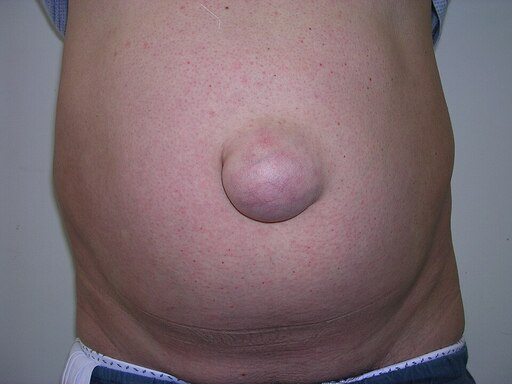
In adults, the mechanism differs slightly. Even if the ring closed properly at birth, the area remains a potential weak point in the abdominal fascia. Excessive pressure over time can cause the scar tissue at the umbilicus to stretch, thin out, and eventually fail. This leads to an acquired herniated umbilical hernia. The disruption of the abdominal wall integrity allows abdominal contents to escape their natural cavity and reside subcutaneously (just under the skin). This creates the visible lump often searched for online as Umbilical hernia pictures. Unlike inguinal hernias which rely on a canal, umbilical defects are direct protrusions through the fascia, making them prone to entrapment if the neck of the hernia (the opening) is narrow compared to the volume of tissue inside.
Detailed Umbilical Hernia Causes and Risk Factors
The etiology of an Umbilical Hernia is multifactorial and varies significantly depending on the age of the patient. While genetics and congenital factors play a major role in pediatric cases, lifestyle, chronic health conditions, and physiological stressors are heavily involved in adult-onset cases.
Congenital Causes in Infants
In the pediatric population, the condition is almost exclusively congenital, resulting from developmental variances rather than injury or strain. It is important for parents to understand that it is not caused by anything they did or did not do, such as how the cord was cut or clamped.
- Prematurity and Low Birth Weight: Infants born prematurely or with a low birth weight (typically under 1500 grams) are at a significantly higher risk. This is because their abdominal muscles and the collagen matrix of the linea alba have had less time to develop, mature, and strengthen in the womb before birth.
- Failed Closure: The primary anatomical cause is the simple failure of the umbilical ring to contract and close completely after the cord falls off.
- Demographics: Medical studies consistently indicate that Umbilical hernia newborn cases are more prevalent in African American infants compared to other ethnic groups. While the genetic basis for this is not fully understood, the correlation is well-documented.
- Associated Conditions: While most occur in healthy babies, they can be associated with certain syndromes like Down syndrome, Beckwith-Wiedemann syndrome, and congenital hypothyroidism.
Acquired Factors in Adults
In adults, an Umbilical Hernia is typically described as “acquired.” This means it develops later in life due to specific mechanical stressors that compromise the abdominal wall. The central theme in all adult causes is chronically increased intra-abdominal pressure which overpowers the tensile strength of the umbilical fascia.
- Obesity: Excessive body weight is perhaps the leading modifiable risk factor. The accumulation of visceral fat (fat stored within the abdominal cavity around organs) pushes outwardly against the abdominal muscles. This constant, low-grade pressure weakens the linea alba and the umbilical ring over years, eventually causing it to give way.
- Multiple Pregnancies: Umbilical hernia pregnancy correlations are very strong. During pregnancy, the uterus expands significantly to accommodate the growing fetus, which stretches the abdominal muscles and connective tissues. Women who have had multiple pregnancies (multiparity) are at higher risk because the muscles may not fully recover their original tension and density between pregnancies, leading to a permanent widening of the umbilical ring.
- Ascites: This medical condition involves the abnormal buildup of fluid in the abdominal cavity, most often resulting from advanced liver disease (cirrhosis) or heart failure. The fluid exerts immense, constant hydrostatic pressure on the navel from the inside. In these patients, the hernia can become quite large and the skin covering it can become dangerously thin.
- Chronic Straining: Any behavior that repeatedly spikes intra-abdominal pressure contributes to muscle breakdown. This includes chronic heavy lifting (occupational hazards), straining during bowel movements due to chronic constipation, or persistent, violent coughing (e.g., from smoking, COPD, or chronic lung disease).
- Previous Surgery: Incisions from prior abdominal surgeries, especially laparoscopic ports placed at the umbilicus, can disrupt the structural integrity of the fascia. These are technically incisional hernias but appear at the umbilicus.
Recognizing Comprehensive Umbilical Hernia Symptoms
Identifying Umbilical hernia symptoms early is vital for monitoring the condition and preventing emergency situations. The clinical presentation can range from a subtle, asymptomatic defect to an overt, painful emergency depending on the size of the defect and the contents of the hernia sac.
Signs in Children and the Umbilical Hernia Newborn
In babies and young children, the hernia is often asymptomatic and painless. Parents are usually the first to notice the condition during diaper changes or bath time.
- Visibility: The bulge is typically most apparent when the intra-abdominal pressure rises. This happens when the baby cries, coughs, laughs, or strains to pass stool. During these moments, the loop of bowel is forced out, making the belly button pop outward.
- Reducibility: When the baby is calm, sleeping, or lying flat on their back, the lump often disappears completely or can be gently pushed back into the abdomen with a finger. This characteristic is known as reducibility and is a sign that the hernia is not currently dangerous.
- Size Variations: The defect can vary drastically in size, from a small pea-sized opening (less than 1 cm) to a much larger defect (3-5 cm or more). Interestingly, the size of the external skin bulge (the “outie”) does not always correlate perfectly with the size of the muscular defect underneath. Some large protrusions have small necks, which increases the risk of entrapment, although this is rare in children.
Umbilical Hernia Pain and Symptoms in Adults
Unlike the pediatric presentation, adults with a belly button hernia frequently experience localized discomfort and a range of physical symptoms.
- Visible Protrusion: Adults will notice a distinct bulge at the navel. Unlike in children, this bulge does not typically disappear on its own and tends to grow larger over months or years.
- Pain Characteristics: Patients often report a dull, dragging sensation, pressure, or sharp Umbilical hernia pain at the site. This pain is often activity-dependent, worsening when bending over, coughing, lifting heavy objects, or standing for long periods. The pain typically subsides with rest or when the hernia is reduced.
- Gastrointestinal Symptoms: In some cases, vague gastrointestinal distress can be associated with the hernia. If a portion of the bowel or omentum is intermittently trapped, patients might experience nausea, indigestion, or changes in bowel habits.
- Skin Changes: The skin over the hernia typically appears normal. However, in large, chronic hernias, the skin can become thin, shiny, and stretched. Pressure necrosis can occur if the hernia rubs against clothing or belts, leading to ulceration, which is a significant infection risk.
Diagnostic Procedures for Umbilical Hernia
Diagnosing an Umbilical Hernia generally begins with a thorough medical history and physical examination. A healthcare provider will examine the abdomen in both standing and supine (lying down) positions.
During the exam, the doctor will look for a bulge near the navel. They may ask the patient to perform the Valsalva maneuver—coughing or bearing down as if having a bowel movement. This action increases intra-abdominal pressure, causing the hernia to protrude more noticeably, allowing the physician to feel the size of the defect edges. The provider will also attempt to gently push the hernia back into the abdomen to determine if it is reducible or incarcerated.
While a physical exam is often sufficient for diagnosis, diagnostic imaging is crucial in complex cases, specifically for surgical planning or when complications are suspected.
- Abdominal Ultrasound: This is often the first-line imaging modality. It is a non-invasive, radiation-free test that uses sound waves to create images of the abdominal wall. It is excellent for differentiating a hernia from other masses like lipomas (fatty tumors), sebaceous cysts, or lymph nodes. It can also visualize the contents of the hernia sac to see if it contains bowel or just fat.
- CT Scan: A Computed Tomography (CT) scan provides a detailed, high-resolution cross-sectional view of the abdominal wall and internal organs. It is highly effective in determining exactly what tissues are trapped in the hernia sac and is essential for surgical planning in large or recurrent defects. It helps surgeons detect “occult” hernias (not felt on exam) and evaluate the health of the intestine if strangulation is suspected.
- MRI: Magnetic Resonance Imaging is less commonly used but offers superior soft tissue contrast without radiation, which may be preferable for pregnant people or younger patients requiring detailed anatomical mapping.
Complications: When Umbilical Hernia Becomes Dangerous
The natural progression of an untreated Umbilical Hernia in adults can lead to severe, life-altering medical emergencies. Understanding the pathophysiology of these complications is critical for timely intervention.
Incarceration
An incarcerated Umbilical Hernia occurs when the protruding tissue (omentum or intestine) becomes physically trapped in the abdominal defect and cannot be pushed back into the abdominal cavity. The tissue is effectively “stuck” outside the muscle wall.
- Symptoms: The bulge becomes firm, tender, and painful. Crucially, it does not flatten or reduce when the patient lies down or relaxes.
- Risk: While incarceration itself is not immediately fatal, it is a precursor to strangulation. It can also lead to a partial or complete bowel obstruction if the intestinal lumen is kinked, preventing the passage of stool and gas. This manifests as bloating, severe cramping, and constipation.
Strangulation
This is the most feared complication and represents a dire surgical emergency. Strangulation happens when the blood supply to the incarcerated tissue is physically cut off.
- Mechanism: The narrow muscular ring of the hernia acts like a tourniquet. It first compresses the veins, causing swelling and congestion, and eventually compresses the arteries, stopping oxygenated blood flow. Without blood, the trapped tissue (usually a loop of small intestine) begins to die (ischemia and necrosis) within hours.
- Critical Signs: The clinical picture changes dramatically. Patients experience sudden, excruciating pain that is continuous. Systemic signs include fever, tachycardia (fast heart rate), nausea, and vomiting. Locally, the hernia bulge may turn red, purple, dark, or black due to the underlying necrotic tissue.
- Consequence: If not treated immediately with emergency umbilical hernia operations, gangrene of the bowel will set in. This can lead to perforation (rupture) of the intestine, spilling fecal contents into the sterile abdominal cavity. This causes peritonitis and sepsis, a systemic infection that carries a high mortality rate.
Umbilical Hernia Pregnancy: Risks and Management
Umbilical hernia pregnancy issues are a common clinical scenario due to the immense physiological strain placed on the abdomen during gestation. Many women develop a new hernia or see the enlargement of an existing one during their second or third pregnancy.
- Physiological Impact: As the uterus grows, it stretches the abdominal muscles and the linea alba, thinning the fascia. This exacerbates any pre-existing weakness at the umbilicus.
- Management Strategy: Surgeons generally adopt a conservative, “watchful waiting” approach during pregnancy. Umbilical hernia surgery is typically avoided while the woman is pregnant unless a strangulation emergency occurs. Elective surgery poses risks to the fetus and the pregnancy itself. Furthermore, the enlarging uterus often pushes the bowel upward and away from the umbilicus, paradoxically protecting it from entrapment in many cases.
- Delivery and Post-Partum: The presence of a hernia usually does not prevent a vaginal delivery. However, women should be monitored for incarceration during labor. Surgical repair is typically delayed until at least 6 to 12 months after delivery. This delay allows the abdominal muscles to recover their tone and for the uterus to return to normal size, ensuring a more stable and durable repair. In some cases, if a Cesarean section is required for obstetric reasons, the hernia may be repaired simultaneously, although this is debated among surgeons due to the high failure rate associated with repairing tissues that are still stretched and edematous.
Treatment Options and Umbilical Hernia Surgery
The clinical approach to treating an Umbilical Hernia is strictly dichotomous based on the patient’s age and the natural history of the defect in that demographic.
Management in Children
For a newborn umbilical hernia, the standard of care is almost always observation. The vast majority (up to 90%) of these hernias close spontaneously by age 4 or 5. As the child grows, the rectus abdominis muscles strengthen, enlarge, and converge towards the midline, naturally sealing the defect.
- When to Operate: Pediatric surgeons reserve surgery for specific indications:
- Defects that are large (greater than 2cm) which are unlikely to close.
- Hernias that persist beyond age 4 or 5 years.
- “Proboscoid” hernias (trunk-like appearance with excess skin) which are cosmetically disfiguring and unlikely to resolve.
- Any hernia that causes symptoms (pain, vomiting) or becomes incarcerated.
- Myths: Parents should be advised that taping a coin, strapping a belt, or applying pressure bandages over the belly button is an old wives’ tale. These methods are not recommended; they do not speed up muscle closure and can cause severe skin irritation or infection.
Umbilical Hernia Operations for Adults
In adults, the natural history of the disease is fundamentally different. The defect will never close on its own. Instead, it tends to enlarge over time due to the cumulative effects of gravity and abdominal pressure. Therefore, umbilical hernia surgery is the standard treatment for all symptomatic adults to improve quality of life and prevent the catastrophe of strangulation.
Umbilical Herniorrhaphy vs. Umbilical Hernioplasty
There are two primary technical approaches to repairing the defect:
- Umbilical Herniorrhaphy (Primary Suture Repair): This technique is typically reserved for very small hernias (defects less than 1-2 cm). The surgeon dissects the hernia sac and stitches the healthy muscle fascia back together to close the hole. While simple, it has a higher recurrence rate for medium or large defects because it pulls tissues together under tension.
- Umbilical Hernioplasty (Mesh Repair): For medium to large hernias (defects > 2cm), or for patients with risk factors like obesity or manual labor jobs, the use of a prosthetic mesh is the gold standard. The mesh is a sterile, woven material placed either under the defect (sublay) or over it (onlay) to bridge the gap. It acts as a scaffold for new tissue growth, reinforcing the abdominal wall without creating tension. This “tension-free” repair significantly lowers the risk of the hernia coming back.
Open vs. Laparoscopic herniated belly button surgery
- Open Repair: The standard approach for smaller hernias. The surgeon makes a small curved incision below or inside the navel (to hide the scar). The hernia sac is identified, contents are returned to the abdomen, and the defect is repaired with sutures or mesh.
- Laparoscopic Repair: For larger, recurrent, or bilateral hernias, minimally invasive surgery is preferred. The surgeon makes 3 small incisions on the side of the abdomen (flank) and uses a camera and long instruments. The mesh is placed from the inside of the abdomen, covering the defect securely. This method often results in less post-operative Umbilical hernia pain, a lower rate of wound infection, and a faster return to work and physical activities.
Recovery and Post-Operative Care
Recovery from herniated belly button surgery is generally straightforward, but strict adherence to post-operative guidelines is essential to prevent recurrence.
- Immediate Phase: Most umbilical repairs are performed as outpatient procedures, meaning patients return home the same day. As the anesthesia wears off, patients may experience grogginess and mild nausea.
- Pain Management: Pain is usually mild to moderate. Surgeons typically prescribe a short course of painkillers or recommend over-the-counter analgesics like acetaminophen and ibuprofen. Ice packs applied to the area (over a towel) can significantly reduce swelling and bruising in the first 48 hours.
- Activity Restrictions: Walking is encouraged immediately—even the night of surgery—to promote blood flow and prevent deep vein thrombosis (blood clots). However, patients must avoid heavy lifting (usually defined as anything over 10-15 lbs) and strenuous exercise (gym, running, core workouts) for 4 to 6 weeks. This critical period allows the collagen to cross-link and the fascia to heal securely around the sutures or mesh.
- Wound Care: Keeping the incision dry and clean is paramount to prevent infection. Steri-strips or surgical glue often cover the wound and fall off on their own. Patients should shower rather than bathe (no soaking) for the first two weeks. Any signs of infection—increasing redness, warmth, fever, or pus-like drainage—warrant immediate medical attention.
Living with a Herniated Umbilical Hernia
For patients who are waiting for surgery or those who have small, asymptomatic hernias and are engaging in “watchful waiting” under a doctor’s supervision, certain lifestyle adjustments can help manage hernia belly button symptoms and prevent progression.
- Weight Management: Achieving and maintaining a healthy weight is the most effective way to reduce intra-abdominal pressure. Losing excess fat can slow the enlargement of the hernia and make future surgery easier and safer.
- Dietary Choices: A high-fiber diet rich in fruits, vegetables, and whole grains, combined with high water intake, is crucial. This prevents constipation and the associated straining during bowel movements, which is a major aggregator of hernias.
- Support Garments: Wearing an abdominal binder, corset, or hernia truss can provide temporary symptomatic relief by applying external pressure to hold the hernia in. However, patients must understand that this is not a cure. It does not fix the hole in the muscle and should not be used as a long-term substitute for surgical repair. It is merely a bridge to surgery.
Frequently Asked Questions
When should i worry about my umbilical hernia in adults?
You should be concerned and seek medical advice if you experience a sudden change in the hernia. Specifically, worry if there is an intensification of pain that doesn’t go away with rest, or if the hernia bulge becomes firm, tender to the touch, and cannot be pushed back in (irreducible). These are classic signs of incarceration. Immediate, emergency medical attention is required if these local symptoms are accompanied by systemic signs such as fever, nausea, vomiting, abdominal distension, or discoloration (redness, purple/blue hue) of the skin over the hernia. These indicate strangulation and dying bowel tissue, which is a life-threatening emergency.
What is an umbilical hernia?
An Umbilical Hernia is a common anatomical condition where intra-abdominal contents—typically a loop of the small intestine, omentum, or fluid—protrude through a weakened area or congenital defect in the abdominal wall muscles specifically located at the navel. This protrusion creates a soft, palpable lump or bulge that may fluctuate in size depending on activity. It is caused by the failure of the umbilical ring to close properly in infants or the acquired weakening and reopening of this area in adults due to pressure.
What causes umbilical hernia in adults?
In adults, the condition is almost always “acquired” and is caused by factors that chronically increase pressure inside the abdominal cavity, forcing tissue through a weak spot in the midline muscle fascia. The most common risk factors and causes include obesity (due to visceral fat pressure), multiple pregnancies (due to uterine stretching), chronic heavy lifting (occupational strain), persistent coughing (from smoking or lung disease), and fluid accumulation in the abdomen (ascites from liver disease). Previous abdominal surgeries can also predispose an individual to incisional hernias at the site of the umbilicus.
How to treat umbilical hernia in adults?
The definitive and only curative treatment for adults is umbilical hernia surgery. Unlike in children, these hernias do not resolve spontaneously and tend to worsen. The surgery involves dissecting the hernia sac, returning the herniated tissue to the abdomen, and closing the muscle defect. This is done using strong sutures for small defects (Umbilical herniorrhaphy) or by reinforcing the abdominal wall with a synthetic surgical mesh (Umbilical hernioplasty) for larger defects. While lifestyle changes can help manage symptoms temporarily, surgery is required to fix the mechanical problem.
How serious is an umbilical hernia?
Most of the time, a reducible Umbilical Hernia is not immediately dangerous, but it is considered a serious health condition because of the potential for unpredictable and severe complications. While a simple hernia may be just an annoyance or cosmetic issue, a strangulated hernia is a bona fide medical emergency that can lead to bowel necrosis, sepsis, and death if not treated rapidly. Therefore, while the condition itself is mechanical, its potential complications are severe enough to warrant surgical repair in most healthy adults upon diagnosis.
How to fix an umbilical hernia?
To fix the hernia permanently, a surgical procedure is required to physically repair the hole in the abdominal wall. During umbilical hernia operations, the surgeon makes an incision at the navel, isolates the hernia sac from the skin, returns the contents to the abdominal cavity, and then securely sews the muscle layers together. In many adult cases, a patch of sterile mesh is placed over or under the hole to act as a bridge and strengthen the fascia, preventing the defect from pulling apart again. This restores the structural integrity of the abdominal wall.
Does umbilical hernia go away?
The answer depends entirely on the age of the patient. In infants and young children, an Umbilical Hernia frequently goes away on its own by age 4 or 5 as the abdominal muscles continue to develop and the ring contracts. However, in adults, the hernia does not go away naturally. Once the fascia is torn or stretched in adulthood, it will not heal spontaneously and will typically persist or grow larger over time without surgical intervention.
The following post may interest you
How to care for a newborn umbilical cord stump: Essential Guide
Sources
Complicated umbilical hernias in children
https://link.springer.com/article/10.1007/s00383-002-0932-y
Adhesive Strapping for Umbilical Hernia in Infants
https://pmc.ncbi.nlm.nih.gov/articles/PMC2036131
Adhesive Strapping for Umbilical Hernia in Infants
https://pmc.ncbi.nlm.nih.gov/articles/PMC2036131
Umbilical hernia
https://www.sciencedirect.com/science/article/abs/pii/S0002961041904816
Umbilical Hernia Repair and Pregnancy: Before, during, after…
https://www.frontiersin.org/journals/surgery/articles/10.3389/fsurg.2018.00001/full
Risk Factors of Umbilical Hernia in Patients
https://cajmns.casjournal.org/index.php/CAJMNS/article/view/1755
Umbilical Hernia in Children
https://pmc.ncbi.nlm.nih.gov/articles/PMC2283484
Hernia of Umbilical Cord with Congenital Short Gut
https://pmc.ncbi.nlm.nih.gov/articles/PMC4420328
A literature review of spontaneous evisceration in paediatric umbilical hernias
https://link.springer.com/article/10.1007/s00383-012-3076-8
Image Source