- A Comprehensive Medical Guide to Managing a Poison Ivy Rash
- The Fundamental Botany Behind a Poison Ivy Rash
- Recognizing the Early Signs of a Poison Ivy Rash
- Detailed Progression of a Poison Ivy Rash
- Effective Strategies for Treating a Poison Ivy Rash
- Protecting Your Family from a Poison Ivy Rash
- Frequently Asked Questions
- Scientific Resources
A Comprehensive Medical Guide to Managing a Poison Ivy Rash
Spending time outdoors is a wonderful way to connect with nature, whether you are hiking through dense forests, camping with your family, or simply enjoying a sunny afternoon gardening in your backyard. However, these seemingly harmless outdoor activities frequently come with a hidden and highly uncomfortable danger: the risk of developing a severe and intensely itchy Poison Ivy Rash. For decades, medical professionals, botanists, and outdoor enthusiasts have studied this allergic reaction, seeking the best ways to identify the offending plants, understand the underlying immunological mechanisms, and formulate the most effective treatment protocols.
A single brush against the wrong leaf can lead to weeks of physical discomfort, sleep deprivation, and significant psychological frustration. This comprehensive, scientifically backed guide is designed to provide you with an exhaustive understanding of every aspect of this condition. From the fundamental botanical origins of the plants that cause the reaction to the most advanced, evidence-based dermatological treatments available today, this guide will equip you with the knowledge needed to protect yourself and your loved ones. By understanding the intricate details of how the body reacts to the plant’s toxic resin, you can take proactive steps to prevent exposure, recognize the earliest signs of an allergic reaction, and apply the correct medical interventions before the condition worsens into a widespread dermatological emergency.
The Fundamental Botany Behind a Poison Ivy Rash
To fully comprehend the nature of this allergic reaction, one must first look at the botanical origins of the plants responsible for causing it. The plants that trigger a Poison Ivy Rash belong to the Anacardiaceae family. Interestingly, this diverse botanical family also includes several popular food-producing trees, such as pistachios, cashews, and mangoes. While these edible fruits and nuts are widely consumed and enjoyed globally, the leaves, stems, and roots of their wild cousins harbor a potent, highly reactive oily resin known as urushiol. The history of human interaction with these plants is rich and complex. The earliest known historical reference to these irritating plants dates back to seventh-century China. In the Western world, the first written account was documented in 1624 by John Smith, an English explorer famous for his role in establishing the first permanent English colony in North America. Later, in the eighteenth century, the renowned French botanist Joseph Pitton de Tournefort and the “Father of Taxonomy,” Carl Linnaeus, worked to classify these unique plants under the genus Rhus and later Toxicodendron, which aptly translates to “poison tree.”
How Urushiol Triggers a Poison Ivy Rash
The primary culprit behind the intense allergic reaction is urushiol. This oleoresin is an incredibly sticky, long-lasting substance found inside the plant’s sap canals. It is estimated that an overwhelming 75 to 90 percent of the adult population is clinically sensitive to urushiol, making it one of the most common allergens in the natural world. When the plant’s leaves, stems, or vines are bruised, damaged, or even lightly brushed against by passing humans or animals, the urushiol oil is released onto the surface. Once it makes contact with human skin, the oil penetrates the epidermis rapidly—often within ten to fifteen minutes. The immune system then identifies this foreign substance as a dangerous invader, launching a massive defensive response known as a Type IV delayed hypersensitivity reaction. This cell-mediated immune response is what ultimately produces the agonizing symptoms associated with a Poison Ivy Rash.
Furthermore, environmental scientists and botanists have noted a concerning trend regarding the potency and prevalence of these plants. Due to rising atmospheric carbon dioxide levels associated with global climate change, these toxic plants are growing faster, producing larger leaves, and synthesizing a much more potent, highly allergenic form of urushiol. As urbanization pushes residential neighborhoods closer to natural woodland habitats, the likelihood of human exposure continues to rise exponentially, making awareness and education more critical than ever before.
Causes
The primary cause of the skin reaction is direct or indirect contact with the urushiol oil. While direct skin-to-plant contact is the most common route of exposure, the oil is notoriously resilient and can be transferred through secondary contact. Unwashed clothing, hiking boots, camping gear, gardening tools, and even the fur of family pets can act as vehicles for the oil. Because urushiol does not evaporate easily, it can remain active and highly potent on inanimate surfaces for months or even years if not thoroughly washed away with soap and water. Another extremely dangerous cause of exposure is the inhalation of smoke from burning Toxicodendron plants. When these plants are burned during yard cleanup or wildfires, the urushiol oil vaporizes and attaches to smoke particles, potentially causing a severe, life-threatening allergic reaction in the respiratory tract and lungs.
Poison Sumac Rash
While poison ivy is the most ubiquitous offender, other plants in the Toxicodendron genus contain the exact same urushiol oil and cause an identical allergic reaction. Poison sumac (Toxicodendron vernix) is a tall shrub or small tree that thrives in wet, swampy, and boggy regions, particularly in the southeastern and northeastern United States. Unlike the classic “leaves of three” associated with poison ivy, a poison sumac plant features clusters of seven to thirteen smooth-edged leaflets arranged in pairs along a single stem. The leaves undergo dramatic color changes throughout the seasons, appearing bright orange in the spring, deep green in the summer, and vibrant red or yellow in the fall. A poison sumac rash is clinically indistinguishable from the standard reaction, requiring the exact same medical protocols and home care strategies.
Poison Oak Rash
Similarly, a poison oak rash is caused by exposure to Toxicodendron diversilobum (western poison oak) or Toxicodendron pubescens (eastern poison oak). These plants typically grow as low shrubs in the eastern and southern states, or as tall, imposing clumps and long climbing vines on the Pacific Coast. Poison oak leaves also grow in clusters of three, but they are distinguished by their lobed, irregularly toothed edges that closely resemble the leaves of a true oak tree. The resulting poison oak rash presents with the same intense pruritus, blistering, and erythema, reinforcing the rule that all urushiol-bearing plants must be treated with equal caution and respect by outdoor enthusiasts.
Recognizing the Early Signs of a Poison Ivy Rash
Timely identification of the allergic reaction is crucial for mitigating its severity and implementing rapid treatment strategies. However, one of the most frustrating aspects of this condition is the delayed onset of symptoms. Because the reaction relies on a complex, cell-mediated immune response, the body requires time to process the allergen and mobilize its defensive T-cells. If you have been previously exposed to urushiol, your immune system holds a “memory” of the allergen, and the skin reaction typically manifests within 12 to 48 hours. Conversely, if this is your very first encounter with the toxic resin, your body may take anywhere from two to three weeks to develop the initial signs of a Poison Ivy Rash. This delayed manifestation often leads to severe confusion, as patients struggle to recall exactly when or where they might have come into contact with the offending plant.
Clinical Manifestations
When the immune response finally culminates at the surface of the skin, the clinical manifestations are highly distinct and profoundly uncomfortable. The primary hallmark of the condition is intense, unyielding pruritus (itching) that often precedes any visible changes to the skin. This itching can be so severe that it wakes patients from a deep sleep and significantly impairs their ability to concentrate on daily tasks. Shortly after the itching begins, the visible dermatological symptoms emerge.
Symptoms
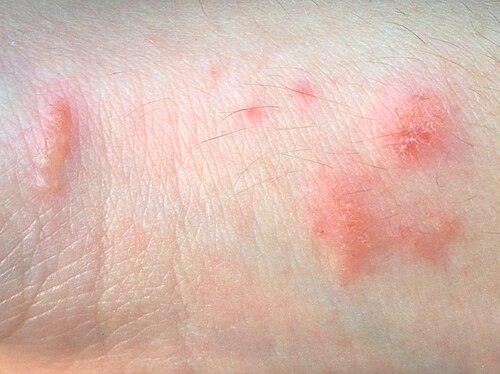
The classic symptoms include localized erythema (redness), significant tissue swelling (edema), and the formation of papules and fluid-filled blisters (vesicles and bullae). Because human exposure usually occurs when a person accidentally brushes past the plant while walking or reaching into foliage, the rash characteristically appears in straight lines or distinct streaks. These linear strike marks are a major diagnostic clue for healthcare providers. However, if the urushiol was transferred via a contaminated object—such as a gardening glove or pet fur—the rash may appear in more diffuse, irregular patches across the body. In exceedingly rare but documented cases, a phenomenon known as “black-spot poison-ivy dermatitis” can occur. In this unusual presentation, the urushiol resin oxidizes on the skin, forming hard, black spots that resemble droplets of black lacquer or ink. This specific presentation often lacks the typical redness and swelling but serves as a definitive indicator of heavy urushiol exposure.
Itchy Bumps After Park
Parents often bring their children to pediatricians or urgent care clinics complaining of sudden, unexplained itchy bumps after park visits or woodland hikes. Because children are naturally curious and frequently explore bushes, thickets, and off-trail areas, they are highly susceptible to unknowingly touching poisonous plants. These itchy bumps often start as small, flesh-colored or pale pink raised areas that rapidly evolve into larger, red, fluid-filled blisters. It is essential for parents to thoroughly inspect their children’s skin after outdoor play and proactively wash all exposed areas, clothing, and footwear to prevent the development of a severe allergic reaction.
Poison Ivy Rash Pictures
When patients search the internet for visual confirmation of their symptoms, they often look at poison ivy rash pictures to compare against their own skin. These clinical photographs typically showcase the hallmark linear streaks of inflammation, surrounded by clusters of weeping, crusting blisters. However, patients must exercise caution when self-diagnosing using online images. Several other dermatological conditions, such as insect bites, scabies, nummular eczema, shingles (herpes zoster), and allergic reactions to other plants (like the oxalate crystals found in Virginia creeper), can mimic the appearance of urushiol-induced contact dermatitis. Consulting a board-certified dermatologist or primary care physician is always the safest course of action for a definitive diagnosis.
Poison ivy rash pictures on black skin
It is crucial to highlight that the visual presentation of skin inflammation can vary dramatically depending on the patient’s skin tone. Most classic medical textbook images depict erythema on Caucasian skin; however, diagnosing the condition requires a different visual baseline for patients of color. When looking at Poison ivy rash pictures on black skin, the hallmark “redness” is often entirely absent. Instead, the affected areas may appear violaceous (purple or deep violet), grayish, or dark brown. The skin will still display the characteristic swelling, linear blistering, and intense itching, but the underlying inflammation presents as darkening rather than reddening. Healthcare providers and patients must be aware of these diverse presentations to ensure timely, accurate diagnoses and prevent the increased risk of severe post-inflammatory hyperpigmentation that frequently occurs in darker skin tones as the rash heals.
Detailed Progression of a Poison Ivy Rash
Understanding the chronological progression of the skin’s reaction is vital for managing patient expectations and avoiding unnecessary panic. The natural lifecycle of the allergic response involves several distinct phases, each characterized by specific physiological changes and varying degrees of physical discomfort.
The Expected Timeline of a Poison Ivy Rash
The duration and severity of the timeline depend heavily on two main factors: the individual’s inherent immunological sensitivity to urushiol and the total volume of the oil that penetrated the epidermal barrier. For a patient who has experienced previous exposure, the entire ordeal generally resolves within 14 to 21 days. For individuals experiencing their very first allergic response, the timeline can stretch extensively, sometimes lasting a full month before the skin completely returns to its normal baseline state.
Poison Ivy Rash Stages
The progression occurs in the following generalized Poison ivy rash stages:
- Initial Contact and Incubation: The urushiol oil binds to the skin cells. There are no visible symptoms during this stage, making it the critical window for preventative washing.
- Early Inflammation: Occurring 12 to 48 hours post-exposure, the immune system begins its attack. Patients experience intense, localized itching accompanied by the emergence of red or violaceous streaks and general tissue swelling.
- The Blistering Phase: As the inflammatory response peaks (typically between days 3 and 7), the localized swelling gives way to the formation of vesicles and large, flaccid bullae. These blisters are filled with clear, sterile interstitial fluid. The itching during this phase is often described as agonizing.
- Weeping and Crusting: The blisters eventually rupture, either naturally or due to friction, releasing the clear fluid. The open areas then begin to dry out, forming yellowish or brown scabs and crusts over the raw skin.
- Resolution and Healing: The crusts flake off, and the underlying epidermis repairs itself. The intense itching gradually subsides, leaving behind temporary hyperpigmentation or slight discoloration that fades over the following weeks or months.
Poison Ivy Rash Stages Pictures
Documenting the healing process through Poison ivy rash stages pictures can be highly beneficial for tracking the efficacy of prescribed treatments. If a patient notices that their blisters are beginning to exude thick, opaque, yellow or green pus, or if they observe expanding red streaks radiating outward from the original site of the rash, these photographs can help a physician quickly identify the onset of a secondary bacterial infection, such as impetigo or cellulitis, which requires immediate antibiotic intervention.
Why Does a Poison Ivy Rash Seem to Expand?
One of the most persistent and widespread anxieties among patients is the alarming perception that their skin condition is actively multiplying and spreading across their body day by day. It is incredibly common for a patient to wake up on day three with a small rash on their wrist, only to discover a massive, blistering outbreak on their abdomen and legs by day five. This chronological emergence leads to deep misunderstandings regarding the nature of the allergy.
Poison Ivy Rash Spreading
The concept of Poison ivy rash spreading from one part of the body to another through scratching is a complete medical myth. Once the urushiol oil has been completely washed off the skin with soap and water, the rash is entirely non-contagious; you cannot spread the rash to yourself or to another person by touching the blisters or the fluid that oozes from them. The clear fluid inside the blisters is simply blood serum responding to tissue damage, not liquid plant oil. So, why does it seem to spread? The appearance of “new” rashes days later is due to the varying thickness of the stratum corneum (the outermost layer of the skin) across different body parts. Areas with very thin skin, such as the face, wrists, and forearms, absorb the oil rapidly and react quickly. Areas with thicker skin, such as the legs or torso, absorb the oil much more slowly, resulting in a delayed immune response. Furthermore, seemingly “new” spreading rashes are often the result of continuous, unrecognized secondary exposure to contaminated items, such as an unwashed jacket, a steering wheel, or a pet’s fur that still harbors the sticky urushiol resin.
Effective Strategies for Treating a Poison Ivy Rash
When confronted with the agonizing itch and painful inflammation of this condition, securing prompt and effective treatment becomes the absolute highest priority for any patient. Because there is currently no medical cure that can instantly switch off the immune system’s localized Type IV hypersensitivity reaction, the primary goals of all treatment protocols are to aggressively mitigate the debilitating symptoms, prevent the patient from causing excoriation (skin picking and scratching), and vigilantly protect the compromised epidermal barrier from secondary bacterial infections.
Medical and Home Remedies
The initial response within the first few minutes of exposure dictates the trajectory of the entire ordeal. If you suspect you have brushed against a toxic plant, you must immediately wash the exposed skin with generous amounts of lukewarm water and a strong degreasing soap, such as liquid dish detergent. Friction is necessary to lift the sticky resin from the skin, and special attention must be paid to thoroughly scrubbing underneath the fingernails where the oil frequently hides. Once the rash has fully materialized, however, washing will no longer reverse the immune response, and the focus must shift to symptom management and dermatological care.
Poison Ivy Rash Treatment
When over-the-counter methods fail to provide relief, or when the allergic reaction involves highly sensitive areas such as the face, eyelids, or genitals, aggressive medical intervention is absolutely mandatory. For decades, the standard medical protocol involved prescribing short courses of oral corticosteroids, such as the heavily utilized “Medrol Dosepak” (methylprednisolone). However, modern dermatological research has proven that these short, low-dose steroid tapers are fundamentally insufficient for managing a severe Poison Ivy Rash. A landmark randomized, controlled trial published in the Journal of Clinical Medicine Research (JOCMR) by Curtis and Lewis rigorously investigated optimal oral steroid dosing. The researchers compared a short 5-day course of 40mg daily prednisone against a long 15-day tapered course of prednisone. The clinical study definitively proved that patients receiving the longer 15-day steroid taper were significantly less likely to suffer from severe rebound dermatitis or require additional emergency medications to control their symptoms. Therefore, if a physician recommends systemic oral corticosteroids, patients should advocate for a prolonged 14 to 21-day tapered prescription to ensure the intense immunological fire is completely extinguished, preventing the rash from roaring back to life the moment the medication is stopped. Additionally, physicians may prescribe sedating oral antihistamines, such as hydroxyzine, to be taken at bedtime. While oral antihistamines do not stop the fundamental mechanism of the rash, their sedative properties are incredibly valuable for helping distressed patients achieve restorative sleep without unconsciously scratching their skin in the middle of the night.
Protecting Your Family from a Poison Ivy Rash
Implementing rigorous preventative measures is universally agreed to be the most effective strategy for managing the risks associated with these toxic plants. This is especially true for families with young children, who lack the botanical awareness necessary to identify hazardous flora while playing outdoors.
Special Considerations for a Poison Ivy Rash in Children
Managing this dermatological condition in the pediatric population requires extreme patience, specialized care strategies, and constant vigilance from parents and caregivers. Children possess highly sensitive, delicate skin that reacts violently to urushiol, and their developing immune systems often mount massive, widespread inflammatory responses. Furthermore, young children lack the impulse control required to resist the agonizing urge to scratch their lesions, putting them at an exceedingly high risk for dangerous complications.
Poison Ivy Rash on Toddler
When dealing with a poison ivy rash on toddler, parents must take immediate action to break the itch-scratch cycle. Toddlers will inevitably scratch their blisters, embedding dirt and opportunistic bacteria (such as Staphylococcus aureus or Streptococcus pyogenes) directly into the open wounds. This rapidly leads to severe secondary bacterial infections like impetigo, which presents as honey-colored, crusty lesions, or cellulitis, a deep tissue infection characterized by expanding redness, extreme warmth, and fever. To prevent this, parents must keep the toddler’s fingernails trimmed as short as possible and file away any sharp edges. Covering the affected areas with lightweight, breathable cotton clothing can provide a physical barrier against scratching. Applying pediatric-safe calamine lotion and utilizing colloidal oatmeal baths can help soothe the toddler’s distress. If a toddler exhibits any signs of a secondary infection, facial swelling, or breathing difficulties, parents must bypass home remedies and seek emergency medical evaluation immediately.
Proactive Measures
The ultimate defense against this miserable condition is a comprehensive strategy of avoidance and barrier protection. Everyone, from casual hikers to professional landscapers, should memorize the golden rule of botanical identification: “Leaves of three, let it be.” However, recognizing the plant is only the first step; proactive defense requires proper gear and chemical barriers.
Prevention
When venturing into thick brush, heavily wooded areas, or unkempt gardens, you must wear protective clothing that leaves zero skin exposed. This includes wearing thick socks, sturdy boots, long pants tucked securely into the boots, and long-sleeved shirts. If you are actively working in the yard and suspect the presence of toxic plants, do not rely on standard latex or thin rubber gloves; urushiol oil can easily penetrate these porous materials. Instead, always utilize heavy-duty vinyl or thick leather work gloves. For individuals who are highly sensitive or whose occupations require constant exposure to woodland environments, utilizing an over-the-counter barrier cream containing 5% bentoquatam (such as Ivy Block) can provide a highly effective layer of chemical protection. This specialized clay-like cream forms a physical shield over the epidermis, actively absorbing and neutralizing the urushiol resin before it can bind to the skin cells.
Finally, if you discover these plants growing on your personal property, you must eradicate them with extreme caution. Utilize systemic herbicides designed specifically for tough brush, or carefully dig the plants out by the roots while wearing full protective gear. Under no circumstances should you ever burn poison ivy, oak, or sumac plants; the resulting urushiol-laced smoke is highly toxic and can cause catastrophic, life-threatening respiratory emergencies if inhaled.
Frequently Asked Questions
How to get rid of poison ivy rash overnight?
Unfortunately, it is medically impossible to cure or completely get rid of this allergic reaction overnight. Because the rash is a complex, cell-mediated Type IV delayed hypersensitivity response, your immune system requires several weeks to process the allergen, heal the damaged tissue, and resolve the inflammation. However, you can significantly reduce the intense swelling and agonizing itching overnight by taking a prescribed oral corticosteroid (like prednisone), applying cool compresses, and utilizing a sedating antihistamine to help you sleep comfortably through the night.
What does poison ivy rash look like?
The visual appearance of the rash begins with intense, localized swelling and severe erythema (redness) that almost always develops in distinct straight lines or streaky patterns where the plant brushed against your skin. Within a few days, these red streaks evolve into clusters of raised, fluid-filled blisters (vesicles and bullae) that will eventually rupture, ooze clear fluid, and form yellowish crusts. On darker skin tones, the classic redness is often absent; instead, the inflamed streaks may appear deeply violaceous (purple), grayish, or dark brown, while still retaining the characteristic swelling and blistering.
How long does poison ivy rash last?
The overall duration of the healing process depends heavily on your immune system’s prior exposure to the urushiol oil. If you have had the rash before and your immune system recognizes the allergen, the reaction typically peaks within a week and resolves completely within 14 to 21 days. If it is your very first time being exposed to the plant’s toxic resin, your body’s immune response will be much slower to develop and much slower to resolve, meaning the rash could easily last up to a full month or longer before the skin fully returns to normal.
The following posts may interest you
Heat Rash (Prickly Heat) Guide: Treatment, Causes & Prevention
How to Prevent Diaper Rash: Tips for Parents
Sixth Disease (Roseola): Symptoms, Rash, and Treatment
Sources
Treatment of Severe Poison Ivy: A Randomized, Controlled Trial of Long Versus Short Course Oral Prednisone
https://pmc.ncbi.nlm.nih.gov/articles/PMC4169084
Toxicodendron Contact Dermatitis: A Case Report and Brief Review
https://pmc.ncbi.nlm.nih.gov/articles/PMC7733371
Poison Ivy (Rhus Toxicodendron)
https://pmc.ncbi.nlm.nih.gov/articles/PMC1823950
Poison Ivy
https://pmc.ncbi.nlm.nih.gov/articles/PMC1821932
The effectiveness of jewelweed, Impatiens capensis, the related cultivar I. balsamina and the component, lawsone in preventing post poison ivy exposure contact dermatitis
https://www.sciencedirect.com/science/article/abs/pii/S0378874112004382
Poison ivy, poison oak and similar plant identification for the home gardener
https://openresearch.okstate.edu/entities/publication/a88a389e-34d4-40c8-860a-25244a90c9e0
Toxicodendron Dermatitis: Poison Ivy, Oak, and Sumac
https://journals.sagepub.com/doi/full/10.1580/PR31-05.1
Age differences in poison ivy dermatitis
https://onlinelibrary.wiley.com/doi/abs/10.1111/j.1600-0536.1984.tb00964.x
Black-spot poison ivy dermatitis An acute irritant contact dermatitis superimposed upon an allergic contact dermatitis
Cost-effective post-exposure prevention of poison ivy dermatitis
https://onlinelibrary.wiley.com/doi/abs/10.1046/j.1365-4362.2000.00003.x