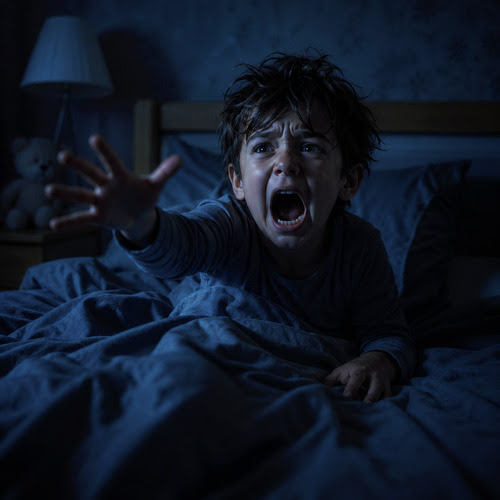
- Understanding Night Terrors: A Comprehensive Guide
- What Are Night Terrors?
- Recognizing Night Terrors: Key Signs and Indicators
- Demographics: Who is Affected by Night Terrors?
- The Underlying Causes of Night Terrors
- Night Terrors vs. Nightmares: Clarifying the Confusion
- Clinical Evaluation and Diagnosing
- Treatment Strategies
- Living With Night Terrors
- Frequently Asked Questions
- Scientific Resources
Understanding Night Terrors: A Comprehensive Guide
Sleep is a fundamental biological necessity, yet for some, the nocturnal hours are interrupted by profound and deeply unsettling disturbances known as Night Terrors. Night Terrors are complex sleep disorders that cause individuals to abruptly partially awaken from deep sleep in a state of intense panic, fear, and physiological arousal. Unlike typical bad dreams, Night Terrors are characterized by dramatic physical reactions such as screaming, thrashing, and inconsolability, often leaving observers far more distressed than the sleeper, who usually has no memory of the event the following morning. This comprehensive guide explores the multifaceted nature of Night Terrors, delving into their neurobiological underpinnings, demographic prevalence, underlying triggers, and the most effective management strategies available in modern sleep medicine.
What Are Night Terrors?
To fully grasp the complexities of this condition, it is essential to explore the architecture of human sleep. Sleep is not a uniform state; rather, it cycles through distinct stages, primarily divided into Rapid Eye Movement (REM) sleep and Non-Rapid Eye Movement (NREM) sleep. Night Terrors almost exclusively occur during the deepest stages of NREM sleep, specifically stages 3 and 4, which are often referred to as slow-wave sleep or delta sleep.
The Science Behind Night Terrors
How medical professionals define night terrors and their physiological impact
Medical professionals classify these episodes as arousal parasomnias. Parasomnias are a broad category of disruptive sleep-related disorders characterized by undesirable physical events, verbal behaviors, or experiences that occur during the transition between sleep stages. When an individual experiences a sleep terror, their brain becomes caught in a neurological twilight zone—a transitional state where the body is exhibiting signs of extreme wakeful panic, yet the higher cognitive centers of the brain remain deeply asleep. This unique neurological state explains why a person experiencing a night terror appears awake, with their eyes wide open, but is completely unresponsive to environmental stimuli or attempts to comfort them.
During a typical episode, the autonomic nervous system goes into overdrive. Polysomnography (a comprehensive sleep study) conducted during these events reveals highly specific brainwave patterns, including very high voltages of delta activity accompanied by sudden shifts to theta and alpha activity. These electrical brain changes correlate with intense physical symptoms, establishing the fundamental night terror meaning as a physiological misfiring rather than a psychological nightmare.
Recognizing Night Terrors: Key Signs and Indicators
Identifying an episode requires a keen understanding of the physical and behavioral markers that distinguish it from other nocturnal disturbances. Because the individual is trapped between sleep and wakefulness, their actions are driven by rudimentary survival instincts rather than conscious thought.
Common Night Terrors Symptoms to Watch For
Identifying Night terrors symptoms in daily life
The onset of an episode is typically abrupt and startling. A night terror often begins with a sudden, piercing scream or a loud cry of panic that shatters the silence of the night. Observers, such as parents or sleeping partners, frequently report the following Night terrors symptoms:
- Extreme Autonomic Arousal: The individual’s sympathetic nervous system activates a “fight or flight” response, resulting in a racing pulse (tachycardia), rapid breathing (tachypnea), heavy perspiration (diaphoresis), and dilated pupils (mydriasis).
- Violent Motor Activity: It is incredibly common for the person to sit bolt upright in bed, thrash their limbs violently, kick, punch, or attempt to aggressively flee from an unseen threat.
- Inconsolability and Confusion: Despite their eyes being wide open and staring blankly, the individual is utterly disconnected from reality. They will not recognize familiar faces, cannot be comforted by physical touch or soothing words, and may even become physically combative if someone attempts to restrain or wake them.
- Amnesia of the Event: One of the most defining characteristics of Night Terrors is the complete or near-complete lack of memory regarding the episode upon fully awakening the next morning.
Episodes typically last anywhere from a fleeting few seconds to an exhausting 30 to 40 minutes before the individual abruptly ceases the behavior and settles back into peaceful sleep.
Demographics: Who is Affected by Night Terrors?
While anyone can theoretically experience an arousal parasomnia, clinical data reveals distinct demographic patterns regarding who is most susceptible to these nighttime disturbances.
Exploring Night Terrors Age Brackets
Night terrors in children and developmental stages
Night Terrors are overwhelmingly a pediatric phenomenon. Epidemiological studies estimate that between 1% to 6.5% of children experience these episodes, with a significant concentration occurring in early childhood. The typical Night terrors age of onset is between 3 and 7 years old, reaching a peak frequency around three and a half years of age. For the vast majority of these children, the condition is entirely benign and self-limiting; most will naturally outgrow the episodes as their central nervous system matures and they enter adolescence.
Understanding night terrors in toddlers
When discussing night terrors in toddlers, parents often express deep concern regarding their child’s neurological health. However, it is crucial to understand that in toddlers and young children, these episodes are rarely indicative of any underlying psychological trauma or psychiatric illness. Instead, they are viewed by pediatricians as a normal, albeit dramatic, developmental quirk of the maturing brain. Toddlers may experience episodes lasting 10 to 15 minutes, during which they may sweat profusely and cry out, but they will wake up the next morning completely unaffected and energetic.
While predominantly a childhood issue, adult Night Terrors do occur, affecting approximately 2.2% to 3% of the adult population. In adults, the episodes tend to be more physically violent and carry a higher risk of injury, as grown individuals are more capable of jumping out of bed and running into walls or furniture while attempting to escape their perceived terrors. Furthermore, while pediatric cases are rarely linked to mental health issues, adult cases frequently show strong correlations with psychopathology, including Post-Traumatic Stress Disorder (PTSD), Generalized Anxiety Disorder (GAD), and severe stress.
The Underlying Causes of Night Terrors
The precise neurobiological mechanisms that cause a person’s sleep cycle to fracture and produce an arousal parasomnia remain a subject of intense scientific research. However, clinicians have identified a robust list of precipitating factors and genetic predispositions.
What Triggers Night Terrors Internally and Externally?
Psychological and physical factors of sleep terrors
There is a highly documented genetic component to parasomnias. Individuals with a family history of sleepwalking or other arousal parasomnias are significantly more likely to experience these episodes themselves. Beyond genetics, various environmental and physical triggers can disrupt the deep sleep cycle and precipitate an episode:
- Severe Sleep Deprivation: Extreme fatigue and irregular sleep schedules are among the most potent triggers. When a person is severely sleep-deprived, their brain attempts to compensate by plunging into unnaturally deep and prolonged periods of slow-wave sleep the next time they rest, which significantly increases the likelihood of a parasomnia event.
- Fever and Illness: In young children, a sudden spike in body temperature or a general systemic illness can easily disrupt the delicate architecture of their sleep, triggering an episode.
- Sleep-Disordered Breathing: Conditions such as obstructive sleep apnea (OSA), where breathing repeatedly stops and starts during sleep, cause micro-arousals. These constant physiological interruptions prevent the brain from maintaining a stable deep sleep state, frequently triggering an episode.
- Restless Legs Syndrome (RLS): Similar to sleep apnea, RLS and Periodic Limb Movement Disorder (PLMD) cause involuntary limb movements that subtly wake the brain, fracturing the sleep cycle and acting as a catalyst for a sleep terror.
- Stress and Emotional Tension: High levels of daytime stress, anxiety, or traumatic life events can severely impact sleep architecture. The brain’s inability to fully relax can manifest as extreme nocturnal panic.
- Substance and Medication Use: The consumption of alcohol before bedtime disrupts the normal progression of sleep stages. Additionally, certain medications, including specific antidepressants or central nervous system depressants, have been clinically linked to an increase in parasomnia events.
Night Terrors vs. Nightmares: Clarifying the Confusion
One of the most frequent misconceptions in sleep medicine is the conflation of Night Terrors with nightmares. While both occur during the night and involve fear, they are fundamentally distinct physiological phenomena.
How Night Terrors Differ From REM Sleep Dreams
Comparing sleep terror to traditional nightmares
The primary distinction between the two lies in the stage of sleep during which they occur. Nightmares take place during Rapid Eye Movement (REM) sleep, which is the stage associated with vivid, narrative dreaming. Because REM sleep periods become longer and more intense in the early morning hours, nightmares typically occur in the second half of the night. Conversely, Night Terrors occur during NREM deep sleep, meaning they almost exclusively strike during the first third of the night, usually within the first two hours of falling asleep.
Furthermore, the individual’s experience and physical reaction are entirely different. When a person has a nightmare, they awaken fully, are immediately lucid, and can clearly recall the terrifying details of the bad dream. They may feel scared, but they are easily comforted and recognize their surroundings. During a sleep terror, the individual does not fully awaken, is completely inconsolable, thrashes violently, and upon finally waking, has absolutely no memory of a dream or the physical panic they just exhibited.
Clinical Evaluation and Diagnosing
While occasional episodes are normal, frequent or injurious events require proper medical evaluation to ensure the individual’s safety and well-being.
Medical Assessment
Diagnostic criteria for the night terror disease
Although the term night terror disease is colloquially used, clinicians refer to it technically as Sleep Terror Disorder when the episodes are recurrent and cause clinically significant distress or impairment. Diagnosis is primarily clinical, relying heavily on a detailed medical history and eyewitness accounts from parents or bed partners. A healthcare provider will meticulously evaluate the timing of the episodes, the physical symptoms exhibited, and the presence of amnesia to differentiate the condition from other nocturnal events.
The night terror definition in the DSM-5
For an official psychiatric and medical diagnosis, physicians utilize the Diagnostic and Statistical Manual of Mental Disorders, Fifth Edition (DSM-5). The strict night terror definition within the DSM-5 requires:
- Recurrent episodes of abrupt arousal from sleep, typically initiated by a panicky scream.
- Intense fear and signs of autonomic arousal (tachycardia, rapid breathing, sweating).
- Relative unresponsiveness to efforts of others to comfort the individual during the episode.
- No recall of a dream, or recall of only a single, fragmented visual image.
- Complete amnesia for the episode upon full awakening.
- The episodes must cause clinically significant distress or impairment in social, occupational, or other areas of functioning.
- The disturbance cannot be attributed to the physiological effects of a substance or another medical condition.
If the diagnosis is ambiguous, a physician may order a polysomnography (overnight sleep study) or an electroencephalogram (EEG) to rule out nocturnal frontal lobe epilepsy, which can mimic the symptoms of a sleep terror.
Treatment Strategies
The approach to treating this condition depends heavily on the patient’s age, the frequency of the episodes, and the presence of any underlying medical conditions.
Managing and Treating
Exploring night terrors treatment options
For the vast majority of pediatric cases, intensive medical night terrors treatment is completely unnecessary. The primary focus of management is parental reassurance and implementing strict safety protocols to prevent physical injury during the thrashing phase. Parents are heavily advised to secure the child’s bedroom environment by removing tripping hazards, locking windows, placing padding near the bed, and installing safety gates if the child is prone to sleepwalking in conjunction with the terrors.
It is a cardinal rule of management that observers must never attempt to vigorously shake, shout at, or forcibly awaken someone experiencing an episode. Attempting to wake the individual will only exacerbate their confusion, prolong the episode, and potentially trigger a violent defensive reaction. The safest approach is to stand by quietly, gently guide the person away from physical hazards, and wait for the neurological storm to pass so they can transition naturally back into peaceful sleep.
Remedies for night terrors in toddlers
When dealing with frequent episodes, several behavioral Remedies for night terrors in toddlers have proven highly effective. The most prominent non-pharmacological intervention is the technique of “scheduled awakenings”. Parents are instructed to track the timing of the episodes over a week. Because these events often occur at the exact same time each night, parents can gently rouse the child 15 to 30 minutes before the anticipated onset. The child only needs to be kept awake for a few minutes before being allowed to return to sleep. This brief interruption effectively resets the sleep cycle, preventing the brain from plunging into the pathological deep-sleep state that triggers the terror.
Managing sleep terrors at home
Improving overall sleep hygiene is crucial for preventing Sleep Terrors in both children and adults. Maintaining a consistent sleep schedule, ensuring an age-appropriate amount of total sleep, creating a cool and quiet sleeping environment, and establishing a relaxing pre-bedtime routine can drastically reduce the frequency of events. For adults, managing daily stress through Cognitive Behavioral Therapy (CBT) and strictly avoiding alcohol and caffeine prior to bedtime are essential preventative measures.
In highly severe adult cases where the individual is suffering from extreme sleep deprivation or causing physical harm to themselves or their bed partner, pharmacological interventions may be considered. Doctors may occasionally prescribe low-dose benzodiazepines (such as clonazepam) or specific tricyclic antidepressants, which alter sleep architecture and suppress the deep sleep stages where the terrors originate. However, medication is generally viewed as a last resort.
Living With Night Terrors
Enduring these nocturnal events, either as the person experiencing them or as the terrified observer, requires patience, education, and excellent sleep management.
Coping Mechanisms
Supporting someone with a night terror
The emotional toll of witnessing a loved one scream in terror while completely unresponsive cannot be overstated. It is critical for families to remember that despite the horrific appearance of the event, the sleeper is not in actual pain, is not experiencing psychological trauma, and will not remember the ordeal. By focusing on environmental safety, optimizing daily sleep hygiene, addressing potential medical triggers like sleep apnea or restless legs syndrome, and utilizing scheduled awakenings, families can successfully navigate and drastically minimize the impact of Night Terrors on their daily lives.
Frequently Asked Questions
What are night terrors?
Night Terrors are a specific type of sleep disorder classified as an arousal parasomnia. They occur when a person’s brain becomes partially awakened from deep, non-REM sleep, resulting in a state of intense physical panic and fear. During the event, the individual may scream, thrash around violently, and exhibit rapid breathing and a fast heart rate, but they remain unresponsive to their environment and will have no memory of the event the next day.
What causes night terrors?
The exact neurobiological cause remains under scientific investigation, but several distinct triggers have been identified. Severe lack of sleep, physical exhaustion, and high levels of daytime stress are among the most common catalysts. Additionally, underlying sleep disorders like obstructive sleep apnea, periods of fever in children, and the use of certain medications or alcohol can disrupt the deep sleep cycle and provoke an episode.
Are night terrors in toddlers a sign of mental illness?
No, experiencing these episodes during the toddler years is absolutely not an indicator of mental illness, psychological trauma, or emotional disturbance. In young children, these events are widely considered by pediatricians to be a normal part of central nervous system development and brain maturation. The vast majority of toddlers who experience them are completely healthy and will naturally outgrow the condition by the time they reach adolescence.
What brings on night terrors?
Episodes are frequently brought on by anything that artificially fractures or fragments the normal progression of the sleep cycle. Environmental disruptions, such as sudden loud noises in the bedroom or needing to use the restroom, can abruptly pull the brain out of deep sleep and trigger a panic response. Furthermore, sleeping in an unfamiliar environment, physical illness, and significant emotional tension or anxiety during waking hours can heavily predispose an individual to an attack.
Are night terrors dangerous?
The neurological event of a sleep terror itself is completely benign and does not cause physical or psychological brain damage. However, the violent physical movements and behaviors associated with the episodes can be quite dangerous; individuals can severely injure themselves by jumping out of bed, running blindly into walls, or inadvertently striking a bed partner. Therefore, securing the sleep environment by removing sharp objects and tripping hazards is essential to ensure the physical safety of the person experiencing the event.
The following posts may interest you
Why Does My Baby Scream When Waking Up?
Why Does My Baby Sweat From The While Sleeping?
Source
Novel and non-toxic treatment for night terrors.
https://pmc.ncbi.nlm.nih.gov/articles/PMC1834533
Sleepwalking, night terrors, and consciousness.
https://www.bmj.com/content/300/6721/360.short
Sleep disorders. “Working treatment” best for night terrors.
https://pmc.ncbi.nlm.nih.gov/articles/PMC1677850
The sleepwalking/night terrors syndrome in adults
https://academic.oup.com/pmj/article-abstract/72/852/599/7046653
Is there a dissociative process in sleepwalking and night terrors
https://academic.oup.com/pmj/article-abstract/77/906/244/7039738
Sleep disorders. Simple treatment for night terrors.
https://pmc.ncbi.nlm.nih.gov/articles/PMC1677852
Chemoprophylaxis against tuberculosis.
https://pmc.ncbi.nlm.nih.gov/articles/PMC1612183
Sleep Terrors: An Updated Review
https://www.benthamdirect.com/content/journals/cpr/10.2174/1573396315666191014152136
Night terrors associated with thalamic lesion
https://www.sciencedirect.com/science/article/abs/pii/S1388245704002299