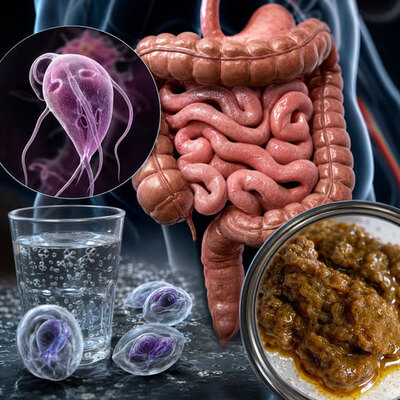
Giardiasis: Key Facts at a Glance
Giardiasis is a highly contagious intestinal infection caused by the parasite Giardia duodenalis. It spreads through contaminated water, food, or poor hygiene, and symptoms begin one to two weeks after exposure. The hallmark is explosive, watery, foul-smelling diarrhea with abdominal cramping, bloating, and gas.
- What the stool looks like: Greasy, soft, and extremely foul-smelling. It often floats in the toilet bowl.
- In young children: Look for failure to thrive, persistent irritability, and prolonged loose stools. Symptoms can seem to recover and then suddenly relapse.
- How it spreads: Drinking untreated water from lakes or streams, swallowing pool water, improperly washed food, and person-to-person contact, which is extremely common in daycare centers.
- Treatment: Metronidazole for 5 to 7 days is the most commonly prescribed medicine, and nitazoxanide is a liquid option favored for children. Symptoms typically resolve within a week of starting therapy.
- Can it go away on its own? Yes, but this can take several weeks or even months, and the person remains highly contagious. Medical professionals strongly recommend treatment for anyone with symptoms.
- Prevention: Wash hands with soap and warm water for at least 20 seconds. Alcohol-based hand sanitizers are largely ineffective against this parasite. Never swallow water while swimming.
- Daycare: A child with diarrhea should stay out of the facility until symptom-free for at least 48 hours.
- A Comprehensive Guide to Giardiasis Infection
- Understanding What the Infection Is
- Recognizing Symptoms in Patients
- The Causes and Transmission of Giardiasis
- Diagnosis and Medical Evaluation of the Disease
- Effective Giardiasis Treatment and Management
- Preventing the Illness in Daily Life
- Giardiasis in Childcare and Vulnerable Populations
- Frequently Asked Questions
- Scientific Resources
A Comprehensive Guide to Giardiasis Infection
When discussing intestinal illnesses worldwide, Giardiasis stands out as one of the most common and persistent parasitic infections affecting the human digestive system. This condition is a widely recognized diarrheal disease that impacts millions of individuals globally, ranging from young children in daycare centers to international travelers and outdoor enthusiasts. In this extensive medical guide, we will explore every facet of the infection, diving deep into its causes, epidemiological factors, clinical manifestations, and the most effective diagnostic and therapeutic approaches available today.
By understanding the intricate biology of the organism responsible for this illness, we can better grasp how the disease spreads and why it remains a significant public health challenge. Giardiasis is not just a disease of developing nations with limited sanitation; it is highly prevalent in developed countries as well, making the awareness of the condition crucial for parents, healthcare providers, and the general public. Throughout this article, we will examine the nuances of this parasitic issue to provide a thorough understanding of the disease and its profound impact on gastrointestinal health.
Understanding What the Infection Is
At its core, this is an infectious disease of the small intestine caused by a microscopic, flagellated protozoan parasite. The historical discovery of the organism behind the illness dates back to 1681 when the Dutch microscopist Antonie van Leeuwenhoek first observed it in his own stool. Since that groundbreaking discovery, extensive research has been conducted to understand how the parasite functions and why it causes such pervasive gastrointestinal distress.
The organism exists in two distinct morphological stages: the fragile trophozoite and the resilient cyst. When a person is exposed to the protozoan, they typically ingest the cyst form, which is incredibly hardy and can survive outside a host in cold water or soil for several months. Once ingested, the acidic environment of the stomach triggers excystation, releasing trophozoites into the duodenum, where the active phase begins. These trophozoites attach firmly to the mucosal lining of the small intestine, leading to the clinical manifestations.
The Global Impact of Giardiasis
The global prevalence of Giardiasis is staggering, with an estimated 300 million cases occurring annually. The infection is endemic throughout the world, with the highest rates observed in tropical and subtropical regions where access to clean drinking water is limited. However, it is also the most commonly reported pathogenic protozoan disease in the United States and other developed nations.
In these developed regions, the parasite is frequently responsible for waterborne outbreaks linked to contaminated municipal water supplies, recreational lakes, and swimming pools. Furthermore, the illness poses a significant challenge in institutional settings, particularly in child care centers where close contact and developing hygiene habits facilitate rapid transmission. Understanding the far-reaching implications of the disease is essential for implementing effective public health interventions and minimizing the burden of the condition.
Identifying giardia in humans
When identifying giardia in humans, medical professionals look for the specific protozoan known scientifically as Giardia duodenalis (also referred to as Giardia lamblia or Giardia intestinalis). This specific parasite is solely responsible for causing the disease. The presence of giardia in humans can range from a completely asymptomatic carrier state to severe, debilitating gastrointestinal distress. The morphological characteristics of the parasite, such as its teardrop-shaped trophozoite form with a distinct “face-like” appearance under a microscope, make the identification of giardia in humans a critical step in diagnosing the root cause of prolonged digestive issues.
Recognizing Symptoms in Patients
The clinical presentation of this condition is remarkably diverse, making it sometimes difficult to diagnose based on clinical signs alone. Following an incubation period that typically ranges from one to two weeks, the acute stage of the illness begins. Many individuals infected with the parasite experience a sudden onset of gastrointestinal uneasiness, which rapidly progresses to more severe symptoms.
The hallmark of acute infection is explosive, watery, and foul-smelling diarrhea. Patients suffering from it frequently report profound abdominal cramping, severe bloating, and excessive flatulence. Loss of appetite, profound fatigue, and nausea are also prominent features of the disease. Unlike many bacterial dysenteries, it rarely causes high fever, and the presence of blood or mucus in the stool is highly uncommon. If left untreated, the acute phase of the illness can transition into a subacute or chronic condition, characterized by intermittent diarrhea, persistent weight loss, and significant nutritional malabsorption.
How the Infection Affects the Digestive System
The exact mechanisms by which the parasite damages the digestive system are complex and multifactorial. While the trophozoites rarely invade the intestinal tissue deeply, their physical attachment to the microvilli causes significant irritation and functional disruption. It leads to the blunting of the intestinal villi and a reduction in crucial digestive enzymes, such as lactase.
This enzymatic disruption explains why many patients develop secondary lactose intolerance, a condition that can persist long after the underlying infection has been successfully eradicated. The malabsorption associated with the disease affects the body’s ability to absorb fats, carbohydrates, and fat-soluble vitamins (such as Vitamin A and Vitamin B12). This extensive disruption of the gut environment underscores why prompt diagnosis and management of the illness are vital for maintaining long-term digestive health.
Recognizing giardiasis symptoms in children and adults
It is crucial for caregivers and healthcare providers to be adept at recognizing giardiasis symptoms accurately. While adults may experience severe bloating and fatigue, recognizing giardiasis symptoms in young children often involves looking for signs of failure to thrive, persistent irritability, and prolonged loose stools. Because young children may not be able to articulate their abdominal pain, recognizing giardiasis symptoms requires careful observation of their feeding habits and stool output. The severity of giardiasis symptoms can fluctuate widely, with periods of apparent recovery followed by sudden relapses, highlighting the unpredictable nature of this parasitic illness.
Understanding what giardia poop and giardiasis poop look like
A common concern for parents and patients is understanding exactly what giardia poop and giardiasis poop look like. Due to the fat malabsorption caused by the infection, giardia poop is characteristically greasy, soft, and extremely foul-smelling. Unlike standard viral gastroenteritis, giardiasis poop often floats in the toilet bowl because of its high lipid content. Observing the unique characteristics of giardiasis poop is often one of the first clinical clues that leads a physician to suspect a parasitic infection rather than a routine viral or bacterial stomach bug.
The Causes and Transmission of Giardiasis
The primary cause of Giardiasis is the accidental ingestion of the parasite’s infective cysts. Because these cysts are shed in the feces of infected individuals and animals in massive numbers—sometimes millions in a single bowel movement—the transmission is highly efficient. The illness is fundamentally transmitted via the fecal-oral route. This can occur directly through person-to-person contact or indirectly through the consumption of contaminated water or food.
Poor hand hygiene is a massive contributor to the spread of the infection, particularly in environments like daycares, nursing homes, and among food handlers. Furthermore, the disease can be transmitted through sexual practices that involve fecal exposure. The sheer resilience of the cysts ensures that the condition remains a persistent threat in both rural and highly urbanized settings.
Environmental Factors Influencing the Spread
The physical environment plays a massive role in the epidemiology of the illness. The cysts responsible for it are notoriously resistant to standard levels of chlorine used in typical municipal water purification systems and swimming pools. Therefore, an individual can easily acquire the parasite by accidentally swallowing recreational water from a seemingly clean public pool or interactive fountain.
In wilderness settings, hikers and campers frequently contract the bug by drinking untreated water from pristine-looking mountain streams or lakes. Wildlife, including beavers, dogs, and cattle, can serve as reservoirs for the parasite, contaminating surface waters and facilitating the zoonotic spread of the infection. Consequently, understanding the environmental persistence of this organism is essential for anyone looking to prevent an occurrence of the disease.
The role of the giardia parasite in water sources
The giardia parasite is exceptionally well-adapted to surviving in aquatic environments. The tough outer shell of the giardia parasite protects it from environmental stressors, allowing it to remain viable and infective in cold water for several months. When local water treatment facilities experience filtration failures, the giardia parasite can easily bypass chemical disinfections, leading to massive, community-wide outbreaks of waterborne illness. The resilience of the giardia parasite necessitates the use of advanced filtration systems or boiling techniques to ensure drinking water is entirely safe.
How a giardia infection spreads in communities
A giardia infection can sweep rapidly through a community, especially when basic sanitary practices are overlooked. Once a single individual introduces a giardia infection into a tight-knit environment, such as a family household or a child care center, the likelihood of secondary transmission is exceptionally high. Asymptomatic carriers play a silent but significant role in spreading a giardia infection, as they unknowingly shed infective cysts into the environment, perpetuating the cycle of transmission without ever showing signs of illness themselves.
Diagnosis and Medical Evaluation of the Disease
Accurately diagnosing Giardiasis is a critical step in providing relief and preventing further transmission. Because the symptoms of the condition overlap significantly with other gastrointestinal disorders, a definitive diagnosis relies heavily on laboratory confirmation. Historically, the standard method for diagnosing the illness has been the microscopic examination of a patient’s stool for the presence of ova and parasites (O&P).
However, because the shedding of cysts can be highly intermittent, a single stool sample may not always detect the infection. To confidently rule out the parasite, physicians often recommend collecting three distinct stool samples on alternate days. Even with multiple samples, the microscopic detection requires a highly trained laboratory technician, as the organisms can easily degrade if not properly preserved in specific chemical solutions like 10% buffered formalin or polyvinyl alcohol.
Laboratory Testing for Giardiasis
Advancements in medical technology have significantly improved the diagnosis of Giardiasis. Today, antigen detection tests, such as Enzyme-Linked Immunosorbent Assays (ELISA) and direct immunofluorescence assays, are widely utilized for diagnosing the condition. These modern tests offer higher sensitivity and specificity than traditional microscopy, allowing for the rapid and accurate detection of specific antigens directly in the stool.
In rare and highly cryptic cases of the illness where stool tests remain negative but clinical suspicion remains high, more invasive diagnostic procedures may be employed. Gastroenterologists may perform an upper endoscopy to collect duodenal fluid aspirates or small bowel biopsies. Alternatively, the non-invasive “string test” (Entero-Test) can be used to capture mucous from the upper intestine to identify the trophozoites causing the distress. Regardless of the method, confirming the presence of the organism is paramount for targeted treatment.
Distinguishing lambliasis giardiasis from other illnesses
In European medical literature, the condition is frequently referred to as lambliasis giardiasis. Distinguishing lambliasis giardiasis from other enteric infections, such as cryptosporidiosis, bacterial dysentery, or viral gastroenteritis, requires careful clinical evaluation. Unlike bacterial infections, lambliasis giardiasis generally does not present with high fever or bloody stools. Recognizing the unique chronicity and malabsorptive characteristics of lambliasis giardiasis is essential for healthcare providers to avoid the misprescription of standard antibacterial antibiotics, which are completely ineffective against this protozoan.
Effective Giardiasis Treatment and Management
Once a diagnosis is confirmed, initiating the correct giardiasis treatment is essential for eradicating the parasite and alleviating the patient’s distress. The pharmacological management of the infection involves specific antiprotozoal medications that are highly effective at killing both the trophozoites and the cysts. The primary goal of giardiasis treatment is not only clinical cure but also the complete parasitological eradication to prevent the patient from becoming an asymptomatic cyst shedder.
While many individuals, particularly asymptomatic children, may spontaneously clear the parasite over several months, active medical intervention is strongly recommended for anyone exhibiting symptoms, as well as for food handlers and child care workers, to halt public transmission. It is imperative that patients adhere strictly to the prescribed giardiasis treatment regimen, completing the entire course of medication even if their symptoms resolve within a few days.
Medical Approaches for a Cure
The arsenal of medications available to combat the organism includes several distinct classes of drugs, with the nitroimidazole family being the most prominent. These drugs work by inducing DNA damage within the parasite, effectively halting its ability to multiply and survive. In the United States and many other countries, specific medications have been established as the gold standard for treating the illness, though regional availability and physician preference can dictate alternative approaches.
Patients undergoing treatment for the condition must also be managed supportively. Hydration is paramount, particularly in infants and young children who are highly susceptible to dehydration from prolonged diarrhea. If a patient experiences ongoing digestive discomfort after the successful eradication of the parasite, physicians must evaluate them for post-infectious lactose intolerance or irritable bowel syndrome rather than immediately assuming a failure of the initial treatment.
Utilizing giardiasis metronidazole and other medications
The most universally prescribed medication is giardiasis metronidazole. Utilizing giardiasis metronidazole generally involves a 5 to 7-day course of oral tablets or liquid suspension. While giardiasis metronidazole boasts a high efficacy rate (often between 85% and 95%), it can cause side effects such as nausea, a metallic taste in the mouth, and gastrointestinal upset. It is absolutely critical that patients avoid consuming any alcohol while taking giardiasis metronidazole, as it can trigger a severe, vomit-inducing reaction. Other alternative medications include Tinidazole, which offers the convenience of a highly effective single-dose regimen, and Nitazoxanide, a broad-spectrum antiparasitic agent available in a liquid formulation that is highly favored for pediatric use. Quinacrine and Furazolidone are older medications that remain highly effective against the parasite, though their side effect profiles have made them less popular in modern clinical practice compared to newer alternatives.
Standard giardiasis treatment protocols
Developing standard giardiasis treatment protocols requires considering the specific needs of the patient. For instance, treating pregnant people presents a unique challenge, as many standard antiprotozoal drugs are avoided during the first trimester. In such cases, physicians may utilize alternative giardiasis treatment protocols, such as prescribing Paromomycin, a non-absorbed aminoglycoside that works locally within the gut without exposing the developing fetus to systemic drug levels.
Evaluating giardiasis lambliasis recovery rates
When evaluating giardiasis lambliasis recovery, physicians typically expect symptoms to resolve within a week of initiating therapy. If a patient continues to exhibit signs of giardiasis lambliasis after completing a full course of medication, re-testing is mandatory. In cases of true drug resistance or treatment failure, the standard approach to curing giardiasis lambliasis involves prescribing a prolonged course of a different class of antiprotozoal medication to ensure complete eradication.
Preventing the Illness in Daily Life
Given the highly contagious nature and environmental resilience of the parasite, the prevention of the infection is deeply rooted in rigorous personal hygiene and meticulous food and water safety practices. Because there is no vaccine available to prevent this condition, proactive behavioral measures are the only effective defense mechanism against this pervasive disease. At the individual level, rigorous and frequent handwashing with soap and warm water for at least 20 seconds is the single most critical intervention for preventing the illness. This is especially important after using the restroom, changing diapers, or handling animal waste. It is important to note that alcohol-based hand sanitizers are largely ineffective at destroying the hard cystic shell of the parasite; therefore, traditional handwashing is absolutely mandatory to prevent the transmission.
Hygiene Practices Against the Parasite
Beyond hand hygiene, dietary precautions are paramount in the fight against the condition. Travelers visiting regions with compromised sanitation infrastructure must remain vigilant. To avoid contracting the bug, one should only consume bottled water with intact seals, avoid ice cubes in beverages, and refrain from eating raw fruits and vegetables unless they have been peeled by the consumer or thoroughly washed in purified water.
For outdoor enthusiasts, bringing a reliable water purification system is non-negotiable to prevent the sickness. Devices that utilize absolute 1-micron filters or reverse osmosis are highly effective at physically removing the cysts. Alternatively, bringing water to a rolling boil for at least one full minute (or longer at higher altitudes) guarantees the destruction of the parasite, ensuring that the water is completely safe from the protozoan.
Avoiding giardiasis lambliasis through safe water practices
To successfully avoid giardiasis lambliasis, individuals must understand that standard municipal chlorination may not always be sufficient. Avoiding giardiasis lambliasis means never swallowing water while swimming in lakes, rivers, or public pools. Furthermore, if your home is supplied by a private well, conducting routine water quality testing is an essential step in identifying potential contamination and preventing a family-wide outbreak of giardiasis lambliasis.
Giardiasis in Childcare and Vulnerable Populations
The epidemiology of the illness is heavily skewed towards pediatric populations, making child care centers a notorious breeding ground for the infection. Children who are not yet toilet-trained and lack basic hygienic awareness are highly susceptible to contracting and spreading the condition. The high density of susceptible hosts, combined with frequent diaper changing and shared toys, creates a perfect storm for the rapid transmission.
In these environments, a single asymptomatic child excreting cysts can spark a massive outbreak of the disease that quickly involves not only other children but also the center’s staff and the children’s extended families. Therefore, strict institutional policies are required to mitigate the risk and manage the spread effectively.
Managing Outbreaks
When an outbreak of the illness occurs in a daycare setting, public health interventions must be swift and comprehensive. Health departments often recommend that any child or staff member actively suffering from diarrhea be strictly excluded from the facility until they have been symptom-free for at least 48 hours to prevent the further spread of the bug.
Furthermore, environmental cleaning protocols must be massively escalated. While the cysts causing the infection are tough, thorough cleaning of diapering areas, toys, and food preparation surfaces with appropriate disinfectants is vital. Education is also a key component; teaching daycare workers the precise techniques for safe diapering and enforcing rigorous handwashing routines are proven methods to break the chain of transmission.
The prevalence of giardiasis in humans in daycare centers
Studies continuously show that the prevalence of giardiasis in humans within daycare settings can be alarmingly high, sometimes reaching infection rates of 20% to 30% among attendees. Because a significant portion of this prevalence involves asymptomatic carriers, fully eradicating giardiasis in humans within a specific facility is incredibly challenging. While routine mass treatment of asymptomatic children is generally not recommended due to drug side effects and rapid reinfection rates, maintaining hyper-vigilance regarding symptomatic cases is essential to keeping the prevalence of giardiasis in humans as low as possible.
Frequently Asked Questions
What is giardiasis?
Giardiasis is a highly contagious intestinal infection caused by the microscopic protozoan parasite known as Giardia duodenalis. When a person ingests the infective cysts of this parasite, it settles in the small intestine, leading to a disruption of the digestive tract’s normal absorptive functions. This parasitic illness is one of the most common causes of waterborne disease worldwide, affecting millions of people through contaminated water, food, or poor hygiene.
How is giardiasis transmitted?
The disease is primarily transmitted through the fecal-oral route, meaning it spreads when microscopic amounts of infected feces are accidentally ingested. You can contract the illness by drinking contaminated water from lakes or streams, consuming improperly washed food, or touching surfaces tainted with the parasite and then touching your mouth. Furthermore, person-to-person transmission is extremely common in crowded environments like daycare centers where proper handwashing is not strictly enforced.
What does giardiasis poop look like?
Because the infection severely impairs the body’s ability to absorb dietary fats, the resulting bowel movements have a very distinct appearance. Giardiasis poop is typically characterized as being incredibly greasy, soft, and remarkably foul-smelling. Additionally, due to the high fat content, the stool often floats in the toilet bowl and may be accompanied by severe abdominal bloating and excessive gas.
Can giardiasis go away on its own?
Yes, in many cases, especially among otherwise healthy individuals or asymptomatic carriers, the immune system can eventually clear the infection without medical intervention. However, this spontaneous resolution can take several weeks or even months, during which time the person remains highly contagious to others. Because of the risk of spreading the disease and the potential for severe malnutrition and dehydration, medical professionals strongly recommend active pharmacological treatment for anyone experiencing symptoms.
How can you get giardiasis?
You can easily get infected by inadvertently swallowing the hardy parasitic cysts found in various contaminated environments. Drinking untreated water from mountain streams while camping, swallowing water in public swimming pools, or interacting intimately with an infected person without proper hygiene are primary ways to contract the disease. Additionally, handling contaminated diapers or failing to wash hands before eating significantly increases your risk of acquiring this persistent digestive infection.
The following post may interest you
Why Does My Baby Have Green Poop?
Understanding Diarrhea: Causes, Symptoms, and Effective Treatments
Disclaimer: The content provided on BabyKidsHealth.com is for informational purposes only and is not intended as a substitute for professional medical advice, diagnosis, or treatment. Always seek the advice of your physician or other qualified health provider with any questions you may have regarding a medical condition.
Sources
Giardia Intestinalis Infections (American Academy of Pediatrics, HealthyChildren.org)
Giardiasis
https://journals.asm.org/doi/abs/10.1128/cmr.5.1.93
Giardiasis
https://www.ncbi.nlm.nih.gov/sites/books/NBK513239
Treatment of Giardiasis
https://journals.asm.org/doi/full/10.1128/cmr.14.1.114-128.2001
Giardiasis Surveillance — United States, 2009–2010
https://www.cdc.gov/MMWR/preview/mmwrhtml/ss6105a2.htm
Giardiasis Surveillance — United States, 2011–2012
https://www.cdc.gov/mmwr/preview/mmwrhtml/ss6403a2.htm
Giardiasis: clinical and therapeutic aspects
https://gut.bmj.com/content/18/5/343.abstract
Prevalence of giardiasis among primary school children
https://onlinelibrary.wiley.com/doi/abs/10.1111/j.1365-2214.1994.tb00386.x
Risk factors for infection with Giardia duodenalis in pre-school children in the city of Salvador, Brazil
Giardia lamblia infections in children in Ghana