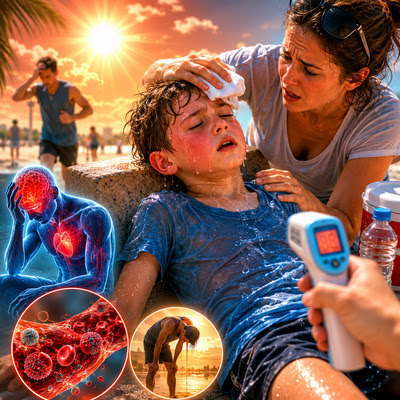
The Complete Medical Guide to Heat Stroke: Causes, Symptoms, and Expert Care
Heat Stroke is the most severe and life-threatening form of heat-related illness, occurring when the human body’s thermoregulatory system is completely overwhelmed by excessive environmental heat or strenuous physical activity. When the body becomes dehydrated and its cooling processes fail, body temperature can rapidly rise to dangerous levels, typically above 104°F (40°C). In the first paragraph of any medical discussion regarding this condition, it is critical to emphasize that this is a true medical emergency; if left untreated, it can quickly cause profound damage to the brain, heart, kidneys, and muscles, leading to permanent disability or death.
Understanding Heat Stroke: The Medical Emergency
The human body is remarkably efficient at maintaining a steady internal temperature, primarily utilizing the evaporation of sweat to cool the skin and underlying tissues. However, excessive heat exposure can overtax this built-in cooling mechanism. If steps are not taken to immediately reduce body temperature, a milder heat exhaustion can rapidly worsen and transition into full-blown hyperthermia and multi-organ dysfunction. Recognizing the severity of Heat Stroke involves understanding the complex interplay between environmental factors, metabolic heat generation, and the body’s acute inflammatory response.
The Pathophysiology of Heat Stroke
The progression of Heat Stroke involves much more than just a simple elevation in core body temperature. It represents a continuum of changes resulting from thermoregulatory failure coupled with an exaggerated acute-phase inflammatory response.
Hyperthermia and Thermoregulatory Failure
As body temperature climbs, the cardiovascular system attempts to adapt by drastically increasing cardiac output—sometimes up to 20 liters per minute—and shunting heated blood from the central circulation to the peripheral skin vessels to facilitate heat dissipation. This massive shift of blood volume leads to visceral hypoperfusion, particularly in the gastrointestinal tract and kidneys. Failure of this normal cardiovascular adaptation to severe heat stress is the primary trigger that precipitates circulatory shock and extreme hyperthermia.
Heat Stroke Causes and Inflammatory Responses
The underlying Heat stroke causes extend into cellular and molecular levels. The reduction in splanchnic blood flow induces intestinal and hepatocellular hypoxia. This hypoxia generates highly reactive oxygen and nitrogen species that damage the intestinal mucosa, increasing gastrointestinal permeability. Consequently, endotoxins from the gut flora leak into the systemic circulation, triggering a massive release of inflammatory cytokines, such as tumor necrosis factor-alpha (TNF-alpha), interleukin-1, and interleukin-6. This systemic inflammatory response syndrome (SIRS) behaves similarly to septic shock, causing profound endothelial cell activation, microvascular thrombosis, and ultimately disseminated intravascular coagulation (DIC).
Mild Heat Stroke Symptoms Progression
What might initially appear as Mild heat stroke symptoms can escalate unpredictably. The body’s cellular defense includes the production of heat-shock proteins, which attempt to repair thermal damage and protect cells against ischemia and endotoxins. However, when the heat stress is extreme or prolonged, this heat-shock response is altered or overwhelmed, allowing widespread cellular necrosis and apoptosis, particularly within the central nervous system and the cerebellum.
Clinical Types of Heat Stroke
Medical professionals classify this condition into two distinct categories based on the underlying mechanisms and the populations most frequently affected. Both types of Heat Stroke derive from a failure to dissipate excessive body heat, but their presentations and triggers differ significantly.
Classic Heat Stroke
Classic, or non-exertional, Heat Stroke tends to occur during prolonged heat waves and primarily strikes individuals who have a compromised ability to adjust physiologically to environmental heat stress. This demographic heavily includes the older people, young infants, chronically ill individuals, and people without access to adequate air conditioning. In classic cases, the simple absorption of environmental heat overwhelms the body’s heat-loss mechanisms without the need for physical exertion.
Furthermore, factors such as social isolation, confinement to poorly ventilated spaces, and pre-existing medical conditions (like cardiovascular disease or neurological disorders) exponentially increase the risk. older people individuals often suffer from a diminished sweating capacity and a reduced cardiovascular reserve, making them highly susceptible.
Exertional Heat Stroke
Exertional Heat Stroke strikes otherwise healthy, active individuals who engage in strenuous physical activity in hot or humid environments. This type frequently occurs in athletes, military personnel, and outdoor laborers who generate massive amounts of metabolic heat that surpass the body’s maximum cooling capacity. Exertional cases can develop rapidly, even within the first 60 minutes of exertion, and occasionally occur in relatively moderate environmental temperatures if the physical output is extreme.
Heat Stroke Symptoms vs Heat Exhaustion
It is clinically vital to distinguish between these varying levels of heat illness. When evaluating Heat stroke symptoms vs heat exhaustion, the defining differentiator is central nervous system (CNS) dysfunction. Heat exhaustion represents a moderate illness driven by water and salt depletion, manifesting as heavy sweating, weakness, dizziness, and a core temperature that is elevated but below 104°F (40°C). If untreated, it progresses. Once altered mental status, confusion, or loss of consciousness occurs, the condition has officially escalated to a critical emergency, necessitating immediate life-saving interventions.
| Feature Comparison | Classic Presentation | Exertional Presentation |
| Primary Age Group | Older people, very young children, chronically ill. | Young, active adults, athletes, military personnel. |
| Typical Occurrence | Epidemic, usually during prolonged heat waves. | Sporadic, directly tied to heavy physical exertion. |
| Skin Condition | Hot, flushed, and usually dry (absence of sweating). | Profuse sweating, hot, and damp skin. |
| Acid-Base Status | Respiratory alkalosis. | Respiratory alkalosis combined with severe lactic acidosis. |
| Organ Complications | Acute respiratory distress syndrome (ARDS), mild DIC. | Rhabdomyolysis, severe acute renal failure, marked DIC. |
Crucial Medical Note: Exertional cases often feature rhabdomyolysis, a severe breakdown of muscle tissue that floods the bloodstream with toxic byproducts, placing enormous stress on the kidneys and frequently leading to acute renal failure.
Recognizing Heat Stroke
Early identification is the most significant factor in patient survival. Because Heat Stroke affects the brain profoundly, the individual experiencing it is often completely unaware of their deteriorating condition, relying heavily on bystanders, coaches, or family members to recognize the danger and intervene.
Early Warning Signs of Heat Stroke
Before complete collapse, the body usually exhibits profound distress signals. The initial manifestations include a core body temperature soaring above 104°F (40°C), accompanied by a rapid, strong pulse and fast, shallow breathing. The heart races because heat stress places an immense burden on the cardiovascular system as it desperately attempts to pump blood to the skin for cooling.
Signs of Heat Stroke in Vulnerable Groups
The signs of heat stroke can vary slightly depending on the patient’s age and health status. In infants and children, extreme lethargy, lack of tears, and unresponsiveness are immediate red flags. In the older people, caregivers might notice slurred speech, delirium, or odd, bizarre behavior that mimics a neurological event. In all populations, a sudden cessation of sweating in a hot environment is a dire clinical indicator.
Symptoms of Heat Stroke in Athletes
For those engaged in sports, the symptoms of heat stroke often begin with severe muscle cramping, staggering, and a loss of coordination. Athletes may become combative, highly irritable, or suffer from severe visual disturbances (blurred vision). Sweating may still be profuse in these exertional cases, making it easier for untrained observers to mistakenly assume the athlete is merely tired rather than experiencing a life-threatening crisis.
Heatstroke Symptoms in the Older People
When observing heatstroke symptoms in older adults during a heat wave, watch for hot, flushed, and perfectly dry skin. The older people often have an impaired central nervous system response to temperature changes, meaning they may not even feel excessively hot despite a dangerously high core temperature.
Diagnosing Heat Stroke
In a hospital or emergency room setting, medical professionals must act swiftly to confirm the diagnosis while simultaneously initiating treatment. The primary diagnostic criterion is profound hyperthermia paired with encephalopathy (brain dysfunction).
Clinical Evaluation
Emergency physicians will immediately measure the patient’s core body temperature, strictly using a rectal thermometer, as oral, axillary, or tympanic measurements are dangerously inaccurate in extreme hyperthermia. If providers suspect the condition, they will not wait for laboratory confirmation to begin aggressive cooling protocols, as every minute of hyperthermia exponentially increases cellular death.
A comprehensive evaluation involves extensive laboratory testing. Doctors will order blood tests to check for severe electrolyte imbalances (such as hyperkalemia or hypocalcemia), complete blood counts, and coagulation profiles to identify early signs of disseminated intravascular coagulation. Furthermore, urine tests and serum creatine kinase (CPK) levels are closely monitored to detect myoglobinuria and rhabdomyolysis, which are highly indicative of massive muscle breakdown.
Heat Stroke and Stroke Differences
Many people confuse the terminology, but distinguishing between heat stroke and stroke is neurologically essential. A standard stroke (cerebrovascular accident) involves a blockage or rupture of blood vessels in the brain, typically presenting with unilateral weakness, facial drooping, and speech deficits. In contrast, the neurological dysfunction in thermal injury is global and driven by extreme temperature, leading to generalized confusion, hallucinations, seizures, and coma without the focal neurological deficits typically seen in a localized brain attack.
Managing and Treating Heat Stroke
The foundational philosophy for treating Heat Stroke is “cool and run”—meaning rapid, aggressive cooling must be initiated on-site before or during transport to a medical facility. The patient’s prognosis relies entirely on the duration their core temperature remains above the critical threshold.
Immediate Actions
If you suspect someone is suffering from this condition, immediately call 911 or local emergency services. While waiting for paramedics, you must attempt to lower the person’s body temperature using any means available, as delaying cooling can lead to irreversible vital organ damage.
Move the individual out of the direct sun into a shaded or air-conditioned environment. Remove all tight, heavy, or unnecessary clothing and protective equipment. Do not give the person fluids to drink if they are experiencing an altered state of consciousness, as this poses a massive risk of aspiration (inhaling liquid into the lungs). Furthermore, fever-reducing medications like aspirin or acetaminophen must be strictly avoided; they are completely ineffective against environmental hyperthermia and can actually exacerbate severe liver damage and bleeding complications.
Heat stroke treatment Protocols
In the hospital, the Heat stroke treatment focuses on achieving a rapid cooling rate (ideally faster than 0.10°C to 0.20°C per minute).
- Cold Water Immersion: This is the gold standard for exertional cases. The patient is immersed up to the neck in an ice-water bath. This method facilitates the most rapid transfer of heat from the body’s core to the environment.
- Evaporative Cooling: Often used for classic cases, especially in older people patients who may not tolerate ice baths. The patient is continuously sprayed with tepid water while large fans blow air across their body, maximizing heat loss through evaporation.
- Intravascular Temperature Management: In advanced intensive care units, cold intravenous fluids or specialized endovascular cooling catheters may be utilized to lower blood temperature internally.
Sun Stroke Cooling Techniques
Historically referred to as sun stroke, managing this condition requires careful monitoring during the cooling phase. Cooling measures are typically halted when the core temperature reaches 101°F to 102°F (38°C to 38.9°C) to prevent severe hypothermia overshoot. During this process, patients may begin to shiver violently, which paradoxically generates more metabolic heat. Medical professionals may administer intravenous benzodiazepines (such as diazepam) to suppress seizures and halt shivering, thereby allowing the external cooling methods to work effectively.
Long-Term Outlook
The aftermath of a severe thermal insult is complex. While rapid and effective cooling usually reverses the immediate threat, the systemic inflammatory response and cellular damage can leave lasting marks on the patient’s physiology.
Surviving Heat Stroke
The prognosis depends heavily on several critical factors: the peak core temperature reached, the total duration of hyperthermia before cooling was initiated, the patient’s underlying health, and the number of organ systems compromised. If medical help is sought immediately and cooling is aggressive, the survival rate for exertional cases is exceptionally high, and patients can often recover with minimal permanent organ damage.
However, classic cases in the older people carry a grave prognosis. Mortality rates can exceed 50% during massive urban heat waves, primarily because the condition often goes unrecognized for days, allowing irreversible tissue necrosis and multiorgan failure to take hold.
Heat Stroke Recovery Process
The Heat stroke recovery process requires meticulous medical follow-up. Some patients experience lingering neurological deficits for weeks or even months. These can include cerebellar ataxia (trouble coordinating muscle movements), dysarthria (slurred speech), and anterograde amnesia (difficulty forming new memories). Furthermore, complete physiological recovery of internal organs, particularly the liver and kidneys, may take anywhere from two months to a full year. Patients who have suffered a severe episode often demonstrate a long-term increased susceptibility to heat, requiring permanent lifestyle modifications to avoid extreme temperatures in the future.
Preventing
Because it is a highly predictable and entirely preventable medical emergency, public health initiatives and personal vigilance are paramount. Preventing Heat Stroke involves a combination of environmental awareness, proper hydration, and physiological acclimatization.
Strategies Against Heat Stroke
During extreme heat waves or when traveling to hot climates, individuals must take proactive steps to protect their bodies. Air conditioning is the most effective protective factor against heat-related illness; relying solely on fans when the ambient temperature exceeds 99°F (37.2°C) is insufficient to prevent dangerous heat accumulation.
Hydration is equally critical. Individuals must drink plenty of fluids—water and electrolyte-replacement beverages—throughout the day, even before they feel thirsty. It is vital to strictly avoid alcohol and excessive caffeine, as these act as diuretics, accelerating dehydration and impairing the body’s natural thermoregulatory abilities.
Heat Stroke Prevention Guidelines
Effective Heat stroke Prevention requires recognizing and mitigating specific risk factors:
- Acclimatization: Allow the body several weeks to adjust to hot weather before engaging in strenuous physical labor or heavy exercise. Start with shorter exposures and gradually increase duration and intensity.
- Medication Awareness: Be extremely cautious if you take medications that impair sweating, alter cardiovascular responses, or cause dehydration. These include beta-blockers, diuretics, antihistamines, tricyclic antidepressants, and stimulants.
- Clothing: Wear lightweight, light-colored, and loose-fitting clothing to allow sweat to evaporate easily.
- Vehicle Safety: Never leave children, older people, or pets unattended in a parked car. The internal temperature of a closed vehicle can surge by 20 degrees Fahrenheit in just 10 minutes, creating a lethal environment.
Heat Stroke in Special Scenarios
While urban heat waves and athletic fields are the most common settings for this emergency, it can also manifest in unique, highly challenging environments where immediate medical intervention is virtually impossible.
Wilderness and Heat Stroke
Outdoor enthusiasts, hikers, and mountaineers face unique hazards. In remote settings, individuals are often exposed to direct, unrelenting sunlight for hours while carrying heavy gear and engaging in intense physical exertion.
Heat Stroke Symptoms in Remote Areas
When heat stroke symptoms occur in the wilderness, the situation is incredibly dire. Without access to ice baths, intravenous fluids, or rapid emergency transport, survival depends entirely on the immediate actions of the hiking party. The victim must be moved to whatever shade is available. Cooling must be improvised using cold river water, wet clothing, and aggressive fanning. Because evacuation can take hours or even days, wilderness first aid dictates that preventing the escalation of heat exhaustion is the only reliable way to ensure survival.
Frequently Asked Questions
What is heat stroke?
It is a severe, life-threatening medical emergency where the body’s temperature regulation system completely fails, causing the core body temperature to rise rapidly above 104°F (40°C). When this happens, the body can no longer cool itself through sweating, leading to cellular damage. Without immediate medical intervention, the extreme hyperthermia causes widespread systemic inflammation, central nervous system dysfunction, and potentially fatal multi-organ failure.
How to treat heat stroke?
The primary treatment is rapid and aggressive cooling of the body to lower the core temperature below dangerous levels. Medical professionals typically use cold water immersion, evaporative cooling with mist and fans, or the application of ice packs to the groin, neck, and armpits. In addition to external cooling, patients require hospitalization for intravenous fluids to stabilize their circulation, continuous monitoring for organ damage, and occasionally medications to control shivering or seizures during the cooling process.
What are the symptoms of heat stroke?
The hallmark symptoms include an extremely high body temperature and severe alterations in mental status, such as confusion, delirium, slurred speech, or loss of consciousness. Physically, the patient may exhibit a racing heart rate, rapid and shallow breathing, nausea, and vomiting. Depending on the type, the person’s skin may be completely dry, hot, and flushed (classic non-exertional type), or it may be profusely sweaty if the illness was triggered by intense physical activity (exertional type).
The following posts may interest you
Heat Exhaustion: Symptoms, Causes, Treatment & Prevention
How to Keep Baby Cool in Summer: Essential Tips for Hot Weather
Heat Rash (Prickly Heat) Guide: Treatment, Causes & Prevention
Sources
Heat Stroke
Heatstroke
https://www.nejm.org/doi/full/10.1056/NEJMra1810762
Heat Stroke
https://www.sciencedirect.com/science/article/abs/pii/S037712370380062X
Exertional heat stroke: pathophysiology and risk factors
https://pmc.ncbi.nlm.nih.gov/articles/PMC9978764
Exertional heatstroke: clinical characteristics, diagnostic and therapeutic considerations
https://www.sciencedirect.com/science/article/abs/pii/S095362051000261X
Heat stroke
https://pmc.ncbi.nlm.nih.gov/articles/PMC1130221
Fire-Heat and Qi Deficiency Syndromes as Predictors of Short-term Prognosis of Acute Ischemic Stroke
https://journals.sagepub.com/doi/abs/10.1089/acm.2012.0546
On Heat Stroke
https://pmc.ncbi.nlm.nih.gov/articles/PMC5268287
Evidence-Based Heatstroke Management in the Emergency Department
https://pmc.ncbi.nlm.nih.gov/articles/PMC7972371
Use of an external-cooling device for the treatment of heat stroke