- Comprehensive Guide to Rocky Mountain Spotted Fever (RMSF)
- Historical Perspectives and Exploration of Rocky Mountain Spotted Fever (RMSF)
- Pathogen and Characteristics of Rocky Mountain Spotted Fever (RMSF)
- Vector Ecology and Transmission Dynamics
- Epidemiological Trends in Rocky Mountain Spotted Fever
- Pathophysiology and Systemic Effects of Rocky Mountain Spotted Fever
- Clinical Progression and Presentation of Rocky Mountain Spotted Fever
- Dermatological Manifestations of Rocky Mountain Spotted Fever (RMSF)
- Diagnostic Procedures
- Medical Management and Therapeutics
- The Role of Canine Companions and Veterinary Aspects
- Preventive Strategies and Public Health
- Frequently Asked Questions
- Scientific Sources
Comprehensive Guide to Rocky Mountain Spotted Fever (RMSF)
Introduction to a Severe Tick-Borne Illness The landscape of infectious diseases includes numerous ailments transmitted by arthropods, but few are as rapidly progressive and potentially devastating as Rocky Mountain Spotted Fever (RMSF). Historically recognized in the late nineteenth century in the American West, this condition has evolved from a regional mystery into a nationally monitored public health priority. Early settlers in the Bitterroot Valley of Montana suffered from what was then termed “black measles” due to the dark, hemorrhagic skin eruptions it caused. Today, modern medicine understands that Rocky Mountain Spotted Fever (RMSF) is a life-threatening systemic infection that requires immediate clinical intervention.
Despite tremendous advancements in infectious disease management, the mortality associated with this condition remains a significant concern. The absolute key to surviving this illness is early recognition and the rapid administration of appropriate antimicrobial therapy. When treatment is delayed, the pathogen causes profound damage to the body’s vascular system, leading to organ failure and, in severe instances, death. Because early signs are notoriously non-specific, public health education and clinical vigilance are paramount. This extensive guide will explore the history, epidemiology, pathophysiology, clinical presentation, diagnostic challenges, and preventive strategies associated with this formidable disease.
Historical Perspectives and Exploration of Rocky Mountain Spotted Fever (RMSF)
Early Investigations and Milestones
The journey to understanding the origins of this infection is a testament to early twentieth-century scientific dedication. Initial observations in the late 1800s described a highly fatal illness concentrated in the western United States. It was not until the pioneering work of Howard T. Ricketts between 1906 and 1909 that the infectious nature of the disease was elucidated. Ricketts successfully demonstrated that the illness was caused by a microorganism present in the blood of infected patients and could be transmitted by tick vectors. Tragically, Ricketts lost his life to typhus, another rickettsial disease, shortly after his groundbreaking discoveries.
Following Ricketts’s initial findings, researchers like S. Burt Wolbach provided detailed histopathological descriptions, visualizing the organisms within the damaged endothelial cells of blood vessels. These foundational discoveries paved the way for future interventions and established the biological basis of the illness.
The Quest for Immunization
During the 1920s, the severity of the illness prompted urgent research into preventive measures. Scientists such as R.R. Spencer at the Rocky Mountain Laboratories undertook perilous work to develop a protective inoculation. By mashing infected ticks and treating them with weak carbolic acid, Spencer created an early version of a Rocky Mountain spotted fever vaccine. While this formulation provided some protection to high-risk individuals in that era, the advent of highly effective antibiotics in the 1940s rendered the vaccine obsolete. Today, there is no commercially available human vaccine, making swift antibiotic intervention the sole medical defense against the infection.
Pathogen and Characteristics of Rocky Mountain Spotted Fever (RMSF)
Microbiological Profile
To comprehend the clinical severity of the condition, one must examine the specific organism responsible. When investigating Rocky Mountain spotted fever caused by microscopic agents, scientists identify Rickettsia rickettsii as the culprit. This bacterium is an obligate intracellular pathogen, meaning it cannot survive or replicate outside of a host cell. Structurally, it is a small, Gram-negative coccobacillus that possesses a typical prokaryotic cytoplasm but lacks the ability to synthesize all the nutrients it needs, forcing it to parasitize the host’s cellular machinery.
Intracellular Invasion and Replication
The pathogenesis begins immediately following a Rocky mountain spotted fever bite. Once the bacteria enter the human bloodstream, they attach to the plasma membrane of vascular endothelial cells—the cells that line the interior of blood vessels. The pathogen induces the host cell to engulf it, escaping the phagosome to replicate freely within the host’s cytosol. Unlike other bacteria that cause cell lysis upon exit, Rickettsia rickettsii propels itself through the cell using host actin filaments, pushing into adjacent cells without exposing itself to the host’s immune system in the extracellular space. This continuous cycle of intracellular replication and spread results in extensive damage to the vascular lining.
Vector Ecology and Transmission Dynamics
Primary Tick Carriers
The natural reservoir and primary vectors for this pathogen are hard-bodied ticks of the family Ixodidae. Several species are responsible for maintaining the bacteria in nature and transmitting it to humans:
- American Dog Tick (Dermacentor variabilis): This species is widely distributed across the eastern, central, and Pacific coastal regions of the United States and is the most common vector for the disease rocky mountain spotted fever.
- Rocky Mountain Wood Tick (Dermacentor andersoni): Predominantly found in the Rocky Mountain states and southwestern Canada, this tick prefers wooded and brushy areas.
- Brown Dog Tick (Rhipicephalus sanguineus): Distributed globally, this tick has recently been recognized as a critical vector in the southwestern United States and parts of Mexico, heavily infesting domestic environments and dog populations.
The Transmission Cycle
The bacteria are maintained within tick populations through transovarial transmission (from an infected adult female directly to her eggs) and transstadial transmission (retained through the tick’s life stages from larva to nymph to adult). When an infected tick attaches to a mammalian host, it injects the bacteria through its saliva. A critical factor in transmission is the duration of attachment; research indicates that a tick must typically be attached for several hours to successfully transmit the pathogen, although transmission can occasionally occur more rapidly.
Epidemiological Trends in Rocky Mountain Spotted Fever (RMSF)
Geographic Shifts and Prevalent Regions
The epidemiology of Rocky Mountain Spotted Fever (RMSF) has shifted dramatically over the decades. While initially concentrated in the western frontier, the highest incidence rates are currently reported in the southeastern and south-central United States. States such as North Carolina, Oklahoma, Arkansas, Tennessee, and Missouri consistently report the vast majority of cases. Consequently, the name of the illness is considered somewhat of a geographical misnomer today.
The Emergence in the Southwest
A significant and highly concerning epidemiological development has occurred in the southwestern United States, particularly within Indigenous peoples of America communities in Arizona. In these areas, the disease is transmitted by the brown dog tick and is characterized by extraordinarily high incidence rates and severe mortality, especially among young children. The warm climate allows these ticks to remain active year-round, and their preference for peridomestic environments (around human dwellings and free-roaming dogs) creates a continuous risk of exposure.
Demographics and Seasonality
While anyone exposed to infected ticks is vulnerable, certain demographics exhibit higher incidence rates. Children under the age of ten, as well as older adults, are particularly susceptible to severe outcomes. The occurrence of the illness is highly seasonal, strongly corresponding to the feeding periods of the primary tick vectors. The vast majority of cases are reported during the warmer months from April through September. However, due to varying climates and indoor tick infestations (as seen with the brown dog tick), cases can occur in any month of the year.
Pathophysiology and Systemic Effects of Rocky Mountain Spotted Fever (RMSF)
Vascular Damage and Endothelial Injury
The fundamental pathological mechanism of Rocky Mountain Spotted Fever (RMSF) is a systemic vasculitis. Because the bacteria specifically infect the endothelial cells lining the blood vessels, their uncontrolled replication causes these cells to undergo necrosis. This widespread cellular destruction leads to a loss of vascular integrity. Blood vessels begin to leak fluid and red blood cells into the surrounding interstitial spaces.
Multisystem Organ Failure
The consequences of this microvascular leakage are catastrophic if left unchecked. Hypovolemia (decreased blood volume) occurs as protein-rich fluid escapes the circulatory system, leading to dangerous drops in blood pressure and reduced perfusion to vital organs.
- Pulmonary System: Fluid accumulation in the lungs can cause acute respiratory distress syndrome (ARDS), leading to severe breathing difficulties.
- Central Nervous System: Leakage in the brain leads to cerebral edema and meningoencephalitis, manifesting as profound confusion, ataxia, seizures, or coma.
- Renal System: Decreased blood flow to the kidneys can precipitate acute renal failure, further complicating the patient’s fluid and electrolyte balance.
Clinical Progression and Presentation of Rocky Mountain Spotted Fever (RMSF)
Diagnosing the illness in its earliest stages requires a high index of clinical suspicion because initial signs are entirely nonspecific. The incubation period typically ranges from 2 to 14 days following tick exposure.
Initial Warning Signals
The onset of the illness is usually abrupt. A patient will present with severe rocky mountain spotted fever symptoms that mimic many benign viral infections. These early symptoms typically include:
- High fever and chills
- Severe, unrelenting headache
- Deep muscle pain (myalgia) and profound fatigue
- Gastrointestinal distress, including nausea, vomiting, and severe abdominal pain
Because these symptoms of rocky mountain spotted fever lack specificity, healthcare providers must diligently inquire about recent outdoor activities, travel history, or pet interactions.
Pediatric vs. Adult Presentations
There are notable differences between adult and pediatric cases. Rocky Mountain spotted fever symptoms in children frequently feature prominent gastrointestinal issues, severe abdominal pain that may mimic appendicitis, and swelling around the eyes (periorbital edema). In contrast, symptoms of rocky mountain spotted fever in adults may lean more heavily toward severe respiratory or neurological complications as the disease advances.
Dermatological Manifestations of Rocky Mountain Spotted Fever (RMSF)
The Evolution of the Rash
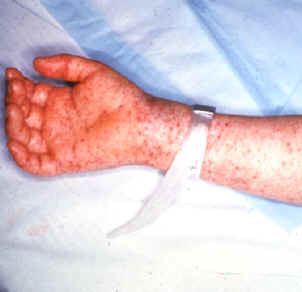
The rocky mountain spotted fever rash is the most recognized hallmark of the illness, yet it is a source of dangerous diagnostic delay. Crucially, the rash rarely appears on the first day of illness; it typically develops between the second and fourth day of fever.
The visual progression of the skin eruption follows a specific pattern:
- Early Stage: The rash begins as small, flat, pink spots (macules) that are non-itchy and turn pale when pressure is applied (blanching). These typically emerge on the wrists, forearms, and ankles.
- Spreading Phase: Over subsequent days, the lesions spread centripetally (inward) toward the trunk of the body. It eventually involves the palms of the hands and the soles of the feet—a classic, though late, diagnostic indicator.
- Late Stage: As vascular damage worsens, the macules become raised (papules) and develop deep red or purple centers (petechiae). At this stage, the rash represents actual bleeding into the skin and will no longer blanch under pressure.
The “Spotless” Fever Dilemma
A perilous clinical scenario arises when a patient does not develop the characteristic skin lesions. Between 10% and 15% of patients never exhibit a rash, leading to what clinicians call “spotless” fever. This phenomenon is more common in older adults and individuals with darker skin tones, where early macules may be visually obscured. The absence of a rash frequently causes fatal delays in treatment, reinforcing the rule that therapy must begin before a rash appears if clinical suspicion is high.
Diagnostic Procedures
Laboratory Assessments
Routine laboratory blood tests during the first few days of Rocky Mountain Spotted Fever (RMSF) are often indistinguishable from normal baseline values, providing little diagnostic help. As the disease progresses, physicians may observe mild to severe thrombocytopenia (low platelet counts), elevated hepatic transaminases (liver enzymes), and hyponatremia (low blood sodium levels).
Confirmatory Testing Challenges
Achieving a definitive Rocky Mountain spotted fever diagnosis relies on specialized testing that unfortunately cannot deliver results fast enough to guide initial treatment decisions.
- Serology: The gold standard for retrospective confirmation is the indirect immunofluorescence antibody (IFA) test. This test compares antibody levels from an acute serum sample (taken early in the illness) with a convalescent sample (taken 2 to 4 weeks later). Because it takes the immune system roughly 7 to 10 days to produce detectable antibodies, early serological tests will often return negative results.
- Polymerase Chain Reaction (PCR): While PCR can detect bacterial DNA, its sensitivity on whole blood samples is low for this specific pathogen because the bacteria reside primarily inside tissue cells rather than circulating freely in the blood.
- Skin Biopsy: An immunohistochemical stain or PCR performed on a punch biopsy of a rash lesion offers a highly specific and relatively rapid diagnostic method, visualizing the bacteria directly within the blood vessel walls.
Clinical Warning: “Treatment decisions for rickettsial pathogens should never be delayed while awaiting laboratory confirmation. Delay in treatment can lead to severe disease and long-term sequelae or death.”
Medical Management and Therapeutics
Antimicrobial Approaches
The primary directive in Rocky Mountain spotted fever treatment is the immediate, empirical administration of targeted antibiotics. The undisputed drug of choice for all patients is doxycycline.
If administered within the first five days of symptoms, doxycycline rapidly halts bacterial replication, and patients typically see their fever subside within 24 to 48 hours. Treatment is usually continued for at least three days after the fever breaks and clinical improvement is obvious, generally totaling a 5 to 7-day course (though severe cases require longer duration).
Overcoming Treatment Hesitancy in Pediatrics
Historically, medical professionals avoided prescribing tetracycline-class drugs like doxycycline to children under the age of eight due to fears of permanent dental staining and enamel hypoplasia. However, extensive modern studies have conclusively demonstrated that short courses of doxycycline do not cause tooth discoloration. The American Academy of Pediatrics and the CDC unequivocally recommend doxycycline as the first-line treatment for children of all ages. Withholding this medication from pediatric patients due to outdated fears is a critical error that significantly increases the risk of pediatric mortality.
Alternative Treatments and Contraindications
For patients with severe, life-threatening allergies to tetracyclines, or in certain specific scenarios during late pregnancy, chloramphenicol may be considered as an alternative. However, chloramphenicol carries a higher risk of fatal outcomes compared to doxycycline and necessitates careful monitoring for severe hematologic side effects, such as aplastic anemia. Furthermore, broad-spectrum antibiotics typically used for unspecified fevers—such as penicillins, cephalosporins, macrolides, and sulfonamides—are entirely ineffective against this pathogen. In fact, the administration of sulfa drugs may actively exacerbate the disease severity.
The Role of Canine Companions and Veterinary Aspects
Understanding the ecological cycle requires looking at our domestic pets. The organism causing rocky mountain spotted tick fever heavily involves dog populations. Canines are highly susceptible to the bacteria and exhibit clinical symptoms very similar to humans, including fever, lethargy, loss of appetite, and petechial rashes on their mucous membranes.
Because dogs share our living environments and are preferred hosts for the brown dog tick, they act as both transport mechanisms for infected ticks and as epidemiological sentinels. A household dog diagnosed with the infection should serve as an immediate red flag to human healthcare providers that the owners are at a high risk of exposure. Close collaboration between veterinary and human medical professionals is essential to control community outbreaks, particularly in highly endemic regions.
Preventive Strategies and Public Health
Given the aggressive nature of the disease and the potential for rapid clinical deterioration, primary prevention is the most effective defense mechanism. Since researchers abandoned early attempts to create a Rocky Mountain spotted fever vaccine, individuals must rely on personal protective measures and environmental management.
Personal Protective Measures
When venturing into potentially tick-infested environments, such as forests, grassy fields, or brush-heavy trails, individuals should adopt the following strategies:
- Protective Clothing: Wear light-colored clothing to make crawling ticks easier to spot. Long-sleeved shirts and long pants tucked into socks create a physical barrier preventing ticks from reaching the skin.
- Chemical Repellents: Apply Environmental Protection Agency (EPA)-registered insect repellents to exposed skin. Highly effective compounds include DEET, picaridin, and IR3535.
- Permethrin Treatments: Clothing, boots, and camping gear can be treated with permethrin, a powerful acaricide that kills or repels ticks upon contact.
Environmental and Pet Controls
- Vigilant Tick Checks: Upon returning from outdoor activities, perform meticulous full-body tick checks. Inspect areas where ticks prefer to hide, such as the scalp, under the arms, behind the knees, and in the groin area.
- Proper Tick Removal: If a tick is found attached, it should be removed instantly using fine-tipped tweezers. Grasp the tick as close to the skin’s surface as possible and pull straight upward with a steady, even motion. Never crush the tick with bare hands, and avoid folklore remedies like burning the tick or applying petroleum jelly.
- Yard Management: Keep lawns mowed, remove leaf litter, and clear tall brush around residential properties to reduce tick habitats.
- Veterinary Care: Consistently apply veterinarian-approved tick control products (such as topical acaricides or tick collars) to household pets to prevent them from transporting vectors into the home.
| Category | Specific Preventive Actions |
| Personal Defense | Use DEET or picaridin on skin; wear permethrin-treated clothing. |
| Physical Barriers | Wear long pants tucked into socks; stay on cleared trails. |
| Post-Exposure | Conduct thorough mirror-assisted body checks; remove attached ticks immediately with tweezers. |
| Pet Maintenance | Use continuous acaricidal treatments on dogs; inspect pets daily after outdoor exposure. |
The relentless progression of Rocky Mountain Spotted Fever (RMSF) dictates that awareness and prevention are life-saving tools. By understanding the vectors, recognizing the early and vague symptoms, and advocating for immediate empirical antibiotic therapy, public health entities and informed individuals can successfully mitigate the severe dangers posed by this historic and lethal disease.
Frequently Asked Questions
What is rocky mountain spotted fever?
This disease is a rapidly progressive, highly dangerous infectious illness transmitted to humans through the bites of specific infected ticks. It is categorized as a systemic vasculitis because the bacteria directly invade and destroy the endothelial cells lining the body’s blood vessels. Due to the severe damage it inflicts on multiple organ systems, it is considered the most lethal tick-borne disease in the United States, requiring immediate medical intervention.
Does rocky mountain spotted fever stay in your system forever?
No, the actual bacterial pathogen does not remain in your body permanently after a successful and timely course of appropriate antibiotics. A standard regimen of doxycycline effectively eradicates the Rickettsia rickettsii bacteria from the host. However, if the infection was allowed to cause extensive vascular damage before treatment began, the patient may be left with permanent physical or neurological complications, such as hearing loss or tissue gangrene requiring amputation.
What is spotted rocky mountain fever (RMSF)?
This terminology is simply a slight variation or misnomer for the formally recognized illness, which is caused by the Rickettsia rickettsii bacterium. Regardless of the exact phrasing used, it refers to the same severe tick-borne infection characterized by fever, headache, and a distinct petechial rash. The condition remains a critical medical emergency that necessitates prompt antimicrobial therapy to prevent fatal outcomes.
What are the symptoms of rocky mountain spotted fever (RMSF)?
In its initial stages, the illness mimics many common viral infections, presenting abruptly with a high fever, severe headache, deep muscle pain, extreme fatigue, and gastrointestinal distress such as nausea and vomiting. As the disease advances over a few days, a characteristic rash typically develops, starting as flat pink spots on the wrists and ankles before spreading inward to the trunk and becoming dark and purplish. If untreated, late-stage symptoms reflect severe organ failure and can include profound confusion, respiratory difficulty, and shock.
What causes rocky mountain spotted fever (RMSF)?
The direct biological cause of this severe condition is an infection by an obligate intracellular bacterium named Rickettsia rickettsii. Humans are typically inoculated with these bacteria through the bite of an infected tick, predominantly the American dog tick, the Rocky Mountain wood tick, or the brown dog tick. Once inside the human body, these bacteria aggressively target and replicate within the cells lining the blood vessels, causing extensive internal damage.
Is Rocky Mountain spotted fever deadly (RMSF)?
Yes, this is an incredibly dangerous disease that carries a severe risk of mortality if it is not identified and treated aggressively. Before the advent of modern antibiotics, historical death rates from this illness were exceedingly high, sometimes reaching up to 80 percent in specific outbreaks. Even with contemporary medical care, any delay in administering doxycycline past the fifth day of symptoms drastically increases the likelihood of death, keeping the modern case-fatality rate between 5 and 10 percent.
The following posts may interest you
Campylobacter: Symptoms, Treatment & Prevention
Shigella Overview, Clinical Symptoms and Prevention
Cryptosporidiosis: Symptoms, Causes, and Treatment Guide
Adenovirus: A Complete Guide for Parents and Kids
Sources
Clinical characteristics of Rocky Mountain spotted fever in the United States
Diagnosis and Management of Tickborne Rickettsial Diseases: Rocky Mountain Spotted Fever and Other Spotted Fever Group Rickettsioses, Ehrlichioses, and Anaplasmosis — United States
https://www.cdc.gov/mmwr/volumes/65/rr/rr6502a1.htm?utm_medium=email&utm_source=transaction
Rocky Mountain spotted fever: a disease in need of microbiological concern
https://journals.asm.org/doi/abs/10.1128/cmr.2.3.227
Rocky Mountain Spotted Fever in the United States, 2000–2007: Interpreting Contemporary Increases in Incidence
https://pmc.ncbi.nlm.nih.gov/articles/PMC2912596
Fatal Rocky Mountain Spotted Fever in the United States, 1999–2007
https://pmc.ncbi.nlm.nih.gov/articles/PMC3403778
Diagnosis and Management of Tickborne Rickettsial Diseases: Rocky Mountain Spotted Fever, Ehrlichioses, and Anaplasmosis — United States
https://www.cdc.gov/mmwr/preview/mmWrhtml/rr5504a1.htm
Rocky Mountain Spotted Fever
https://pmc.ncbi.nlm.nih.gov/articles/PMC2878212
Epidemiology and Clinical Features of Rocky Mountain Spotted Fever from Enhanced Surveillance, Sonora, Mexico: 2015–2018