- Understanding Causes, Symptoms, and Treatments
- Understanding the Pathophysiology of Herpangina
- Clinical Manifestations of Herpangina
- Effective Herpangina Treatment and Management
- Public Health Perspectives
- Frequently Asked Questions
- Scientific Sources
Comprehensive Medical Guide to Herpangina: Understanding Causes, Symptoms, and Treatments
Welcome to the definitive, evidence-based guide on Herpangina, an acute viral illness that primarily affects infants and young children but can occasionally impact adults. This comprehensive resource aims to deliver thorough, highly detailed, and scientifically backed information for caregivers, patients, and health enthusiasts alike. The onset of this illness can be sudden and highly distressing for both children and their parents, but understanding its underlying mechanisms is the crucial first step toward effective management and recovery. In this extensive guide, we will explore the virology, epidemiological history, clinical manifestations, and evidence-based treatments associated with this highly contagious viral infection.
Understanding the Pathophysiology of Herpangina
To effectively manage and prevent any infectious illness, one must first understand how the infection operates on a microscopic and systemic level. Herpangina is primarily characterized by sudden, high fevers and painful, blister-like sores in the posterior part of the mouth and throat. Unlike bacterial infections, this illness is strictly viral in nature, meaning it does not respond to antibiotic therapies.
Exploring the herpangina disease In Depth
The herpangina disease belongs to a broader category of enteroviral infections. It was first recognized by medical professionals in the 1920s, though its exact viral etiology was not fully described until nearly thirty years later. The condition primarily targets the mucous membranes of the oral cavity. When the virus enters the body, it typically replicates in the lymphoid tissue of the lower intestine and the pharynx. From there, it spreads into the bloodstream, causing a systemic immune response that results in the sudden, high fevers characteristic of the condition. The localized replication in the posterior oropharynx leads to the classic presentation of erythematous macules that rapidly evolve into vesicles and eventually painful ulcers.
The Role of the herpangina virus
The primary herpangina virus agents belong to the Enterovirus genus, which is part of the Picornaviridae family. These viruses are notoriously small, non-enveloped, and possess a single positive-strand RNA genome. Because they lack a lipid envelope, these viruses are exceptionally resilient in the environment. They are capable of surviving across a wide pH range and can retain their infectivity in temperatures up to 50 degrees Celsius. This extreme durability makes them highly transmissible and capable of surviving on fomites, such as doorknobs, shared toys, and eating utensils, for extended periods. Humans remain the sole natural host for these enteroviruses, which underscores the importance of human-to-human transmission control.
Global Epidemiology of Herpangina
The geographical and temporal distribution of Herpangina provides vital clues regarding its transmission dynamics and risk factors. Epidemiological data indicates that the illness is most frequently observed in the pediatric population, specifically in children younger than ten years of age. Outbreaks are highly seasonal. In temperate climates, such as the United States and parts of Europe, the incidence peaks during the late summer and early autumn months. Conversely, in tropical and subtropical regions, outbreaks frequently align with the rainy seasons when indoor crowding and humidity levels are at their highest.
Identifying the Primary herpangina cause
The fundamental herpangina cause is an infection by specific serotypes of group A coxsackieviruses. However, clinical and virological studies have identified that multiple strains can be responsible for the exact same clinical presentation. Group A coxsackieviruses, particularly strains A16, A6, A8, and A10, are the most frequently implicated. Beyond Group A, other viral strains such as coxsackievirus B, echovirus, and enterovirus 71 are heavily involved in widespread outbreaks.
Common herpangina causes in the Environment
Environmental herpangina causes revolve around the high contagion level of the responsible enteroviruses. Transmission predominantly occurs via the fecal-oral route. However, the virus is also highly adept at spreading through respiratory droplets expelled when an infected individual coughs, sneezes, or even talks loudly. Because viral shedding can occur long before the patient exhibits clinical symptoms and can persist in the stool for up to eight weeks post-infection, childcare centers, kindergartens, and large households serve as the primary epicenters for massive outbreaks.
Clinical Manifestations of Herpangina
Recognizing the clinical signs early is paramount for preventing severe complications such as dehydration. The incubation period for Herpangina typically ranges from three to five days. Following this silent replication phase, the illness announces itself with abrupt and often severe symptoms.
Key Clinical Signs of Herpangina
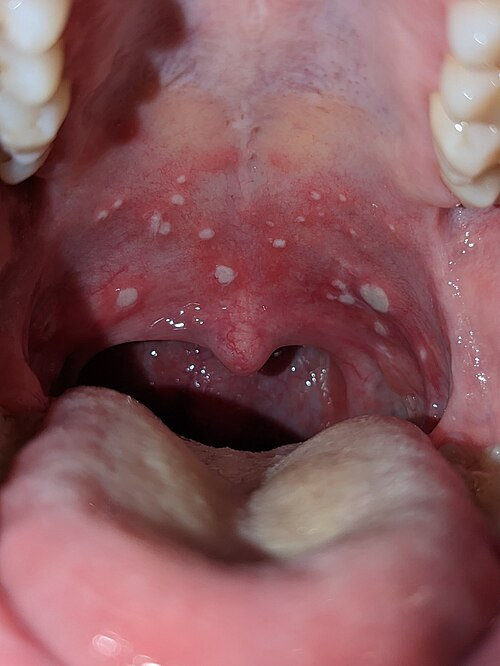
The hallmark of Herpangina is the painful enanthem that develops in the oral cavity. Within two days of the fever’s onset, the patient will develop up to twenty small, grayish papules. These lesions measure about one to two millimeters in diameter and are surrounded by a distinct red halo, known as an erythematous areola.
Common herpangina symptoms to Watch For
Caregivers must be vigilant in identifying herpangina symptoms. The illness frequently begins with a sudden, high-grade fever that can spike up to 106 degrees Fahrenheit. This is immediately followed by a severe sore throat, difficulty swallowing, and a general feeling of malaise. Older children may articulate complaints of headache, neck pain, and backache. Because swallowing becomes excruciatingly painful, patients often refuse food and liquids, leading to rapid and dangerous dehydration if left unmanaged.
Early symptoms of herpangina in Infants
The symptoms of herpangina in infants can be particularly challenging to identify because infants cannot verbally express localized pain. Caregivers should look for indirect signs of throat pain. These include excessive and unusual drooling, a sudden and complete refusal to nurse or take a bottle, heightened irritability, and uncharacteristic lethargy. Some infants may also exhibit vomiting and abdominal discomfort. It is critical to monitor their diaper output; a significant decrease in wet diapers is a major red flag indicating dangerous levels of dehydration.
Diagnostic Approaches for Herpangina
In most routine clinical settings, a pediatrician or general practitioner will diagnose Herpangina solely based on the patient’s medical history and a thorough physical examination. The visual appearance of the ulcers, specifically their location on the posterior pharynx, soft palate, tonsillar pillars, and uvula, is highly distinctive and usually sufficient for a confident clinical diagnosis.
Differentiating herpangina viral Infections from Others
It is incredibly important to differentiate a herpangina viral infection from other pediatric illnesses that present with fever and oral sores. While Herpangina is primarily localized to the back of the mouth, other diseases have different distributions and underlying causes.
| Disease Name | Causative Agent | Key Distinguishing Features |
|---|---|---|
| Herpangina | Coxsackievirus (A and B), Enterovirus 71 | Lesions strictly in the posterior oropharynx; high fever; no skin rash. |
| Hand, Foot, and Mouth Disease | Coxsackievirus A16, Enterovirus 71 | Oral lesions coupled with a non-itchy rash or blisters on the palms, soles, and sometimes buttocks. |
| Strep Throat | Group A Streptococcus bacteria | Bacterial infection featuring red, swollen tonsils with white pus patches; requires antibiotics. |
| Herpetic Stomatitis | Herpes Simplex Virus Type 1 | Larger, more persistent, and more numerous ulcers generally located in the anterior (front) of the mouth and gums. |
| Aphthous Ulcers (Canker Sores) | Non-infectious (Stress, trauma, immune) | Sporadic, non-contagious ulcers not typically accompanied by a high, sudden fever or systemic illness. |
| Kawasaki Disease | Unknown (Systemic vasculitis) | Prolonged fever, strawberry tongue, cracking lips, severe rash, and swollen lymph nodes; a medical emergency. |
Visualizing the Condition: herpangina pictures in Clinical Practice
While we do not include images here, doctors often refer to herpangina pictures in medical literature to train their diagnostic eye. The classic visual is a throat that is hyperemic (red and inflamed) with discrete, punched-out appearing shallow ulcers that have a white or grayish base and a bright red border. Unlike Hand, Foot, and Mouth Disease, these visual markers in Herpangina do not extend to the lips, the outside of the mouth, or the limbs.
Recognizing virus herpangina Outbreaks
During a known virus herpangina outbreak in a community, healthcare providers maintain a high index of suspicion for any child presenting with an acute fever and refusal to eat. In complicated cases, or for epidemiological tracking during severe outbreaks, laboratory tests can be utilized. Polymerase chain reaction testing is the gold standard for high sensitivity and speed in identifying the exact enterovirus serotype. Samples can be obtained via throat swabs, stool cultures, or vesicular fluid. Enzyme-linked immunosorbent assays can also be performed, though they are generally considered less sensitive than polymerase chain reaction methods.
Effective Herpangina Treatment and Management
Because Herpangina is a viral illness, treatment paradigms are strictly supportive. Antibiotics are entirely ineffective against viruses and should never be prescribed for uncomplicated cases of this illness. The primary goals of medical intervention are to mitigate pain, reduce the fever, and relentlessly prevent dehydration until the patient’s immune system clears the virus naturally.
Best herpangina treatment Strategies for Pain Relief
When considering herpangina treatment, pain management is the most critical component. Over-the-counter analgesics and antipyretics, such as acetaminophen or ibuprofen, are the cornerstone of home care. These medications serve a dual purpose: they lower the dangerously high fevers and provide systemic pain relief, which in turn makes it easier for the child to accept oral fluids.
Caregivers must absolutely avoid giving aspirin to children or teenagers due to the risk of Reye’s syndrome, a rare but potentially fatal condition that causes swelling in the liver and brain. For localized throat pain, pediatricians may recommend numbing mouthwashes or throat sprays, though these must be used with extreme caution in young children who might swallow them. Numbing throat lozenges can be highly effective but pose a severe choking hazard and should only be given to older children who can safely dissolve them.
Dietary Adjustments During the Illness
Diet plays a massive role in patient comfort. Caregivers should focus on providing a light, bland, and non-irritating diet.
- Recommended Foods: Cold dairy products like milk and yogurt, unsweetened applesauce, ice cream, popsicles, and ice chips. These items provide necessary calories, hydration, and a soothing, cooling effect on the inflamed ulcers.
- Foods to Avoid: Anything acidic, spicy, hot, or salty. Orange juice, lemonade, potato chips, and heavily seasoned broths will cause severe stinging and burning in the oral cavity, leading to further food refusal and distress.
Complications and Risks Associated
While Herpangina is generally considered a benign, self-limiting condition that resolves within seven to ten days, complications can and do occur, particularly in immunocompromised individuals, newborns, and during outbreaks driven by highly virulent strains like enterovirus 71.
The most common and immediate complication is severe dehydration. When a child completely refuses liquids due to throat pain, their fluid volume drops rapidly. Signs of dangerous dehydration include a profoundly dry mouth, crying without the production of tears, sunken eyes, a significant decrease in urination frequency, unusual sleepiness, and in infants, a sunken fontanelle on the top of the skull. If these signs appear, emergency medical evaluation and potential intravenous fluid resuscitation are required immediately.
Furthermore, certain strains of the virus can cross the blood-brain barrier or affect the cardiopulmonary system. Complications such as aseptic meningitis, encephalitis, acute flaccid paralysis, and myocarditis are incredibly rare but require immediate intensive care unit admission.
“Of all the enteroviruses involved in causing the illness, enterovirus 71 is emerging as an important public health concern causing severe illness, encephalitis, encephalomyelitis, and potentially death in newborns and young children. Prompt recognition and supportive care remain our strongest defense.”
Public Health Perspectives
Analyzing past outbreaks gives the medical community vital insights into the behavior of Herpangina. Large-scale epidemiological studies, such as those conducted during the massive 1998 enterovirus epidemic in Taiwan, which saw over one hundred thousand cases, have highlighted critical risk factors.
Risk Factors and Transmission
The Taiwan study conclusively demonstrated that age-specific pre-epidemic seroprevalence rates were inversely related to periepidemic mortality rates. This means that populations with lower baseline immunity suffered much higher rates of severe illness and death.
Children younger than three years old are at the absolute highest risk for both contracting the infection and suffering from severe clinical outcomes. Researchers identified several major risk factors for acquiring the infection, including older age within the preschool bracket, attendance at kindergartens or child care centers, direct contact with known cases, residing in a rural area, and belonging to a family with a greater number of children.
Sibling transmission is highly efficient. When an older sibling contracts the virus, the likelihood of a younger sibling becoming infected is exceptionally high, emphasizing the need for rigorous intrafamilial isolation and hygiene protocols.
Addressing herpangina viral Transmission Dynamics
To combat herpangina viral transmission, public health officials advocate for strict universal precautions. The viruses responsible for this disease are incredibly hardy, meaning standard cleaning protocols might not be enough.
- Meticulous Hand Hygiene: This is the absolute best defense. Hands must be washed vigorously with soap and clean, running water for at least twenty seconds. This is exceptionally critical after using the bathroom, after changing diapers, and before preparing or consuming food.
- Environmental Disinfection: Because the virus survives on surfaces, all high-touch areas, including shared toys, doorknobs, and countertops, must be frequently sanitized using highly effective, virus-killing disinfectants.
- Isolation: Infected individuals must be kept home from school, daycare, and social gatherings until their fever has completely resolved and their oral lesions have healed sufficiently to allow for normal eating and drinking.
- Respiratory Etiquette: Covering the mouth and nose with a tissue when coughing or sneezing, and immediately disposing of that tissue, drastically reduces the spread of infectious respiratory droplets.
As of currently, there is no widely available, FDA-approved vaccine for Herpangina. While some vaccines targeting specific strains like enterovirus 71 have been developed and utilized in specific countries like China, they are not yet part of global routine immunization schedules. Therefore, deterrence through hygiene and isolation remains the global standard of care.
Frequently Asked Questions
What is herpangina?
Herpangina is a highly contagious, acute viral infection that predominantly affects infants and children under the age of ten. It is characterized by the sudden onset of a high fever, a severe sore throat, and the eruption of small, painful, blister-like ulcers specifically located in the back of the mouth and throat. The illness is most commonly caused by various strains of the coxsackievirus and enterovirus, and while it can be very painful and distressing, it generally resolves on its own without long-term complications.
How long does herpangina last?
The clinical symptoms of herpangina typically run their course within seven to ten days from the initial onset of the fever. During the first few days, the fever and mouth pain are usually at their absolute peak, making it the most difficult period for the patient to eat or drink. If the symptoms persist beyond ten days, or if the fever remains uncontrollable despite over-the-counter medications, it is highly recommended to seek further evaluation from a healthcare provider.
How long is herpangina contagious?
Individuals infected with herpangina are considered to be at their most contagious during the first one to two weeks of the illness, particularly when the fever and respiratory symptoms are present. However, it is crucial to understand that the virus can continue to be shed in the patient’s stool for up to eight weeks after the visible symptoms have completely resolved. Because of this extended shedding period, maintaining rigorous handwashing and diaper hygiene is absolutely essential for months after the initial infection.
Can adults get herpangina?
Yes, while it is primarily a pediatric illness, adults can absolutely contract herpangina, especially if they did not build natural immunity to the specific viral strain during their own childhood. Adults who work in high-risk environments, such as daycares, elementary schools, or those living in close quarters with an infected child, are at a significantly higher risk of catching the virus. Although the illness is usually mild in healthy adults, pregnant people and immunocompromised individuals face a higher risk of developing severe complications and should consult a doctor immediately if exposed.
The following posts may interest you
Hand Foot Mouth Disease (HFMD) – Symptoms & Treatment
Adenovirus: A Complete Guide for Parents and Kids
Poison Ivy Rash: Causes, Symptoms, and Best Treatments
Giardiasis: A Complete Guide to Symptoms and Causes
Sources
Enteroviruses isolated from herpangina and hand-foot-and-mouth disease in Korean children
https://link.springer.com/article/10.1186/1743-422X-9-205
Risk Factors for Hand, Foot, and Mouth Disease and Herpangina and the Preventive Effect of Hand-washing
Risk Factors of Enterovirus 71 Infection and Associated Hand, Foot, and Mouth Disease/Herpangina in Children During an Epidemic in Taiwan
Prevalence and Characterization of Enterovirus Infections among Pediatric Patients with Hand Foot Mouth Disease, Herpangina and Influenza Like Illness in Thailand, 2012
https://journals.plos.org/plosone/article?id=10.1371/journal.pone.0098888
Herpangina
https://link.springer.com/article/10.1007/BF01242417
An Outbreak of Kingella kingae Infections Associated with Hand, Foot and Mouth Disease/Herpangina Virus Outbreak in Marseille, France, 2013
https://journals.lww.com/pidj/abstract/2015/03000/an_outbreak_of_kingella_kingae_infections.4.aspx
Enterovirus Detection Status of Patients with Herpangina and Hand, Foot and Mouth Disease in Epidemic Season 2007, Kanagawa Prefecture, Japan
https://www.jstage.jst.go.jp/article/yoken/61/2/61_JJID.2008.162/_article/-char/ja
Factors associated with severe neurologic complications in patients with either hand-foot-mouth disease or herpangina: A nationwide observational study in South Korea, 2009-2014
https://journals.plos.org/plosone/article?id=10.1371/journal.pone.0201726
Modelling the impacts of meteorological factors on herpangina: a Bayesian spatiotemporal analysis
https://link.springer.com/article/10.1186/s41182-026-01000-x
Molecular epidemiology of the enteroviruses associated with hand, foot and mouth disease/herpangina in Dongguan, China, 2015