- Comprehensive Guide to Chigger Bites: Diagnosis, Treatment, and Prevention
- What Are Chigger Bites and How Do Mites Cause Them?
- Clinical Symptoms of Chigger Bites on Human Skin
- Diagnostic Features: Differentiating Chigger Bites from Other Pest Infestations
- Evidence-Based Chigger Bite Treatment Strategies and Home Remedies
- Environmental Control and Methods to Avoid Chigger Bites
- Potential Complications Associated with Chigger Bites
- Frequently Asked Questions
- Scientific Sources
Comprehensive Guide to Chigger Bites: Diagnosis, Treatment, and Prevention
Spending time outdoors during warm seasons offers immense physical and mental health benefits, yet exposure to microscopic organisms can often lead to uncomfortable skin reactions such as chigger bites. These troublesome skin lesions are caused by the microscopic larval stage of trombiculid mites, which inhabit tall grasses, shaded brush, dense vegetation, and damp soil near water sources. When outdoor enthusiasts, gardeners, hikers, or playing children pass through these environments, these tiny arachnid larvae attach themselves to clothing and migrate toward warm, sheltered areas of the body. Once situated, they inject digestive enzymes into the host’s epidermal layers to break down cellular structures for nourishment. Understanding how these skin reactions develop, recognizing their distinct visual characteristics, implementing effective home care options, and adopting targeted preventive measures can drastically minimize discomfort and protect skin integrity during outdoor activities.
The intense itching associated with a mite feeding probe is legendary among outdoor naturalists and healthcare professionals alike. Despite widespread urban legends, these microscopic larvae do not burrow underneath human skin, nor do they feed on host blood. Instead, their feeding process creates a specialized microscopic tube composed of hardened, necrotic skin tissues called a stylostome. The body’s natural immune response to foreign proteins within the parasite’s digestive fluid triggers severe localized inflammation, hyper-histamine release, and intense pruritus that usually peaks within twenty-four to forty-eight hours after exposure. Recognizing specific reaction patterns allows individuals to take immediate proactive steps to soothe inflamed tissues, avoid secondary bacterial skin infections, and properly distinguish mite reactions from other vector encounters.
What Are Chigger Bites and How Do Mites Cause Them?
To understand how chigger bites affect human hosts, it is essential to examine the biological life cycle and feeding mechanics of the offending organism. These mites belong to the family Trombiculidae, a diverse class of arachnids closely related to ticks and spiders. In their mature adult and nymph stages, these free-living soil mites are completely harmless to humans and feed exclusively on plant materials, insect eggs, and small soil-dwelling arthropods. However, during the six-legged larval stage, these microscopic organisms require tissue fluid proteins from a vertebrate host to successfully complete their developmental metamorphosis into eight-legged nymphs.
When a hungry larva detects an approaching host through environmental cues such as carbon dioxide emissions, physical vibrations, and localized body heat, it rapidly crawls onto footwear or clothing. Moving with surprisingly quick agility, the larva seeks out areas where clothing fits tightly against the cutaneous surface or where the skin folds naturally. After reaching an optimal feeding location, the mite uses its delicate chelicerae to pierce the outermost stratum corneum layer of the epidermis.
Biological Mechanism Behind Chigger Bites
Unlike blood-feeding vectors such as mosquitoes or adult ticks, a larva responsible for chigger bites does not possess mouthparts capable of penetrating deep blood vessels. Instead, it injects specialized salivary fluid rich in powerful digestive enzymes directly into the surrounding cellular matrix. These digestive enzymes liquefy epidermal skin cells, transforming healthy tissue into a nutrient-rich liquid protein soup that the mite consumes through its feeding mechanism.
| Feature | Chigger Bites (Larval Mites) | Mosquito Bites (Diptera) | Tick Attachments (Ixodidae) |
| Primary Food Source | Liquefied epidermal tissue & cellular fluid | Host blood (capillary extraction) | Host blood and lymphatic fluid |
| Feeding Mechanism | Stylostome tube formation via digestive enzymes | Direct vascular piercing via proboscis | Barbed hypostome anchor into dermal layers |
| Burrowing Myth | False; larvae stay strictly on the skin surface | False; temporary surface feeding | False; head anchors deeply but does not burrow |
| Symptom Onset | Delayed (3 to 6 hours post-attachment) | Immediate to within minutes | Delayed (often painless during attachment) |
| Itch Duration | Prolonged (several days to 2 weeks) | Short-term (24 to 48 hours) | Variable (resolves post-removal unless infected) |
Simultaneously, the host’s immune system reacts to foreign salivary proteins by walling off the damaged area. This local defense response hardens surrounding structural proteins, forming a small, rigid chitin-like conduit known as a stylostome. The stylostome acts much like a drinking straw, allowing the larval mite to continue ingesting cellular fluids over a feeding period that can last from several hours up to a few days if left undisturbed. The formation of this stylostome structure is the primary cause of severe, persistent itching.
Seasonal Patterns and Environments Favored
The geographic distribution of trombiculid mites is global, but human encounters leading to chigger bites follow distinct seasonal and environmental patterns. These mites thrive in microhabitats characterized by warm ground temperatures, high relative humidity, and abundant vegetation. In temperate climates, risk peaks during late spring, summer, and early autumn when soil temperatures remain consistently above seventy degrees Fahrenheit (twenty-one degrees Celsius).
Environmental Insight: Transition zones—where overgrown forest edges meet grassy meadows, agricultural field borders, lakeside brush, or unmaintained garden borders—represent classic high-density environments for trombiculid larvae.
Larvae gather in dense clusters on the tips of tall grass blades, fallen leaves, low shrubbery, and damp soil, waiting for potential hosts to brush against foliage. Because larvae remain stationary in these localized pockets, individuals who walk through infested vegetation often experience multiple simultaneous exposures, resulting in distinct groups or lines of intensely itchy lesions.
Clinical Symptoms of Chigger Bites on Human Skin
Recognizing symptoms is straightforward once an individual understands the characteristic timing and physical presentation of the skin rash. Because the initial feeding probe is virtually painless, most individuals are completely unaware of exposure while outdoors. Discomfort typically begins several hours after the mite has attached and begun injecting its salivary enzymes.
Anatomic Locations Most Vulnerable
Because larval mites crawl upwards from ground level until they encounter physical obstacles or tight clothing seams, chigger bites display a highly predictable anatomical distribution across the body:
- Lower legs and ankle boundaries are extremely common due to proximity to tall grass and contact with sock bands.
- Waistlines, belt margins, and underwear elastic zones where clothing compresses against the skin.
- Warm, moist skin folds such as behind the knees (popliteal fossa), armpits (axillae), and groin region.
- Under tight bra straps, compression bands, or restrictive athletic wear.
- In rare instances among small children playing in deep foliage, facial or neckline exposure may occur.
Identifying Chigger Bites Symptoms Early
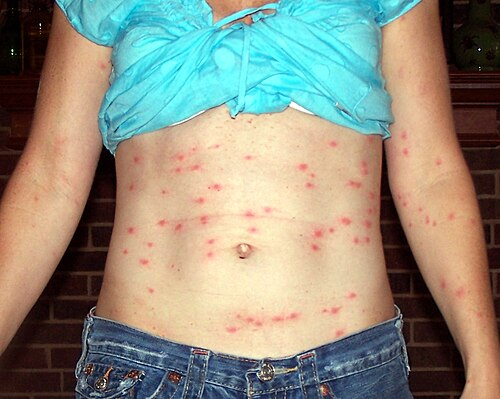
The early stage of infestation presents as tiny, red, speckled macules or small papules that closely resemble minor pimples, red dots, or scattered hives. Over the subsequent twenty-four hours, these lesions transform into bright red, raised bumps, occasionally developing a small central vesicle or microscopic crust at the former feeding site. Observing these Chigger bites symptoms early allows individuals to begin soothing topical care promptly.
Analyzing Chigger Bites on Ankles and Lower Extremities
When walking through infested vegetation in shorts or low socks, the lower limbs receive heavy exposure. Chigger bites on ankles frequently present in dense ring-like clusters directly along the elastic margin of socks. The intense pruritus in this area can cause secondary swelling of lower leg tissues, especially if prolonged standing or vigorous scratching occurs.
Assessing Chigger Bites on Face and Delicate Areas
Although less frequent than lower body exposure, Chigger bites on face and delicate facial skin can cause marked local swelling, localized erythema, and intense discomfort. Facial skin has thin epidermal layers, making the inflammatory response to mite saliva particularly pronounced. Careful washing and application of mild soothing agents are crucial when managing facial lesions to avoid ocular irritation.
Diagnostic Features: Differentiating Chigger Bites from Other Pest Infestations
Proper diagnosis relies on clinical evaluation, physical inspection of lesion morphology, anatomical location analysis, and history of recent outdoor activity. Because many small arthropods produce itchy skin rashes, differentiating these lesions from other common insect vectors is vital for selecting the correct therapeutic approach.
Progression Timeline of Chigger Bites Over Time
Understanding how lesions evolve over time helps patients monitor their recovery and recognize when complications arise.
| Timeline Phase | Visual Lesion Appearance | Itch Intensity Level | Recommended Management Action |
| 0 – 3 Hours | Invisible or tiny red pinpricks; mite attached | None to minimal discomfort | Immediate hot soapy shower to wash off larvae |
| 3 – 12 Hours | Erythematous papules forming; central punctum | Moderate to severe localized itch | Apply cold compresses and topical calamine |
| 24 – 48 Hours | Peak inflammation; firm red bumps or tiny pustules | Maximum, intense pruritus | Use topical hydrocortisone and oral antihistamines |
| 3 – 7 Days | Bumps flatten; reddish-brown color transition | Gradual reduction in itch | Maintain clean skin; avoid scratching lesions |
| 1 – 2 Weeks | Residual hyperpigmentation or dry scaling spots | Minimal to completely resolved | Apply mild moisturizers until skin fully repairs |
Comparing Chigger Bites and Mosquito Bites
Mosquito bites are typically larger, softer, asymmetrical welts that appear almost immediately after exposure on uncovered skin surfaces. In contrast, chigger bites are smaller, firmer, intensely red papules that appear hours later in tight clusters under clothing boundaries.
Comparing Chigger Bites and Bed Bug Infestations
Bed bug bites typically present as linear groupings of three or four lesions (“breakfast, lunch, and dinner” pattern) on exposed skin surfaces such as arms, shoulders, and back during sleep. In comparison, chigger bites follow outdoor environmental exposure and concentrate tightly around waistbands, sock lines, and skin folds.
Comparing Chigger Bites and Flea Attacks
Flea bites often target lower legs and ankles, but flea bites are characterized by small red halos surrounding a central puncture point and occur primarily after indoor contact with infested pets or domestic environments.
Examining Pictures of Chigger Bites for Identification
Reviewing verified Pictures of chigger bites provides valuable visual guidance for patients trying to confirm their exposure. Clinical photography demonstrates grouped, erythematous papules concentrated around anatomical constrictions.
Evaluating Chigger Bites Images across Different Skin Types
Examining a wide variety of chigger bites images highlights how cutaneous reactions vary based on individual skin pigmentation and sensitivity. On fair skin, lesions appear bright red or crimson, while on darker skin tones, bumps may present as hyperpigmented dark brown or purplish papules.
Are Chigger Bites Contagious Between People?
A frequent concern among affected individuals is whether Chigger bites contagious properties exist. It is clinically important to emphasize that these skin lesions are entirely non-contagious. Larvae do not establish permanent colonies on human skin, do not burrow under tissues, and cannot spread from one person to another through physical contact or shared bedding.
Reviewing a Chigger Bite Image for Diagnostic Clarity
A close-up chigger bite image typically reveals a solid red papule with a distinct central stylostome pore. This structural feature differentiates mite feeding sites from non-parasitic skin eruptions such as viral rashes or contact dermatitis.
Using Images of Chigger Bites to Confirm Clinical Patterns
Comparing patient rashes against standardized images of chigger bites helps healthcare providers rule out systemic allergic reactions, hives, or infectious diseases such as chickenpox or scabies.
Examining Pics of Chigger Bites from Clinical Datasets
Evaluating high-resolution pics of chigger bites stored in clinical dermatological databases confirms that individual lesion size typically ranges from one to three millimeters in diameter, though surrounding inflammation may expand the affected area.
Key Findings in Pictures of Chiggers Bites
Analyzing diverse pictures of chiggers bites across pediatric and adult populations shows that children frequently experience larger local inflammatory responses, occasionally developing small central fluid-filled blisters (vesicles) due to heightened immune sensitivity.
Photographic Guidelines in Chigger Bites Pictures
Consulting established medical chigger bites pictures illustrates that while individual bites look modest in size, their dense clustering creates a characteristic “speckled” appearance that is a hallmark of outdoor trombiculid exposure.
Evidence-Based Chigger Bite Treatment Strategies and Home Remedies
Effective management of chigger bites focuses on three core objectives: eliminating any remaining larvae from the body, interrupting the intense itch-scratch cycle to prevent tissue damage, and soothing local cutaneous inflammation.
Over-the-Counter Solutions for Chigger Bites
Immediate self-care measures following suspected exposure can significantly reduce symptom severity:
- Immediate Decontamination: Take a warm to hot shower as soon as possible after outdoor activity, scrubbing vigorously with soap and a washcloth. This mechanical action removes attached larvae before they complete feeding.
- Topical Anti-Itch Preparations: Apply over-the-counter calamine lotion, 1% hydrocortisone cream, or menthol-based ointments directly to affected bumps three to four times daily to suppress local inflammatory signaling.
- Oral Antihistamines: Diphenhydramine, cetirizine, or loratadine can effectively block systemic histamine pathways, reducing generalized pruritus and helping patients sleep comfortably at night.
- Cold Compresses: Applying ice packs wrapped in a clean cloth to inflamed areas for fifteen-minute intervals constricts local capillaries and numbs nerve endings, offering immediate temporary relief.
Crucial Medical Warning: Avoid applying harmful home remedies such as clear fingernail polish, rubbing alcohol, kerosene, or gasoline to skin lesions. These remedies stem from the false belief that mites burrow under the skin and need to be suffocated. In reality, such substances irritate inflamed skin, increase chemical absorption, and worsen tissue damage.
When Professional Evaluation Is Recommended for Chigger Bites
While most cases resolve with basic self-care, seeking formal medical evaluation is appropriate if severe swelling occurs, lesions show spreading warmth or pus indicative of bacterial infection, or itching remains unmanageable after several days.
Effective Techniques for Chigger Bite Treatment
Structured chigger bite treatment requires maintaining clean skin and keeping fingernails trimmed short. Minimizing mechanical scratching prevents secondary bacterial entry, reducing the risk of skin infections such as impetigo or cellulitis.
Understanding the Role of a Bite Mite in Skin Irritation
Every microscopic bite mite leaves behind residual salivary proteins within the stylostome tube. Even after the larva drops off or is washed away, these foreign proteins remain trapped in the skin, which explains why severe itching persists for days after the organism has departed.
Recognizing Other Mites Bites and Environmental Parasites
While trombiculid larvae are responsible for classic outdoor rashes, distinguishing them from other mites bites—such as scabies (Sarcoptes scabiei), bird mites, or rodent mites—is essential. Scabies mites actually burrow into skin tunnels and require prescription permethrin cream, whereas chiggers remain strictly external and self-limiting.
Environmental Control and Methods to Avoid Chigger Bites
Preventing chigger bites requires a dual approach involving personal protective measures and environmental management of domestic landscapes.
Personal Protection Strategies Against Chigger Bites
- Protective Apparel: Wear long-sleeved shirts and full-length pants when entering brushy or grassy areas. Tuck pant cuffs directly into tall socks or boots to create a physical barrier against crawling larvae.
- EPA-Approved Repellents: Apply insect repellents containing DEET (10% to 30%), Picaridin, or Oil of Lemon Eucalyptus (OLE) to exposed skin and clothing seams.
- Permethrin-Treated Gear: Spray clothing, socks, and hiking boots with 0.5% permethrin spray. Permethrin binds tightly to fabric fibers, paralyzing and repelling mites on contact through multiple wash cycles.
- Post-Outdoor Hygiene: Remove and wash all outdoor clothing in hot water immediately upon returning indoors, drying items on high heat to eliminate lingering pests.
Managing Domestic Habitats
Homeowners can minimize local trombiculid populations by altering environmental microhabitats:
- Mow lawns frequently to keep turf grass low, promoting sunlight exposure and reducing ground humidity.
- Trim dense shrubbery, remove leaf litter piles, and clear thick brush along property boundaries.
- Create woodchip or gravel buffers between wooded edges and active lawn or patio areas.
Potential Complications Associated with Chigger Bites
While chigger bites are generally benign and self-limiting, complications can occur under certain circumstances:
Secondary Bacterial Infections
Uncontrolled scratching breaks the protective skin barrier, introducing environmental bacteria such as Staphylococcus aureus or Streptococcus pyogenes. Symptoms of secondary infection include increasing redness, localized warmth, throbbing pain, swelling, or pus leakage from lesions, requiring evaluation by a physician and potential oral antibiotics.
Summer Penile Syndrome
In young pediatric males, bites occurring near the groin can lead to a condition known as “summer penile syndrome.” Characterized by localized hypersensitivity swelling, edema, intense itching, and discomfort during urination, this condition resolves safely with cold compresses, antihistamines, and medical guidance.
Disease Transmission Risk Related
In North America and Europe, trombiculid mites are not known to transmit infectious pathogens to humans. However, in specific geographic regions of East Asia, Southeast Asia, and the Pacific Islands, chiggers serve as primary vectors for Orientia tsutsugamushi, the bacterium responsible for Scrub Typhus. Travelers to endemic regions who develop dark crusty eschars, fever, headache, and muscle aches after mite exposure should seek immediate medical evaluation.
Frequently Asked Questions
What do chigger bites look like?
Chigger bites typically appear as small, bright red, raised bumps or papules that frequently resemble pimples, tiny blisters, or scattered hives. They often occur in tight clusters or lines along areas where clothing compresses the skin, such as around the ankles, waistline, groin, behind the knees, and under elastic bands. Over twenty-four to forty-eight hours, the bumps become increasingly inflamed and may feature a small central crust or tiny punctum where the mite attached.
How long do chigger bites last?
The severe, intense itching caused by chigger bites generally peaks within the first twenty-four to forty-eight hours after exposure and gradually decreases over the following three to five days. The physical red bumps and raised skin lesions slowly flatten and heal over a period of one to two weeks. In some individuals with sensitive skin or heightened immune responses, mild residual discoloration or hyperpigmentation at the bite sites may persist for several weeks before completely fading.
How to treat chigger bites?
To treat chigger bites effectively, immediately wash the affected skin thoroughly with warm water and soap to remove any remaining microscopic larvae. Apply over-the-counter anti-itch creams such as 1% hydrocortisone, calamine lotion, or menthol ointments directly to the inflamed bumps to soothe local discomfort. Taking oral antihistamines can help reduce systemic itching and improve sleep, while cool compresses applied for fifteen minutes at a time offer fast localized relief.
How to get rid of chigger bites?
Getting rid of chigger bites begins with taking a hot, soapy shower immediately after outdoor activity to wash off any unattached or feeding mites from your body. Wash all clothing, socks, and gear worn outdoors in hot water and dry them on high heat to eliminate lingering parasites. For the skin lesions themselves, focus on symptom relief using topical hydrocortisone, anti-itch lotions, and avoiding scratching to allow the skin to heal naturally without secondary infection.
How to cure chigger bites?
There is no medical cure that instantly erases chigger bites, as the lesions represent an inflammatory immune reaction to residual digestive enzymes left in the skin. Healing requires allowing your body’s immune system time to break down the microscopic stylostome tube while managing symptoms with topical steroids, calamine lotion, and oral antihistamines. Keeping the skin clean, cool, and moisturized supports rapid tissue regeneration and prevents secondary bacterial complications.
How to prevent chigger bites?
Preventing chigger bites involves wearing long pants tucked into tall socks and long-sleeved shirts when entering tall grass, brush, or wooded areas. Apply EPA-registered insect repellents containing DEET, Picaridin, or Oil of Lemon Eucalyptus to exposed skin and clothing seams, or treat outdoor apparel with 0.5% permethrin spray. Upon returning indoors, immediately shower with soap and wash outdoor clothing in hot water to remove any hitchhiking larvae before they attach.
Where do chigger bites come from?
Chigger bites originate from microscopic larval mites belonging to the family Trombiculidae, which inhabit damp soil, tall grass, weeds, dense brush, and overgrown vegetation. These larvae sit on the tips of leaves and grass blades in shaded microhabitats, waiting to attach to passing vertebrate hosts such as rodents, birds, or humans. Warm ground temperatures during late spring, summer, and early autumn create optimal environmental conditions for these larvae to thrive and seek hosts.
The following posts may interest you
Mosquito Bites: Symptoms, Prevention, and Best Relief Guide
Skeeter Syndrome: Symptoms, Causes, and Treatments
Sources
Arthropod Bites
https://www.aafp.org/afp/2013/1215/p841
Comparison of Preferred Bite Sites between Mites and Ticks on Humans in Korea
https://pmc.ncbi.nlm.nih.gov/articles/PMC5094210
The diversity and distribution of chigger mites associated with rodents in the South African savanna
Surveillance of Chigger Mite Populations in the Republic of Korea in 2024
https://pmc.ncbi.nlm.nih.gov/articles/PMC12719017
Geographical Distribution and Epidemiologic Factors of Chigger Mites on Apodemus agrarius during Autumn in Korea
https://pmc.ncbi.nlm.nih.gov/articles/PMC8561048
Long-Lasting Permethrin-Impregnated Clothing Protects against Mosquito Bites in Outdoor Workers
https://pmc.ncbi.nlm.nih.gov/articles/PMC4596613
Bite-Count Evaluation of the Repellency of N,N-Diethyl-3-methylbenzamide to Larval Eutrombicula alfreddugesi (Acari: Trombiculidae
https://academic.oup.com/jme/article-abstract/29/5/858/881805
Persistent “Insect Bites” (Dermal Eosinophilic Granulomas) Simulating Lymphoblastomas, Histiocytoses, and Squamous Cell Carcinomas*
https://pmc.ncbi.nlm.nih.gov/articles/PMC1942711
StatPearls