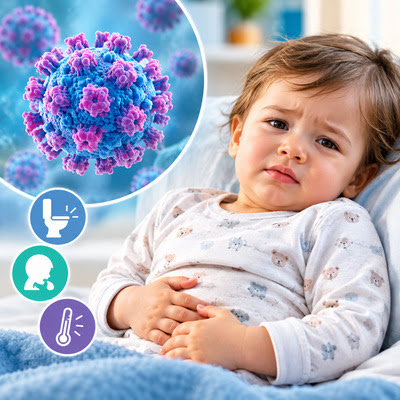
- Comprehensive Guide to Rotavirus: Symptoms, Prevention, and Care
- What Is Rotavirus and Why Is It a Global Concern?
- Rotavirus Causes and Modes of Transmission
- Recognizing Common Rotavirus Symptoms
- Rotavirus Contagious Period and Environmental Survival
- Pathophysiology of a Severe Rotavirus Infection
- Diagnostic Approaches for Acute Gastroenteritis
- Principles of Rotavirus Treatment and Clinical Care
- The Critical Impact of the Rotavirus Vaccine
- Frequently Asked Questions
- Scientific Sources
Comprehensive Guide to Rotavirus: Symptoms, Prevention, and Care
The transmission of rotavirus remains one of the primary triggers of acute, watery gastroenteritis in young pediatric populations worldwide. When a vulnerable child encounters rotavirus, the pathogen targets and damages the mature villus epithelial cells within the mucosal lining of the small intestine. This pathogenic invasion disrupts normal electrolyte absorption, causing watery stools, persistent emesis, and elevated body temperature. Identifying early indicators, adhering to scheduled immunization, and maintaining strict clinical rehydration protocols are indispensable components for shielding infants from serious physiological distress.
What Is Rotavirus and Why Is It a Global Concern?
Belonging to the family Reoviridae, rotavirus is a non-enveloped, 70-nanometer icosahedral viral agent characterized by a distinctive wheel-like appearance under electron microscopy. The viral genome consists of eleven distinct segments of double-stranded ribonucleic acid (dsRNA) encased in a triple-layered protein capsid. These eleven gene segments encode structural viral proteins (VP1, VP2, VP3, VP4, VP6, and VP7) alongside nonstructural molecules designated NSP1 through NSP6.
The intermediate capsid structural protein VP6 defines specific serogroups from A through G. Group A rotavirus strains account for the vast majority of human gastroenteritis cases globally. At the same time, the outer capsid surface proteins—specifically the protease-sensitive spike protein VP4 (defining P genotypes) and the glycoprotein VP7 (defining G serotypes)—induce neutralizing antibodies that establish both homotypic and cross-reactive heterotypic clinical protection.
Clinical Insight: Before the international rollout of effective childhood vaccines, nearly every single child acquired at least one rotavirus infection before reaching five years of age, generating millions of clinical consultations and hundreds of thousands of inpatient admissions annually.
| Viral Component | Structural / Functional Classification | Primary Biological Role in Disease and Immunity |
| VP4 Spike Protein | Protease-cleaved outer capsid protein | Facilitates cell entry; defines P genotypes; major target for neutralizing antibodies |
| VP6 Structural Protein | Abundant intermediate protein shell | Dictates group specificity (Group A); primary biomarker in clinical diagnostic assays |
| VP7 Glycoprotein | Major outer capsid shell structure | Directs serotype specificity; defines G serotypes; elicits protective humoral immunity |
| NSP4 Enterotoxin | Nonstructural transmembrane glycoprotein | Acts as a viral enterotoxin inducing fluid secretion and intestinal motility alterations |
Because viral transmission happens rapidly across diverse environments, exposure risks are not limited to areas with poor infrastructure. Understanding the biological pathways of rotavirus enables caregivers and clinical providers to detect severe complications before dehydration becomes life-threatening.
Rotavirus Causes and Modes of Transmission
Understanding fundamental Rotavirus causes highlights the resilient nature of enteric pathogens in shared environments. The virus relies primarily on fecal-oral transmission, circulating when tiny, microscopic quantities of infected feces reach another individual’s mouth. Due to high structural stability, rotavirus particles survive for extended periods on nursery toys, furniture, door handles, bathroom fixtures, and daycare items.
Transmission routes frequently include:
- Direct interpersonal contact, especially during diaper adjustments or feeding routines.
- Ingesting fluids or solids prepared by individuals shedding rotavirus who skipped basic hand hygiene.
- Touching non-porous environmental surfaces contaminated with rotavirus and touching the mouth shortly afterward.
- Potential respiratory droplets or aerosolized emesis particles during explosive vomiting episodes.
Path of Transmission and Biological Uptake
Phase 1: Viral Shedding
An infected individual sheds viral particles in high concentrations via liquid stool or sudden emesis.
Phase 2: Environmental Exposure
Unwashed hands, nursery toys, eating utensils, bathroom fixtures, and water sources become contaminated with the pathogen.
Phase 3: Fecal-Oral Transfer
A susceptible child touches contaminated surfaces or consumes tainted food, subsequently transferring viral particles into the mouth.
Phase 4: Cellular Infection
The viral agent enters the gastrointestinal tract, binding directly to mature absorptive enterocytes in the small intestine.
The infective dose required to cause acute clinical illness is remarkably small. Consequently, standard household sanitization strategies often fall short without systematic, concentrated chlorine-based or designated antiviral solutions.
Recognizing Common Rotavirus Symptoms
The initial clinical presentation typically emerges following a short incubation interval of one to three days. The earliest rotavirus symptoms frequently manifest as an acute onset of vomiting accompanied by a low to moderate rotavirus fever. Within twelve to twenty-four hours after the initial stomach upset, extensive, non-bloody watery diarrhea develops.
Key clinical features include:
- Sudden, explosive watery diarrhea devoid of frank blood or purulent discharge.
- Persistent vomiting that complicates home-based fluid replenishment.
- Low to moderate rotavirus fever, which occasionally exceeds 38.9 degrees Celsius.
- Intermittent abdominal cramping, pain, and noticeable loss of appetite.
While vomiting and high temperatures generally resolve within two to three days, severe diarrhea can persist for up to eight or nine days, leaving the young body vulnerable to dangerous electrolyte and fluid deficits.
Identifying Rotavirus Symptoms in Babies
Infants under twelve months old face the highest physiological risk from fluid depletion because their small body mass loses water rapidly. When evaluating Rotavirus symptoms in babies, parents and healthcare personnel must monitor subtle behavioural and physical indicators:
- Marked reduction in wet diapers over an extended period (no urination for six to eight hours).
- Noticeable crying without tear production alongside dry, sticky oral mucous membranes.
- A sunken appearance around the eyes or a depressed fontanelle (the soft spot on the baby’s skull).
- Marked lethargy, weak crying, unresponsiveness, or unexpected excessive irritability.
- Sudden loss of skin turgor, where skin pinched on the abdomen fails to bounce back quickly.
If an infant with rotavirus cannot retain oral fluids or shows extreme fatigue, immediate medical intervention is critical.
Evaluating Rotavirus Symptoms Toddler and Preschoolers Experience
As children grow older, their physical reserve improves, yet symptomatic episodes remain disruptive. The typical presentation of a Rotavirus symptoms toddler case includes profound gastrointestinal discomfort, tenesmus, refusal to drink, and prolonged watery stools.
When analyzing Rotavirus symptoms in 2 year old children, clinical signs often consist of frequent foul-smelling diarrhea, persistent nausea, and abdominal cramping. Toddlers in this age group are commonly enrolled in community daycare or nursery settings, amplifying the risk of widespread viral exposure and cross-contamination among peers.
Rotavirus Contagious Period and Environmental Survival
The Rotavirus contagious period presents serious infection-control challenges because virus shedding begins up to two days before diarrhea appears. Peak viral shedding occurs during the acute phase of watery diarrhea and vomiting, releasing up to trillions of infectious viral units per gram of liquid stool.
Important Epidemiology Fact: A patient recovering from rotavirus may continue shedding viral particles in stool for up to ten days after loose stools resolve, and immunocompromised patients can shed the virus for several weeks.
Because an asymptomatic individual carrying rotavirus can unknowingly spread infection, handwashing and environmental cleaning must continue long after acute signs disappear.
| Clinical Phase | Viral Shedding Level | Practical Preventive Measures |
| Incubation Stage (Days 1–2 before symptoms) | Low to Moderate | Maintain routine 20-second handwashing protocols |
| Acute Illness (Days 1–8 of active diarrhea) | Extremely High | Isolate the patient, disinfect items, and use oral electrolytes |
| Post-Resolution (Up to 10 days post-recovery) | Moderate to Low | Keep the child away from daycare for at least 24 to 48 hours |
Pathophysiology of a Severe Rotavirus Infection
During an active rotavirus infection, the virus targets the villous tips of the enterocytes in the duodenum and jejunum. Viral replication damages these mature absorptive cells, causing villus blunting, patchy epithelial denudation, and reduced levels of brush-border disaccharidases like lactase. This cell destruction causes malabsorption, drawing excess fluid into the bowel lumen through osmosis.
Simultaneously, the nonstructural viral protein NSP4 stimulates the enteric nervous system and triggers calcium-dependent chloride secretion. This dual secretory and osmotic mechanism produces rapid, severe dehydration. Without timely rehydration therapy, hypovolemia can progress to organ hypoperfusion, prerenal azotemia, hypovolemic shock, and life-threatening metabolic complications.
Diagnostic Approaches for Acute Gastroenteritis
Most bouts of pediatric diarrhea are managed clinically without laboratory confirmation. However, verifying rotavirus becomes necessary during institutional outbreaks, prolonged hospital stays, or atypical presentations:
- Enzyme Immunoassays (EIA): Widely utilized to detect the VP6 intermediate capsid antigen directly in stool specimens.
- Reverse Transcription Polymerase Chain Reaction (RT-PCR): Highly sensitive molecular testing used in surveillance to identify specific G and P genotypes.
- Immunochromatographic Rapid Lateral Flow Strips: Point-of-care assays providing rapid diagnostic results within minutes in emergency settings.
- Serum Chemistry and Urinalysis: Performed in dehydrated patients to track serum bicarbonate, sodium, potassium, blood urea nitrogen, and urine specific gravity.
Principles of Rotavirus Treatment and Clinical Care
Because rotavirus is a viral infection, antibiotics offer no therapeutic value and can disrupt bowel flora or worsen diarrhea. Management focuses on rehydration, electrolyte replacement, and age-appropriate nutrition.
Step-by-Step Clinical Rehydration Workflow
| Hydration Assessment Level | Dominant Clinical Findings | Primary Therapeutic Action | Recommended Fluid Strategy |
| Mild Dehydration | Slightly dry lips, normal tear production, preserved energy | Home-based management with oral rehydration solution | Small, frequent sips of ORS; continue normal feeding |
| Moderate Dehydration | Sunken eyes, decreased urination, dry mouth, irritability | Supervised oral therapy with close pediatric monitoring | 5 to 10 mL via syringe every 2 to 3 minutes; continue nursing |
| Severe Dehydration | Lethargy, cold extremities, skin tenting, absent tears | Immediate emergency medical care and hospital admission | Rapid intravenous isotonic fluids (e.g., normal saline or lactated Ringer’s) |
Oral Rehydration Therapy (ORT)
The foundation of modern rotavirus treatment is balanced Oral Rehydration Solution (ORS). These formulas use coupled sodium-glucose cotransport across intact intestinal cells to drive water into systemic circulation:
- Offer small, measured volumes (e.g., 5 to 10 milliliters every few minutes using an oral syringe or teaspoon) rather than large volumes that might trigger vomiting.
- Continue breastfeeding on demand alongside ORS administration.
- Dilute high-sugar liquids, avoiding undiluted juice, sodas, and sports drinks that worsen osmotic diarrhea.
Dietary Guidelines
Children should return to an age-appropriate diet as soon as dehydration is corrected. The outdated practice of withholding food or restricting children to dry toast and crackers is no longer recommended. Starchy complex carbohydrates, lean proteins, yogurts, and regular milk can be resumed promptly, though transient secondary lactose intolerance may occur if villus enzymes were depleted during the infection.
Medications and Precautions
Antidiarrheal agents (such as loperamide or diphenoxylate) are contraindicated in infants and young children due to risks of toxic megacolon, ileus, and central nervous system toxicity. Acetaminophen may be used cautiously under medical supervision to relieve discomfort from fever. In cases of severe dehydration with persistent vomiting, hospital admission for intravenous isotonic fluid restoration remains lifesaving.
The Critical Impact of the Rotavirus Vaccine
The development of the modern rotavirus vaccine has substantially transformed global pediatric health. Decades of virological and clinical research demonstrated that naturally acquired infections build immunity against subsequent severe gastroenteritis. Modern live oral vaccines mirror this process, providing protection without the dangers of wild-type illness.
| Vaccine Characteristic | RotaTeq (RV5) | Rotarix (RV1) |
| Manufacturer | Merck & Co., Inc. | GlaxoSmithKline Biologicals |
| Vaccine Type | Live pentavalent human-bovine reassortant | Live monovalent attenuated human strain |
| Antigenic Targets | G1, G2, G3, G4, and P1A[8] | G1P1A[8] with broad heterotypic cross-protection |
| Dosing Schedule | 3 oral doses at 2, 4, and 6 months | 2 oral doses at 2 and 4 months |
| Administration Route | Liquid oral drops | Liquid oral drops |
| Efficacy Against Severe Infection | Approximately 98% protection | Approximately 85% to 96% protection |
Large-scale phase III trials confirm that both vaccines are safe and effective. Routine vaccination has cut emergency room visits and hospital admissions for severe diarrhea by over 75% to 90% across various nations. A slight potential risk of intussusception exists (roughly 1 to 2 cases per 100,000 administered doses), but international health agencies emphasize that the benefits of preventing severe dehydration, shock, and death far outweigh this small risk.
Preventive Hygiene Protocols at Home and Childcare Facilities
While immunization serves as the primary barrier against severe disease, diligent environmental hygiene helps minimize transmission in family homes, preschools, and healthcare clinics:
- Systematic Handwashing: Clean hands with warm running water and soap for at least twenty seconds after handling soiled diapers, using the toilet, and before touching food.
- Environmental Disinfection: Because rotavirus resists standard cleaners, disinfect diaper tables, toys, and common surfaces with a freshly diluted bleach solution (roughly one-third cup household bleach per gallon of water).
- Exclusion Policies: Keep symptomatic children away from daycare, nursery settings, and public swimming pools for at least 24 to 48 hours after vomiting and diarrhea have completely resolved.
- Safe Waste Disposal: Seal used diapers in non-porous bags and clean the surrounding area immediately with disposable wipes.
Frequently Asked Questions
What is rotavirus?
Rotavirus is a highly contagious viral pathogen belonging to the Reoviridae family that primarily causes severe gastroenteritis in infants and young children. The virus infects the mucosal lining of the small intestine, leading to profuse watery diarrhea, vomiting, fever, and rapid fluid loss. Before universal immunization programs were established, virtually every child contracted this infection before five years of age.
How long does rotavirus last?
In most young patients, active symptoms of a rotavirus infection persist between three and eight days. Vomiting and fever usually resolve first within one to three days, whereas watery diarrhea often lingers for up to a week or more. Complete intestinal mucosal healing and normalization of stool patterns can occasionally require up to several weeks.
What is rotavirus vaccine?
A rotavirus vaccine is an oral immunization given to infants to protect against severe diarrheal illness and life-threatening dehydration. Delivered as oral drops rather than an injection, the vaccine trains the child’s immune system by mimicking natural exposure to viral surface proteins. Routine administration typically occurs in two or three doses during the first six months of life.
Can adults get rotavirus?
Yes, adults can contract rotavirus, although they tend to experience milder symptoms or remain entirely asymptomatic due to cross-reactive immunity from previous childhood infections. However, older adults, family caregivers caring for sick toddlers, and immunocompromised individuals face a higher risk of symptomatic infection. In vulnerable adults, the virus can still cause significant gastrointestinal distress and dehydration requiring medical care.
Is rotavirus a live vaccine?
Yes, widely approved options such as RotaTeq and Rotarix are live-attenuated oral vaccines. They contain weakened human or reassortant bovine viral strains designed to trigger protective mucosal and humoral immune responses without causing full-blown illness. Because they are live oral drops, these formulations replicate in the digestive tract to simulate natural infection safely.
The following posts may interest you
Rhinovirus Infections in Children: Causes, Risks, and Care
Adenovirus: A Complete Guide for Parents and Kids
Hantavirus Symptoms: Understanding the Major Risks
Sources
Rotavirus
https://pmc.ncbi.nlm.nih.gov/articles/PMC2640254
Rotavirus infection
https://www.nature.com/articles/nrdp201783
Rotavirus gene structure and function
https://journals.asm.org/doi/abs/10.1128/mr.53.4.410-449.1989
Rotavirus Overview
Global seasonality of rotavirus infections.
https://pmc.ncbi.nlm.nih.gov/articles/PMC2393128
Rotavirus
Global Seasonality of Rotavirus Disease
https://pmc.ncbi.nlm.nih.gov/articles/PMC4103797
Uniformity of rotavirus strain nomenclature proposed by the Rotavirus Classification Working Group (RCWG)
https://link.springer.com/article/10.1007/s00705-011-1006-z
Global Illness and Deaths Caused by Rotavirus Disease in Children