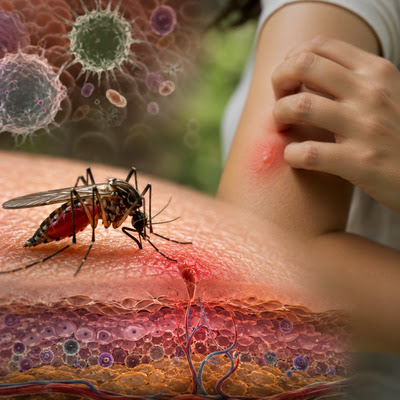
Mosquito Bites: Key Facts at a Glance
For most people, mosquito bites are itchy bumps that resolve on their own within three to seven days. For relief, wash the bite with soap and water, apply a cloth-wrapped ice pack for 10 minutes, use an anti-itch cream, and avoid scratching.
- Itch relief: Hydrocortisone cream, calamine lotion, or a baking soda and water paste, reapplied up to three times a day. A non-drowsy oral antihistamine such as cetirizine or loratadine also helps.
- Skeeter syndrome: A large local allergic reaction with marked swelling, warmth, and redness that develops within hours of the bite. It is most common in infants and young children and resolves gradually over 3 to 10 days.
- Signs of infection: Redness that spreads or forms red streaks, an area that feels hot, pain that intensifies over 24 to 48 hours, thick yellow pus, or a high fever. Contact a healthcare provider immediately.
- Emergency: Hives across the entire body, a swollen throat, wheezing, or dizziness after a bite. Call emergency medical services immediately.
- DEET: Not for infants under 2 months of age. A maximum concentration of 33% is recommended for older children.
- Other repellents: Do not use picaridin on infants under 6 months, or oil of lemon eucalyptus on children under 3 years of age.
- Permethrin: Never apply it directly to skin. Use it only to treat clothing, tents, and bed netting.
- Comprehensive Guide to Managing Mosquito Bites and Hypersensitivity Reactions
- The Biological Mechanism and Pathophysiology of Mosquito Bites
- The Five Exposure Stages and Lifetime Progression of Mosquito Bites
- Clinical Manifestations of Severe Allergic Reaction to Mosquito Bites and Skeeter Syndrome
- Global Pathogens and Complications Transmitted Through Mosquito Bites
- Modern Prevention: Chemical Repellents, Physical Barriers, and Wearable Tech
- Evidence-Based Medical Treatment and Clinical Interventions
- Traditional and Historical Home Remedies: A Clinical Perspective
- Complications of Uncontrolled Scratching and Chronic Trauma
- Frequently Asked Questions
- Scientific Resources
Comprehensive Guide to Managing Mosquito Bites and Hypersensitivity Reactions
When warm weather arrives, flying insects inevitably follow, and a routine encounter with them frequently results in mosquito bites. For most people worldwide, mosquito bites are an itchy, annoying reality of the summer months that typically resolve within a few days without permanent harm. This ubiquitous seasonal phenomenon impacts billions of individuals across almost every continent, turning outdoor recreational spaces, backyards, and public gardens into prime areas for insect interaction. While many accept these small punctures as a minor consequence of enjoying nature, the physiological process behind that familiar, localized cutaneous reaction is highly complex, involving an intricate interplay between foreign proteins and the host’s cellular defense mechanisms.
The immediate physical response is merely the tip of an immunological iceberg. When the insect feeds, the introduction of foreign salivary components into the skin initiates a series of microscopic cascades, triggering histaminergic pathways and activating dermal mast cells. This immediate defense response is heavily influenced by factors unique to each individual, including genetics, the skin’s local microbiome composition, and even lifetime exposure history, meaning that no two people experience a bite in exactly the same way.
Understanding why your body reacts to these punctures, how to identify an abnormal or severe allergy, and what scientific or historical strategies provide actual relief can help you safeguard your family against the broader complications associated with these ubiquitous pests. In sensitive populations, what appears to be a standard bite can rapidly expand into a debilitating inflammatory condition, while in endemic regions, these insects serve as dangerous vectors for lethal systemic pathogens. By demystifying the biological reactions, recognizing the distinct clinical stages of allergy progression, and evaluating the modern and traditional therapeutic toolkits available, individuals can transition from passive tolerance to proactive management, ensuring both immediate symptomatic comfort and long-term protection against secondary risks.
The Biological Mechanism and Pathophysiology of Mosquito Bites
Why Do Female Insects Require a Blood Meal?
To understand the nature of mosquito bites, one must first look at the reproductive biology of the insect. Only female mosquitoes bite humans and animals, as blood provides the essential proteins and lipids required to produce and develop their eggs. Male mosquitoes do not bite humans at all; instead, they sustain themselves exclusively by feeding on flower nectar.
Mosquitoes track down their targets through a sophisticated multi-sensory hierarchy. They utilize visual color cues from a distance, frequently showing a clear preference for dark-colored objects. As they draw closer to a potential host, they increasingly rely on thermal and olfactory stimuli, tracking moist heat sources, skin bacteria, sweat, body heat, and exhaled carbon dioxide.
What Happens to Your Skin Tissue During a Mosquito Bite?
When a female insect targets a host, she pierces the cutaneous tissue using a highly specialized, needle-like mouthpart called a proboscis to draw up blood. As she feeds, she secretes saliva into your bloodstream. This saliva contains a complex mixture of lysosomes, serine proteases, vasodilators, immunomodulators, and anti-clotting anticoagulant substances that prevent blood from clotting while she feeds.
Unfortunately, your immune system registers these foreign salivary proteins as dangerous allergens. In response to the puncture wound, your body launches a localized defense mechanism, triggering a prompt release of the chemical histamine to the site where the insect fed. This rapid immune response is precisely what causes the classic localized mosquito bite swelling treatment challenges, characterized by a puffy, itchy, and reddish bump appearing within minutes of exposure.
The Multiphase Histaminergic and Non-Histaminergic Itch Pathways
The intense pruritus resulting from mosquito bits or bites occurs via distinct immune pathways. The primary, classic pruritic pathway is histaminergic. Histamine directly binds to histamine-specific receptors on sensory nerve endings in the skin, while simultaneously inciting localized vasodilation and edema. This creates the typical round wheal that peaks within 20 to 30 minutes.
However, medical research highlights an IgE-mediated (type I) hypersensitivity reaction where mast cells degranulate, releasing other inflammatory mediators like tryptase, cytokines, and eicosanoids such as leukotrienes. In delayed reactions—which typically peak as itchy papules 24 to 36 hours later—an IgE-independent inflammatory response takes over. This pathway involves a Th2 inflammatory cascade driven by specific salivary peptides like SAAG-4 and sialokinin, which alter the host’s immune balance and prolong the itch sensation via non-histaminergic channels.
The Five Exposure Stages and Lifetime Progression of Mosquito Bites
How Human Skin Adapts to Repeated Salivary Exposure
The clinical presentation of mosquito bites is not uniform; instead, it progresses through an evolutionary sequence of developmental stages determined by the cumulative number of salivary exposures accrued during an individual’s lifetime. When a person encounters a specific insect species over time, their immune system undergoes natural desensitization, completely altering the type of cutaneous lesion produced.
| Exposure Stage | Phase Name | Immune Reaction and Cutaneous Appearance |
| Stage I | First Bite | Initial exposure results in a small, un-inflamed red spot without immediate swelling or intense pruritus. |
| Stage II | Delayed Reaction Only | Subsequent exposures trigger delayed hypersensitivity, forming a hard, itchy, reddish-brown bump a day or so later. |
| Stage III | Immediate and Delayed | The most common phase, where a classic puffy wheal forms within minutes, followed by a persistent, itchy papule that lingers for days. |
| Stage IV | Immediate Reaction Only | Prolonged, years-long exposure causes the delayed cellular reaction to fade, leaving only a temporary swelling that resolves quickly. |
| Stage V | Complete Desensitization | Full natural immunity is achieved; the body no longer recognizes the saliva as a threat, resulting in no reaction or pruritus whatsoever. |
Factors Influencing Individual Susceptibility and Attraction Rates
Have you ever wondered why certain individuals are plagued by dozens of mosquito bites while others escape untouched? Extensive twin studies of monozygotic and dizygotic twins reveal a powerful genetic component governing host attractiveness. This hereditary link is tied closely to your genetic makeup, specifically within the human leukocyte antigen (HLA) region, which can make the ultimate itch response up to three times more intense in females than in males.
Furthermore, your personal skin microbiome plays a critical role. Volatile organic compounds emitted by the skin’s commensal bacteria act as chemical beacons for seeking insects. A lower diversity in your skin microbiome is correlated with significantly higher attraction rates, whereas the presence of specific bacteria, such as Pseudomonas spp., naturally deters the pests.
Clinical Manifestations of Severe Allergic Reaction to Mosquito Bites and Skeeter Syndrome
Recognizing Allergic Reaction to Mosquito Bites in Vulnerable Populations
While a standard bite resolves harmlessly, high-risk groups often experience a severe, exaggerated localized inflammatory response known as skeeter syndrome. This condition is most common in infants and young children, outdoor workers experiencing heavy exposure, immigrants entering a region with unfamiliar indigenous insect species, and individuals with baseline immune system disorders.
Diagnostic Signs: Differentiating Skeeter Syndrome from Bacterial Cellulitis
A severe allergy to mosquito bites can be incredibly alarming because skeeter syndrome frequently mimics bacterial cellulitis. Making an accurate clinical distinction is essential to avoid the unnecessary prescription of oral antibiotics.
| Clinical Feature | Skeeter Syndrome (Large Local Allergy) | Bacterial Cellulitis (Skin Infection) |
| Onset of Symptoms | Rapid development within hours of the bite | Protracted, slow time course over days |
| Primary Mediators | IgE and IgG antibodies against saliva | Bacterial invasion (Staphylococcus/Streptococcus) |
| Localized Signs | Massive mosquito bite swelling treatment area, warmth, redness | Spreading erythema, severe pain, purulent exudate |
| Systemic Features | Low-grade fever, temporary lymphadenopathy | High fever, chills, progressive malaise, red streaks |
| Typical Resolution | Gradual self-resolution over 3 to 10 days | Requires targeted antibiotic therapy to heal |
If you observe swollen mosquito bite toddler conditions, look for signs of a skeeter syndrome rash or fluid-filled blisters instead of basic hard bumps. While frightening, a true skeeter syndrome bite will begin to stabilize and recede within a few days when managed with proper anti-inflammatory protocols.
Skeeter Syndrome Cascade:
[Mosquito saliva injection]
       ↓
[IgE/IgG hyper-responsiveness]
       ↓
[Massive localized edema, warmth & erythema]
       ↓
[Skeeter syndrome rash / Blister formation]
Rare Systemic Complications: When to Seek Immediate Emergency Care
In exceptionally rare instances worldwide (fewer than thirty cases reported in medical history), a severe mosquito allergic reaction can lead to life-threatening systemic anaphylaxis. If an individual experiences an acute mosquito bite and subsequently exhibits hives across the entire body, a swollen throat, wheezing, dizziness, low pulse, or a sudden drop in blood pressure resulting in presyncope, call emergency medical services immediately.
Global Pathogens and Complications Transmitted Through Mosquito Bites
Viral and Parasitic Illnesses Spread via Fluid Exchange
Mosquitoes are classified globally as lethal vectors—living organisms that carry and transmit devastating infectious diseases between animals and humans through fluid exchange. When an insect feeds on an infected host, it ingests the underlying germ. The pathogen replicates within the insect’s salivary glands, allowing it to be transferred directly into the next victim’s bloodstream during a subsequent blood meal.
Vector Transmission Cycle:
[Infected Host] --> [Insect Blood Meal] --> [Germ Replication in Saliva] --> [New Host Puncture]
Mosquito-Borne Viruses
- West Nile Virus: The most prevalent mosquito-borne viral threat in the United States. Symptoms include severe headaches, high fever, and muscle aches, with neuroinvasive cases culminating in fatal encephalitis or meningitis.
- Zika Virus: Transmitted predominantly by Aedes mosquitoes. While causing mild fever, a maculopapular skeeter syndrome rash-like eruption, and conjunctivitis in children, congenital Zika transmission to a pregnant woman’s fetus poses a severe risk of microcephaly and birth defects.
- Dengue Fever: A debilitating illness causing flu-like symptoms, retro-orbital headaches, joint pain, and severe hemorrhagic complications.
- Chikungunya & Yellow Fever: Tropical viral threats characterized by chronic, debilitating arthralgia, jaundice, and acute systemic toxicity.
Mosquito-Borne Parasites
- Malaria: Transmitted exclusively by the nocturnal Anopheles mosquito. It remains a leading global cause of death, presenting with cyclic high fevers, severe vomiting, and profound hemolytic anemia.
- Lymphatic Filariasis & Dirofilariasis: Parasitic worm infestations that invade human and animal vascular networks, causing long-term structural tissue complications.
Amplified Cutaneous Reactions in Immune Disorders and Malignancies
Exaggerated responses to mosquito bites are frequently indicative of underlying clinical systemic conditions. Patients diagnosed with hematologic cancers—such as chronic lymphocytic leukemia (CLL) and mantle cell lymphoma—frequently exhibit robust, painful plaque-like reactions driven by abnormal CD4+ T-cell proliferation and subsequent IL-4 overproduction.
Similarly, individuals living with HIV are highly susceptible to severe pruritic papular eruptions following insect antigen exposure, which directly correlates with shifts in their absolute CD4+ cell counts and elevated serum IgE. Furthermore, hyper-responsiveness to salivary antigens has been linked to HEN disease (a severe triad of Hypersensitivity to Mosquito Bites, chronic active Epstein-Barr Virus infection, and Natural Killer cell proliferative disorders) which can rapidly progress into malignant T-cell lymphomas or necrotic skin ulcerations.
Modern Prevention: Chemical Repellents, Physical Barriers, and Wearable Tech
Environmental Control and Source Reduction Strategy against Mosquito Bites
The absolute first line of defense against mosquito bits and bites is vector source reduction. Property owners should inspect their surroundings weekly to eliminate any stagnant, shallow pools of standing water where female insects lay their eggs. Unclog roof gutters, empty children’s wading pools, regularly change the water in birdbaths, eliminate old tires, and invert empty outdoor flower pots to disrupt the insect’s lifecycle.
Comprehensive Safety Profile of EPA-Registered Chemical and Botanical Repellents
When spending time outdoors, utilizing an Environmental Protection Agency (EPA)-registered insect repellent is vital. Review the comprehensive clinical safety profile below before deciding on a preventative regimen for your family:
| Repellent Active Ingredient | Average Protection Duration | Documented Adverse Reactions / Toxicity | Special Pediatric & Pregnancy Considerations |
| DEET (N,N-diethyl-3-methyl-benzamide) | Approximately 5 Hours | Rare central nervous system toxicity (lethargy, seizures, ataxia), contact dermatitis, or bullous eruptions if heavily misused | Strictly prohibited for infants under 2 months of age. Maximum concentration of 33% recommended for older children. |
| Picaridin (Icaridin) | 8 to 10 Hours | Exceptionally low toxicity profile; rare localized skin or eye irritation | Approved as a highly effective, less toxic alternative to DEET. Do not use on infants under 6 months. |
| Permethrin | Up to 6 Weeks / 6 Washings on Fabrics | Neurotoxicity if ingested, temporary skin numbness, or respiratory irritation upon inhalation | Never apply directly to human skin. Use exclusively to treat clothing, tents, and protective bed netting. |
| Oil of Lemon Eucalyptus (OLE / PMD) | Up to 6 Hours | Localized skin irritation, particularly in highly atopic individuals | Completely natural botanical origin. Strictly contraindicated for children under 3 years of age. |
| Citronella Oil | Less than 2 Hours | Mild eye irritation and rapid evaporation requiring constant reapplication | Safe botanical choice but offers very short-term, volatile protection. |
Repellent Application Order:
[Sunscreen Application] --> Wait 20 Minutes --> [Apply Repellent Outdoors] --> Wash Hands Thoroughly
Breakthrough Wearable Technologies: Graphene Barriers
In recent bio-engineering updates, wearable technology has provided a non-chemical method for preventing mosquito bites. Graphene—a material consisting of a single, ultra-lightweight layer of carbon atoms—has proven highly effective in a dry state at completely suppressing biting behavior. It works via a dual-action mechanism: mechanically blocking the insect’s proboscis from piercing the skin, while simultaneously trapping skin-associated molecular attractants beneath the fabric to interfere with the insect’s host-chemosensing abilities.
Evidence-Based Medical Treatment and Clinical Interventions
Prophylactic Antihistamines for Suppressing Large Local Swelling
For individuals with a known history of severe allergic reaction to mosquito bites, clinical trials support the use of second-generation oral antihistamines as a prophylactic measure. Daily dosing with nonsedating options like cetirizine (10 mg), levocetirizine (5 mg), or loratadine can reduce immediate wheal expansion by up to 45% and minimize self-reported pruritus by nearly 80%. Cetirizine has demonstrated the greatest clinical efficacy in reducing itch intensity, though it carries a slightly higher risk of mild sedation compared to other second-generation alternatives.
Topical Corticosteroids, Local Anesthetics, and Prescription Protocols
Once a puncture has occurred, clinical management shifts toward suppressing the inflammatory response and preventing secondary trauma from scratching.
- Topical Corticosteroids: Over-the-counter or prescription hydrocortisone creams serve as the cornerstone of mosquito bite swelling treatment by suppressing the local Th2 cytokine cascade and reducing edema.
- Local Anesthetics: Creams containing pramoxine, lidocaine, or benzocaine block localized pain and itch signals along the cutaneous nerve branches to provide rapid, temporary relief.
- Calamine Lotion: A classic, soothing topical zinc oxide compound that cools the skin and helps dry out small blisters.
Clinical Step-by-Step Treatment Protocol:
1. Wash puncture site immediately with plain soap and running water.
2. Apply a wrapped ice pack firmly for 10 full minutes to constrict local blood vessels.
3. Apply a thin layer of topical hydrocortisone or calamine lotion to the area.
4. Cover with a clean, breathable bandage if the victim is a young child prone to scratching.
Thermal Receptor Modulation and Emerging Immunotherapies
Fascinating scientific insights have highlighted how modulating temperature receptors in peripheral nerve endings can override the itch sensation. Applying concentrated, localized heat via specialized electronic devices (such as BiteAway) activates transient receptor potential vanilloid 1 (TRPV1) channels on sensory C-fibers. This heat burst alters local proteinase-activated receptor-2 (PAR-2) activity, significantly blunting the itch signal for up to 24 hours. Conversely, local cooling or using menthol triggers the TRPM8 ion channel, which acts to inhibit both histaminergic and non-histaminergic pruritic pathways simultaneously.
For extreme cases of systemic anaphylaxis, allergen immunotherapy utilizing whole-body or salivary insect extracts has shown long-term promise by successfully shifting the body’s immune balance—significantly elevating protective IgG4 antibodies while lowering the IgE/IgG4 ratio. For immediate, off-label preventative care against severe systemic episodes, the anti-IgE monoclonal antibody omalizumab has proven highly effective in clinical case reports.
Traditional and Historical Home Remedies: A Clinical Perspective
Kitchen Staples for Mosquito Bite Relief: Sodium Bicarbonate and Oatmeal
When commercial ointments are unavailable, several traditional home remedies can provide fast, accessible mosquito bite relief. Ground oatmeal, or colloidal oatmeal, contains unique anti-irritant gluten compounds that soothe inflamed skin. Mixing equal parts oatmeal and water into a thick paste and applying it directly to the swollen skin for 10 minutes can significantly reduce active inflammation.
Another highly effective option recommended by the Centers for Disease Control and Prevention (CDC) is sodium bicarbonate, commonly known as baking soda. Baking soda acts as a mild alkaline compound that can help neutralize localized skin acidity and reduce the body’s acute itch response.
CDC Baking Soda Paste Recipe:
• Mix 1 tablespoon of pure baking soda with just enough water to form a thick paste.
• Smooth the paste directly over the mosquito bite site.
• Allow it to sit undisturbed for exactly 10 minutes.
• Wash off cleanly with cool water; discontinue immediately if skin irritation occurs.
Botanical Extracts: Aloe Vera, Honey, and Chamomile Tea
Nature provides a wealth of anti-inflammatory options that can easily double as localized treatments for bug punctures:
- Aloe Vera Gel: The natural gel extracted from the leaves of the aloe succulent contains high concentrations of salicylic acid. Applying it directly to a bug bite provides cooling relief while easing acute pain and accelerating skin healing.
- Medical-Grade Honey: Used for centuries as a traditional healing agent, honey possesses powerful antibacterial and anti-inflammatory enzymes like catalase. Dab a single drop onto an intensely itchy spot to calm inflammation and create a physical barrier that deters scratching.
- Chamomile Tea Compresses: Chamomile flowers are rich in natural terpenoids and flavonoids, which exhibit natural antioxidant and antihistamine properties. Steeping a tea bag in hot water, chilling it thoroughly in the refrigerator, and pressing it against the skin for 10 minutes helps soothe irritated tissue.
Precautions with Raw Alliums and Concentrated Essential Oils
While home remedies are widely used, certain botanicals require careful handling to avoid accidental contact dermatitis. For example, raw garlic and fresh onion slices contain strong sulfur compounds with natural antifungal and antibacterial properties that can ease a sting. However, applying raw garlic directly to broken skin can cause painful burning, stinging, and chemical irritation. Instead, finely minced garlic should always be diluted inside an unscented carrier lotion or petroleum jelly for 10 minutes before being wiped away with a cool cloth.
Similarly, highly concentrated essential oils, like peppermint oil or thyme oil, should always be mixed into a gentle carrier oil before skin application and are completely unsuitable for use on infants and very young children.
Complications of Uncontrolled Scratching and Chronic Trauma
Mechanical Damage to the Epidermal Barrier
The ultimate golden rule of managing bug punctures is simple: do not scratch your mosquito bites. When you rub or scratch an intensely itchy bump, you inflict mechanical trauma on the delicate epidermal layer, scraping away vital skin cells and tearing open the protective barrier. This mechanical friction triggers a vicious cycle: scratching prompts the surrounding mast cells to release even more histamine into the tissue, which drastically intensifies the underlying itch response and causes the swelling to expand further.
The Itch-Scratch Cycle:
[Saliva Itch Response] --> [Mechanical Scratching] --> [Epidermal Barrier Tear] --> [Further Histamine Release]
Secondary Bacterial Superinfections and Warning Signs
Tearing open the epidermal barrier creates a direct gateway for opportunistic bacteria living on the surface of your skin or under your fingernails—such as Staphylococcus aureus or Streptococcus—to invade the deeper dermal layers. This can quickly transform a simple bite into a secondary bacterial superinfection.
Monitored closely by healthcare providers, a standard bite should steadily improve over 3 to 7 days. You should contact a primary care provider immediately if you notice any of the following warning signs of infection:
- The redness spreads outward or forms red streaks travelling away from the puncture site.
- The area feels unusually warm or hot to the touch.
- The localized pain intensifies significantly over 24 to 48 hours.
- The site begins oozing thick yellow pus or cloudy fluid.
- The individual develops a high fever, systemic chills, or painful, swollen lymph nodes.
Long-Term Cosmetic Concerns: Post-Inflammatory Hyperpigmentation
Failing to control the urge to scratch can also lead to long-term cosmetic skin changes. Chronic mechanical trauma and recurrent localized infections disrupt normal melanin production within the healing skin cells. This frequently results in post-inflammatory hyperpigmentation—leaving dark, bruised-looking spots and permanent scarring that can take many months, or even years, to fully fade away.
Frequently Asked Questions
Why do mosquito bites itch?
Mosquito bites itch because when a female insect pierces your skin to feed on blood, she injects her saliva directly into your bloodstream. Your immune system immediately recognizes the foreign salivary proteins as allergens and releases the chemical histamine to fight off the threat. Histamine causes the local blood vessels to dilate and expand, which directly triggers the classic localized swelling, redness, and intense, persistent nerve itch at the site of the puncture.
How to get rid of mosquito bites?
To safely get rid of the discomfort caused by mosquito bites, start by washing the area immediately with soap and water to lower the risk of infection. Next, apply a cloth-wrapped ice pack firmly to the bump for 10 minutes to reduce local inflammation and temporarily numb the nerve endings. Finally, apply an over-the-counter anti-itch medication, such as a hydrocortisone cream, calamine lotion, or a homemade baking soda and water paste, reapplying up to three times a day until the localized swelling resolves.
How long do mosquito bites last?
Typically, mild mosquito bites take anywhere from three to seven days to fully resolve on their own without requiring extensive medical treatment. The sharp, immediate itch response usually peaks within the first few hours, while delayed inflammatory papules can linger for a few days. However, if an individual has a sensitive immune system or suffers from a large local allergic reaction like skeeter syndrome, the swelling and redness can easily last between 3 to 10 days.
How to stop mosquito bites from itching?
The most effective way to stop mosquito bites from itching is to avoid scratching the area entirely, as scratching triggers further histamine release and damages the skin. You can block the itch pathway by taking a non-drowsy oral antihistamine (such as cetirizine or loratadine) or by applying a targeted hydrocortisone or local anesthetic cream directly to the skin. Additionally, home remedies like dabbing aloe vera gel, applying cool chamomile tea compresses, or utilizing targeted electronic heat devices can effectively soothe the nerve endings.
Is everyone allergic to mosquito bites?
No, not everyone experiences an allergic reaction to mosquito bites, though the vast majority of the global population does possess a baseline sensitivity to the insect’s saliva. An individual’s reaction depends entirely on their personal lifetime sensitization stage. While infants may show minimal reaction initially, and older children or adults typically experience standard itching and swelling, individuals who have lived around the same insect species for decades can develop complete natural desensitization, experiencing no immediate or delayed symptoms when bitten.
The following posts may interest you
West Nile Virus (WNV): Symptoms, Risks, and Prevention
Eastern Equine Encephalitis Virus (EEEV): Symptoms, Risks
Disclaimer: The content provided on BabyKidsHealth.com is for informational purposes only and is not intended as a substitute for professional medical advice, diagnosis, or treatment. Always seek the advice of your physician or other qualified health provider with any questions you may have regarding a medical condition.
Sources
About Mosquito Bites (Centers for Disease Control and Prevention, CDC)
https://www.cdc.gov/mosquitoes/about/about-mosquito-bites.html
Preventing Mosquito Bites (Centers for Disease Control and Prevention, CDC)
https://www.cdc.gov/mosquitoes/prevention/index.html
How to Choose an Insect Repellent for Your Child (American Academy of Pediatrics, HealthyChildren.org)
https://www.healthychildren.org/English/safety-prevention/at-play/Pages/Insect-Repellents.aspx
Update on mosquito bite reaction: Itch and hypersensitivity, pathophysiology, prevention, and treatment
https://www.frontiersin.org/journals/immunology/articles/10.3389/fimmu.2022.1024559/full
Chemical and Plant-Based Insect Repellents: Efficacy, Safety, and Toxicity
https://journals.sagepub.com/doi/full/10.1016/j.wem.2015.11.007
Mosquitoes and Mosquito Repellents: A Clinician’s Guide
https://www.acpjournals.org/doi/abs/10.7326/0003-4819-128-11-199806010-00013
Are We Really Allergic to Mosquito Bites?
https://www.tandfonline.com/doi/abs/10.3109/07853899409147906
Mosquito-Borne Diseases: Current Overview and Their Impact on Children
https://www.theijcp.org/index.php/ijcp/article/view/549/469
Infestations, Bites, and Insect Repellents
https://journals.healio.com/doi/abs/10.3928/19382359-20200214-01
Insect and Arachnid Stings, Bites, Infestations, and Repellents
https://journals.healio.com/doi/full/10.3928/0090-4481-20000101-08