- A Comprehensive Clinical Guide to Ringworm Infections
- Understanding the Mycology and Etiology of Ringworm
- Anatomical Classifications of Ringworm by Body Site
- Diagnostic Methodologies for Confirming Ringworm
- Medical and Pharmacological Interventions for Ringworm
- Natural Alternatives and Home Remedies for Ringworm
- Proactive Prevention and Transmission Control of Ringworm
- Frequently Asked Questions
- Scientific Resources
A Comprehensive Clinical Guide to Ringworm Infections
Superficial mycotic infections of the keratinized tissues represent some of the most common dermatological complaints globally, with Ringworm standing out as a particularly persistent and highly contagious disease. This clinical condition, while frequently self-limiting in mild cases, can cause profound physical discomfort, cosmetic distress, and localized tissue damage if left unmanaged. Dermatophytic pathogens have developed highly sophisticated mechanisms to exploit the host’s cornified epithelium, leading to a variety of clinical presentations that span across different age groups and lifestyles.
Understanding the pathobiology of Ringworm requires a deep dive into fungal behavior, host immune responses, and the specific environments that facilitate transmission. By examining how these organisms interact with human tissue, clinicians and patients alike can better recognize the early signs of infection and implement effective, evidence-based management plans. This guide provides a detailed analysis of the mycology, clinical manifestations, diagnostic protocols, pharmacological interventions, and preventive measures essential to controlling this widespread superficial mycosis.
Understanding the Mycology and Etiology of Ringworm
Dermatophyte fungi have evolved specialized mechanisms to colonize cornified host surfaces, making Ringworm a highly successful pathogen. These micro-organisms belong to a group of filamentous molds that possess keratinophilic (keratin-loving) and keratinolytic (keratin-degrading) properties. Unlike deep systemic mycoses, which can invade vascularized organs, these pathogens are physiologically restricted to the non-living stratum corneum, hair shafts, and nails. This restriction is primarily due to their inability to survive at core body temperatures in the presence of serum-mediated defense mechanisms and transferrin, which deprives them of essential iron.
The fungal cell wall plays a critical role in the initial stages of infection. It is rich in glycoproteins containing mannans, which facilitate rapid adhesion to host keratinocytes. Once adhered, the fungal spores (arthroconidia) must germinate quickly before the continuous desquamation of the skin sheds the infected cells. To survive and expand, the germinating hyphae secrete an arsenal of specialized extracellular enzymes, most notably keratinases, proteases, lipases, and phosphatases. These enzymes break down the dense, insoluble keratin network into short, absorbable peptides and amino acids, which serve as the primary source of nutrition for the growing fungus.
Mycological Adhesion and Tissue Invasion Pathway
- Spore Deposition: Fungal arthroconidia land on host keratinized tissue.
- Adherence: Glycoproteins containing mannans bind tightly to receptor sites on host keratinocytes.
- Germination: High humidity and local warmth activate spore germination.
- Enzyme Secretion: Hyphae release keratinases, proteases, lipases, and phosphatases.
- Substrate Cleavage: Dense, insoluble keratin is degraded into short peptides and amino acids.
- Radial Penetration: Growing hyphae invade the stratum corneum horizontally in a circular pattern.
The pathogens responsible for these infections are classified into three distinct genera based on their conidial morphology and developmental characteristics:
- Trichophyton: Characterized by smooth-walled, cigar-shaped macroconidia and abundant, pear-shaped microconidia. This genus is the most common cause of infections in humans, with species like Trichophyton rubrum causing chronic, stubborn superficial mycoses.
- Microsporum: Identified by spindle-shaped, thick-walled macroconidia with rough, echinulate cell walls. Species in this genus, such as Microsporum canis, are highly associated with animal-to-human transmission.
- Epidermophyton: Characterized by large, smooth, club-shaped macroconidia arranged in clusters, entirely lacking microconidia. Epidermophyton floccosum is the primary pathogenic species in this genus, frequently affecting the groin and feet.
From an evolutionary standpoint, these organisms are also categorized by their primary environmental niche:
- Anthropophilic: These species are strictly adapted to human hosts and are transmitted primarily through direct person-to-person contact or contaminated personal items. They typically elicit a low-grade, chronic inflammatory response as they have adapted to coexist with the human immune system.
- Zoophilic: These pathogens are primary parasites of domestic and wild animals. When they spill over into human populations through petting or grooming infected livestock or household pets, they trigger a highly acute, intense inflammatory reaction. These species trigger a massive inflammatory reaction in human hosts, who are atypical reservoirs for Ringworm transmission.
- Geophilic: These are saprophytic molds that reside in soil, feeding on shed hair, feathers, and horns. Human infections are sporadic and occur through direct skin exposure to soil, often resulting in localized inflammatory lesions.
Epidemiology and Global Public Health Impact of Ringworm
The global burden of Ringworm is immense, affecting millions of individuals annually across every continent. Superficial fungal infections of the skin are estimated to affect approximately 25% of the world’s population, with dermatophytoses representing the majority of these cases. While the disease is found worldwide, its prevalence and specific species distribution vary significantly based on geographic climate, socioeconomic status, population density, and local hygiene practices.
In tropical and subtropical regions, high ambient temperatures and humidity provide an ideal environment for fungal spores to thrive and multiply. In resource-poor settings, overcrowded living conditions and limited access to clean water facilitate rapid transmission within families and communities. For instance, scalp infections are highly endemic in schools and childcare facilities in several developing nations, with some regions reporting that more than 25% of school-aged children under ten are active carriers of the pathogen.
Conversely, in high-income countries, outbreaks are more sporadic but still represent a significant public health concern, particularly in institutional settings, sports teams, and industrial workplaces. Foot infections, for example, are highly endemic in heavy industries such as mining and petroleum extraction, where workers must wear occlusive protective footwear for extended shifts under warm, damp conditions. This can lead to lost work hours, reduced productivity, and secondary complications that place an additional burden on occupational healthcare systems.
| Epidemiological Parameter | Global Statistical Observation | High-Risk Demographics | Primary Environmental Drivers |
|---|---|---|---|
| Global Prevalence | Affects of the population worldwide | Children under 12, athletes, industrial workers | High humidity, tropical climates, crowded living spaces |
| Scalp Infections (Tinea Capitis) | Exceeds in endemic, resource-poor school settings | School-aged children, close-contact families | Shared hair tools, close head-to-head contact |
| Foot Infections (Tinea Pedis) | Endemic in athletic facilities and heavy industries | Athletes, miners, military personnel | Occlusive footwear, communal showers, wet locker rooms |
| Resistant Strains | Emerging rapidly across South-East Asia and Europe | Chronic patients, frequent travelers | Overuse of topical steroid-antifungal combinations |
In recent years, the global dermatological community has raised alarms regarding the rapid spread of highly resistant dermatophyte species, specifically Trichophyton indotineae. This drug-resistant variety of Ringworm represents an escalating public health threat, characterized by widespread, highly inflammatory lesions that do not respond to standard oral terbinafine and topical azole treatments. First identified in the Indian subcontinent, this resistant strain has quickly spread through international travel to parts of the Middle East, Europe, Africa, and the Americas. The rise of these resistant strains is heavily driven by the inappropriate use of over-the-counter, high-potency topical steroid creams combined with antifungal and antibacterial agents, which mask symptoms while selecting for drug-resistant mutants.
Anatomical Classifications of Ringworm by Body Site
Clinicians classify the disease based on the anatomical area where Ringworm manifests. This systematic categorization helps guide clinical diagnosis, determines the likelihood of specific fungal species, and dictates whether topical or systemic therapy is required.
The Clinical Diversity of Superficial Fungal Infections
Dermatophytes are highly adapted to exploit specific micro-environments on the human body. A localized infection on the foot requires a completely different diagnostic and therapeutic approach than an infection involving the hair follicles of the scalp. Clinicians must evaluate the anatomical site, hair involvement, and skin thickness to design an effective treatment plan.
Tinea Capitis (Scalp)
When Ringworm affects the scalp, it can cause severe complications like kerion. This presentation is most common in prepubertal children, as adult sebum contains fungistatic fatty acids that offer natural protection. The fungus invades the hair follicle and shaft, leading to localized hair loss, scaling, and inflammation. In non-inflammatory cases, it presents as scaly, ashen-grey patches with broken hair shafts close to the scalp, giving a “black-dot” appearance. In highly inflammatory cases, the body’s cell-mediated immune response triggers a kerion—a boggy, swollen, painful mass dotted with pustules that can lead to permanent scarring and hair loss if not treated promptly.
Tinea Corporis (Body)
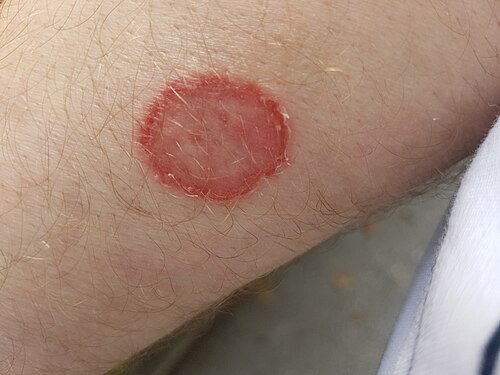
Glabrous skin is highly susceptible, and Ringworm here forms classic annular plaques. It commonly appears on the trunk, limbs, shoulders, or neck. The infection begins as a flat, red, scaly macule that gradually expands outward in a radial fashion. As it spreads, the center of the lesion clears, leaving a classic ring-shaped pattern with an elevated, active border. On darker skin tones, this erythema may appear less pronounced, presenting instead as a hyperpigmented, purplish, brown, or ash-gray scaly area that can easily be mistaken for other dry skin conditions.
Tinea Cruris (Groin)
Typically referred to as jock itch, this variation affects the groin, perineum, and perianal skin. It is significantly more common in post-pububertal males, often triggered by friction, heat, and moisture trapped by occlusive clothing. The rash features a well-demarcated, scaly, reddish-brown crescent-shaped border that extends down the inner thighs from the groin crease, typically sparing the scrotum.
Tinea Pedis (Feet)
Athlete’s foot is a common type of Ringworm affecting the feet. It primarily targets the warm, moist spaces between the toes, particularly the lateral clefts. Sufferers experience intense itching, burning, maceration, scaling, and painful fissures. In some cases, the infection spreads to the soles and heels, causing a chronic, dry, hyperkeratotic pattern known as “moccasin foot,” which is highly resistant to topical therapies.
Tinea Barbae (Beard)
This form is limited to the beard and mustache areas of adolescent and adult males. It is often contracted through contact with infected farm animals or contaminated shaving equipment. Like scalp infections, it can present as mild, superficial scaling with brittle hair, or as a deep, highly inflammatory, pustular nodule that closely mimics bacterial folliculitis.
Tinea Manuum (Hands)
This variation presents as a chronic, dry, scaly patch on the palms, often accentuating the natural creases of the skin. It frequently coexists with athlete’s foot in a classic clinical pattern known as “two feet-one hand syndrome,” where the patient scratching their feet introduces the pathogen to their dominant hand.
Tinea Unguium (Nails)
Nail infections, also known as onychomycosis, present a unique challenge to Ringworm eradication. The fungus invades the nail bed and plate, causing the nail to become thickened, discolored, brittle, and detached from the nail bed. It is highly prevalent in older adults, where reduced peripheral circulation and slower nail growth facilitate persistent colonization.
Pathological Phases and ringworm stages of Development
Understanding the clinical progression is essential for recognizing the disease early and assessing whether a treatment plan is working. The progression of a dermatophytic infection follows a predictable series of clinical ringworm stages:
Pathological Phases and ringworm stages of Development
| Stage | Title | Pathological Process | Clinical Presentation |
|---|---|---|---|
| Stage 1 | Incubation & Germination | Spores adhere to the stratum corneum and germinate over to days. | Clinically silent; no visible rash or pruritus. |
| Stage 2 | Active Development | Hyphae multiply and release metabolic byproducts into the epidermis. | Tiny, erythematous papule or localized scaly patch with mild itching. |
| Stage 3 | Radial Expansion | Fungus spreads outward in a circular pattern to find fresh keratin. | Classic annular plaque with raised, active, scaly edges and central clearing. |
| Stage 4 | Chronicity or Resolution | Infection either stabilizes into chronic plaques or clears with antifungal therapy. | Resolution of scaling, flattening of borders, and return of normal skin texture. |
Primary Cutaneous Manifestations and ringworm symptoms
Recognizing the physical signs of the disease is critical for early diagnosis. The specific symptoms can vary significantly depending on the site of infection and the patient’s individual immune response.
Primary Cutaneous Manifestations and ringworm symptoms
The primary clinical features that define a dermatophyte infection include:
- Intense Localized Pruritus: Persistent, troublesome itching is the most common symptom, often worsening in warm, humid conditions or when the skin is covered.
- Annular Scale and Erythema: Classic lesions present as circular, well-demarcated patches with a raised, scaly red edge and a clearer center, creating a distinct ring-like appearance.
- Localized Alopecia: When hair-bearing areas are involved, the fungus digests the hair shaft, causing the hair to become brittle and break off close to the skin, leaving patchy bald spots.
- Maceration and Fissuring: In skin folds and between the toes, the infected skin becomes white, soft, and starts to peel, often developing deep, painful cracks that can bleed.
- Pustules and Vesicles: The active, expanding edge of the lesion may develop tiny, fluid-filled blisters or pus-filled bumps, indicating a more intense immune response or a secondary bacterial infection.
Visual Documentation and Clinical ringworm pictures
Because we cannot display photographs in this guide, it is helpful to describe what dermatologists look for in clinical databases to confirm a diagnosis.
Visual Documentation and Clinical ringworm pictures
When analyzing high-resolution clinical databases, dermatologists evaluate specific morphological details to differentiate dermatophytoses from other skin conditions:
- Active Scale at the Margin: The outer border of the ring shows a fine, silvery scale that points inward toward the center of the lesion. This scale represents the actively growing front of the fungus.
- Geographic and Polycyclic Borders: When multiple rings expand near each other, their borders often merge to form complex, wavy, geographic patterns across the skin.
- Contrasting Skin Tones: On light skin, the active border is bright pink or red. On darker skin tones, the lesions often present as hyperpigmented, purplish, dark brown, or ash-gray rings, which can be more difficult to identify without proper lighting.
- Follicular Plugging and Black Dots: On the scalp, close-up images reveal dilated hair follicles plugged with dark, broken hair stumps, creating a characteristic “black-dot” pattern.
Diagnostic Methodologies for Confirming Ringworm
Teasing apart the difference between other dermatoses and Ringworm is crucial. Because many skin conditions—such as eczema, psoriasis, contact dermatitis, and seborrheic dermatitis—can present with scaly, red, circular rashes, a purely visual diagnosis can easily lead to mistakes. Inappropriate treatment with topical corticosteroids can trigger tinea incognito, a modified presentation where the classic signs of infection are masked while the fungus continues to spread into deeper tissues.
Step-by-Step Diagnostic Protocol for Suspected Dermatophytoses
- Primary Visual Assessment: Evaluate the rash for active, elevated borders, scaling, and central clearing.
- Direct Microscopy (Bedside KOH): Scrapings are collected from the active margin and dissolved in KOH to visualize branching, septate hyphae.
- Wood’s Lamp Screening: Inspect hair and skin under UV light to check for yellow-green fluorescence indicating specific Microsporum species.
- Fungal Isolation (Culture/PCR): Inoculate Sabouraud dextrose agar or perform molecular PCR assays to identify the specific fungal pathogen.
Direct microscopy plays a central role in confirming Ringworm infections. This simple, rapid, and cost-effective test can be performed right in the clinic:
- Skin Scraping Collection: The clinician gently scrapes the active, scaly outer border of the lesion using a sterile scalpel blade or glass slide, collecting the skin flakes onto a glass slide.
- Potassium Hydroxide (KOH) Treatment: A few drops of a 10% to 20% KOH solution are added to the specimen, and a coverslip is placed on top. The slide is gently warmed for a few seconds to accelerate cell breakdown.
- Microscopic Visualization: The KOH dissolves the keratin in the host cells while leaving the fungal cell walls intact. Under a light microscope, the clinician can clearly visualize long, branching, thread-like structures (septate hyphae) and chains of spores, confirming an active infection.
Specific fungal species glow under UV light, facilitating Ringworm screening. A Wood’s Lamp Examination utilizes a handheld device that emits ultraviolet light at a wavelength of approximately.
- In-Office Screening: The clinician examines the patient’s scalp or skin in a completely darkened room.
- Fluorescence Detection: Certain zoophilic fungi, such as Microsporum canis, produce specific chemical compounds that glow with a bright, signature yellow-green fluorescence under UV light. This makes it a highly valuable tool for rapid screening in schools and household contacts.
For chronic, severe, or treatment-resistant cases, clinicians rely on fungal cultures and PCR assays. Scrapings are inoculated onto specialized media like Sabouraud Dextrose Agar and monitored for several weeks to identify the exact species of fungus. Advanced facilities can also use molecular PCR tests to rapidly identify fungal DNA within 24 to 48 hours, which is particularly helpful for tracking and managing drug-resistant strains.
Medical and Pharmacological Interventions for Ringworm
Modern pharmacology provides both topical and systemic avenues to cure Ringworm effectively. The chosen treatment depends on the location of the infection, how widely it has spread, and whether hair follicles or nails are involved.
Pharmacological Classes of Antifungal Agents
Antifungal medications generally fall into two primary chemical classes: Allylamines and Imidazoles. While both classes disrupt the synthesis of ergosterol—a vital lipid component of the fungal cell membrane—they target different steps in the biochemical pathway, resulting in fungicidal or fungistatic activity.
Exploring Topical ringworm treatment Protocols
For localized, uncomplicated infections on non-hairy skin, such as mild cases of tinea corporis, tinea cruris, or tinea pedis, topical therapy is the gold standard of care.
Exploring Topical ringworm treatment Protocols
These medications are applied directly to the clean, dry lesion and a small surrounding area of healthy skin once or twice daily, typically for a duration of 2 to 4 weeks:
- Allylamines (e.g., Terbinafine 1% cream): These work by selectively inhibiting the enzyme squalene epoxidase. This action blocks ergosterol synthesis, causing toxic squalene to accumulate inside the cell and leading to rapid cell death (fungicidal activity). They typically require shorter treatment courses.
- Imidazoles (e.g., Clotrimazole 1%, Miconazole 2%, Ketoconazole 2%, Econazole 1%): These compounds inhibit the enzyme lanosterol 14-alpha-demethylase, disrupting cell membrane structure and permeability, which halts fungal growth and replication (fungistatic activity). They are highly effective but generally require longer, consistent application.
How to Safely treat ringworm infection with Oral Systemic Medications
Systemic, oral therapy is mandatory for infections involving deep hair follicles, such as tinea capitis or tinea barbae, as well as for extensive, widespread skin lesions or stubborn nail infections where topical creams cannot penetrate deep enough.
How to Safely treat ringworm infection with Oral Systemic Medications
These prescription medications must be taken under close medical supervision:
- Terbinafine (Standard dose: 250 mg daily): This is a first-line systemic treatment due to its high effectiveness and ability to accumulate in keratin-rich tissues like the skin and nails. A typical course ranges from 2 to 4 weeks for extensive body infections, up to 6 weeks for scalp infections, and up to 12 weeks for toenail infections.
- Griseofulvin: This classic systemic treatment works by binding to fungal tubulin and disrupting cell division. It remains a widely used option for treating scalp infections in children. It must be taken with a high-fat meal to ensure proper absorption and is typically prescribed for 6 to 8 weeks.
- Itraconazole and Fluconazole: These oral triazoles are highly effective alternative systemic therapies. They are particularly useful for patients who cannot tolerate terbinafine or for treating resistant fungal strains.
Developing a Combined Strategy for the treatment ringworm
For severe, chronic, or highly contagious cases, a combined treatment approach yields the best clinical results.
Developing a Combined Strategy for the treatment ringworm
- Adjunctive Antifungal Shampoos: In scalp infections, using shampoos containing Selenium Sulfide 2.5% or Ketoconazole 2% alongside oral medication is highly recommended. These shampoos help wash away active fungal spores, significantly reducing how contagious the patient is during the first two weeks of treatment.
- Keratolytic Agents: For thick, dry, hyperkeratotic lesions on the soles or heels, combining topical antifungals with keratolytics like salicylic acid helps soften and peel away the thickened skin, allowing the antifungal cream to penetrate deeper.
- Managing Secondary Infections: If scratching the itchy rash introduces bacteria, causing a secondary bacterial infection like cellulitis or impetigo, the clinician will prescribe appropriate topical or oral antibiotics alongside the antifungal treatment.
Natural Alternatives and Home Remedies for Ringworm
Many patients explore natural or botanical agents to treat Ringworm. While these natural remedies should not replace standard medical treatments—especially for scalp, nail, or widespread infections—several botanical extracts possess documented antifungal properties that can help soothe mild, localized skin irritation.
| Natural Remedy | Primary Active Ingredient | Proposed Mechanism | Application Protocol | Clinical Warnings & Precautions |
|---|---|---|---|---|
| Tea Tree Oil | Terpinen-4-ol | Disrupts the fungal cell membrane | Dilute with a carrier oil and apply with a clean cotton ball | Can cause contact dermatitis or skin irritation; perform a patch test first |
| Garlic Paste | Allicin | Inhibits protein and lipid synthesis | Crush fresh cloves to release allicin, apply for 15 mins, then wash off | Raw garlic can cause chemical burns if left on the skin too long |
| Coconut Oil | Lauric & Caprylic acid | Disintegrates lipid cell membranes | Apply a thin layer of organic, virgin coconut oil 2-3times daily | Safe and soothing, but less effective for deep or establisheƒd infections |
| Apple Cider Vinegar | Acetic acid | Lowers skin pH to inhibit growth | Dilute with water, apply with a cotton ball, let sit for mins | Acidic nature can cause burning and irritation on broken or sensitive skin |
| Oregano Oil | Carvacrol & Thymol | Highly potent cell membrane disruptor | Dilute heavily with carrier oil , apply times daily | Exceptionally potent; can cause severe skin irritation if not properly diluted |
Proactive Prevention and Transmission Control of Ringworm
Interrupting the spread of Ringworm requires a multi-faceted approach. Because fungal spores are resilient and can survive on surfaces and fabrics for extended periods, consistent hygiene and environmental control measures are essential to prevent reinfection.
| Preventive Measure | Targeted Hygiene Action | Clinical Rationale |
|---|---|---|
| Daily Cleansing | Wash skin daily and dry completely, focusing on skin folds and spaces between toes. | Deprives fungal spores of the warm, moist microclimate required for germination. |
| Fomite Avoidance | Do not share towels, combs, hair brushes, clothing, or bedding with others. | Eliminates the primary indirect transmission vectors of resilient arthroconidia. |
| Barrier Footwear | Wear clean, water-resistant sandals in public locker rooms, showers, and pool areas. | Prevents direct skin contact with fungal spores thriving on damp, public surfaces. |
| Breathable Clothing | Wear loose-fitting, natural, moisture-wicking fabrics like cotton; change daily. | Minimizes friction, heat retention, and sweat accumulation that facilitate fungal growth. |
| Veterinary Screening | Have household pets checked by a vet if they exhibit patches of missing fur or scaling. | Curbs the risk of zoophilic transmission from asymptomatic or symptomatic pet carriers. |
By incorporating these practices into your daily routine, you can significantly reduce the risk of contracting or spreading the infection:
- Keep Your Skin Clean and Dry: Fungi thrive in warm, moist environments. Always dry your skin thoroughly after showering, paying close attention to the spaces between your toes, the groin crease, and under any skin folds.
- Do Not Share Personal Items: Avoid sharing items that come into direct contact with skin, hair, or nails. This includes bath towels, bedsheets, hairbrushes, combs, hats, clothing, and sports equipment.
- Wear Protective Footwear: Never walk barefoot in communal areas like locker rooms, public showers, public pool decks, or gyms. Wearing clean, water-resistant sandals or shower shoes provides an essential barrier against fungal spores.
- Choose Breathable Clothing: Wear loose-fitting garments made of natural, moisture-wicking fabrics like cotton. Change your socks and underwear at least once a day, and avoid wearing tight, restrictive clothing for long periods.
- Practice Good Pet Hygiene: Routinely check your household pets, especially younger cats, dogs, puppies, and kittens, for patches of missing fur or scaling skin. Wash your hands thoroughly with soap and water after playing with pets, and take them to a veterinarian if you suspect they have an infection.
- Follow Athlete-Specific Protocols: If you participate in contact sports like wrestling or martial arts, shower immediately after every practice session or match. Keep your uniforms and sports gear clean, and regularly disinfect shared equipment and mats.
Frequently Asked Questions
How do you get ringworm?
You can contract Ringworm through several common pathways due to the highly infectious nature of dermatophyte fungal spores. The most common route is direct, skin-to-skin contact with an infected person who has an active, scaling lesion on their body. You can also contract the infection indirectly by touching contaminated personal items, such as bath towels, clothing, bedsheets, hairbrushes, or combs used by an infected individual. Additionally, petting or grooming infected domestic animals, particularly kittens, puppies, cats, dogs, or farm animals like cattle, can easily transmit the fungal spores to your skin. Finally, the fungi can survive on wet surfaces, meaning you can contract the infection by walking barefoot in communal showers, locker rooms, or around public swimming pools.
What is ringworm?
Ringworm is a highly contagious superficial fungal infection of the keratinized tissues, which include the outer layers of the skin, hair, and nails. Despite its misleading name, the condition is caused entirely by microscopic fungi called dermatophytes, rather than any parasitic worm. The name comes from the characteristic physical appearance of the infection, which often presents as an itchy, red, circular rash with elevated, scaly edges and a clearer center. These fungi secrete specialized enzymes that digest keratin, a tough protein that serves as their primary food source on human and animal hosts. While the infection can cause significant discomfort and cosmetic concern, it is generally superficial and does not invade deeper body tissues in healthy individuals.
Is ringworm contagious?
Yes, Ringworm is exceptionally contagious and can spread rapidly through schools, households, daycare centers, and sports teams. The fungal spores are highly resilient and can easily transfer from person to person through direct physical contact with an active skin lesion. They can also spread through indirect contact by sharing personal items, or by touching contaminated environmental surfaces like locker room benches, gym mats, and public showers. Because the fungal spores can survive on surfaces, clothing, and hairbrushes for weeks or even months, strict hygiene measures are essential to stop the infection from spreading. Early diagnosis and prompt antifungal treatment are key to reducing the contagious period and preventing wider outbreaks.
What does ringworm look like?
The appearance of Ringworm can vary depending on the specific part of the body infected and the individual’s skin tone. On non-hairy skin like the arms, legs, or torso, it typically starts as a small, red, scaly patch that gradually expands outward in a circular pattern, leaving a clearer center with a raised, scaly red border. On darker skin tones, this active border may look less red, presenting instead as a hyperpigmented, purplish, dark brown, or ash-gray ring that can be harder to spot. When the infection targets the scalp, it usually presents as itchy, dry, scaly patches accompanied by localized hair loss, where the hairs break off close to the scalp and leave behind dark, stubbly dots.
The following posts may interest you
Best Baby Eczema Treatment: Complete Guide for Relief
Poison Ivy Rash: Causes, Symptoms, and Best Treatments
How Do I Know If My Baby Has a Food Allergy?
Sixth Disease (Roseola): Symptoms, Rash, and Treatment
Heat Rash (Prickly Heat) Guide: Treatment, Causes & Prevention
Sources
Troublesome Skin Diseases in Infancy and Childhood
https://pmc.ncbi.nlm.nih.gov/articles/PMC1827196
FURTHER STUDIES ON RINGWORM OF THE HANDS AND FEET
https://jamanetwork.com/journals/jamadermatology/article-abstract/492802
THE VARIETIES OF RINGWORM AND THEIR TREATMENT
https://pmc.ncbi.nlm.nih.gov/articles/PMC2381801
Fungal Infections From Human and Animal Contact
https://pmc.ncbi.nlm.nih.gov/articles/PMC6664368
On Ringworm Infection in Man and Animals
https://pmc.ncbi.nlm.nih.gov/articles/PMC2400261
The Role of Animal-type Dermatophytes in Human Ringworm
https://pmc.ncbi.nlm.nih.gov/articles/PMC2059846
Isolation and identification of fungal infections in humans and cats in ringworm of the body and antifungal sensitivity to treatment
https://zjhms.alzahraa.edu.iq/article_189872.html?lang=en
Studies of Ringworm. Part I. Microsporum Audouini Infection in India
https://pmc.ncbi.nlm.nih.gov/articles/PMC5155797
Fungal infection in children: tinea capitis
https://www.cidjournal.com/article/S0738-081X(00)00160-7/abstract
Epidemiology of Some Skin Infections
https://pmc.ncbi.nlm.nih.gov/articles/PMC2015248
İmage: Asurnipal – CC BY-SA 4.0, https://commons.wikimedia.org/w/index.php?curid=88003790
https://tr.wikipedia.org/wiki/Dermatofitoz#/media/Dosya:Dermatophytosis_20190815-02ASD.jpg