Winter Eczema: Key Facts at a Glance
Winter eczema is not a separate disease. It is a seasonal flare of atopic dermatitis (eczema), set off when cold outdoor air and dry indoor heating pull moisture out of an already fragile skin barrier. The skin becomes dry, rough, red, and very itchy. Eczema is never contagious, and most flares calm down within one to three weeks of consistent moisturizing and avoiding triggers.
- Why winter makes it worse: Cold air holds very little moisture, and central heating, radiators, and space heaters warm the air without adding moisture back. Indoor humidity can drop below 20% to 30%, so water escapes from the skin and tiny cracks form. Hot showers, scratchy wool sweaters, and more time indoors with dust mites and pet dander add to the problem.
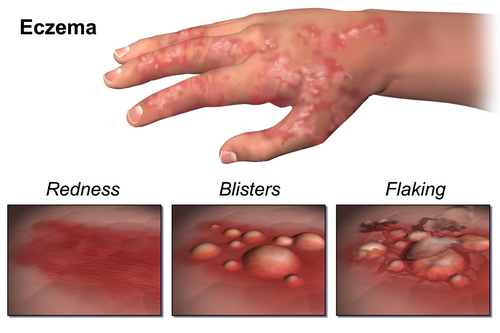
- Main symptoms: Intense itching that often gets worse at night; rough, tight, scaly skin; and patches that look red or pink on lighter skin and dark brown, purple, or gray on darker skin. Flares can bring tiny bumps or blisters that ooze and crust, and repeated scratching thickens the skin or opens painful cracks over the joints.
- Where it appears: In babies, red, dry, crusty patches usually show up on the cheeks, forehead, chin, scalp, outer elbows, and fronts of the knees. In older children, teens, and adults, eczema settles into the creases behind the knees and inside the elbows. In winter, the hands, face, lips, and shins are often hit hardest.
- Daily skin care: Keep baths and showers short (5 to 10 minutes) in lukewarm water with a fragrance-free, soap-free cleanser. Pat the skin until slightly damp and apply moisturizer within three minutes. Thick creams and petrolatum-based ointments protect better than thin pump lotions, which can leave skin drier in winter air.
- Home and clothing: Run a clean cool-mist humidifier to keep indoor humidity between 30% and 50%, and clean the tank every two to three days. Dress children in soft, breathable 100% cotton layers instead of wool or rough synthetics, wash new clothes before wearing them, and use fragrance-free detergent without dryer sheets or fabric softeners.
- Medical treatment: When moisturizing and avoiding triggers are not enough, a pediatrician or dermatologist can prescribe treatment, such as steroid creams for short flares, non-steroidal creams for the face and eyelids, wet-wrap therapy, light therapy for older children and adults, or injectable biologic medicines for severe eczema. Ask a doctor before using any steroid cream on the face.
- When to see a doctor: Get prompt medical care if patches develop honey-colored crusts, pus, worsening pain, spreading warmth, red streaks, or fever, because damaged skin can be infected by bacteria or the cold-sore virus. Also see a doctor if eczema does not improve after one week of careful home care or keeps your child awake at night.
Understanding Winter Eczema: Complete Guide to Causes, Symptoms, and Relief
When temperatures drop and crisp autumn winds give way to freezing weather, millions of people notice their skin becoming tight, rough, and unbearably itchy. For individuals living with atopic dermatitis, this seasonal shift frequently triggers Winter Eczema, a frustrating cycle of dryness, redness, and painful skin inflammation that disrupts daily comfort and sleep. While dry winter skin affects nearly everyone to some degree, Winter Eczema represents a deeper breakdown of the epidermal barrier that requires targeted moisture replenishment, gentle cleansing habits, and proactive environmental adjustments. Whether you are a parent trying to calm a restless toddler at night or an adult struggling with cracked knuckles, understanding how cold weather impacts sensitive skin is the first step toward lasting relief.
Eczema is a chronic, non-contagious inflammatory skin disorder that affects an estimated 10% to 20% of children worldwide and up to 20% to 30% of infants, while also persisting into adolescence and adulthood for many individuals. Although the condition can flare at any time of year, dermatologists observe that the majority of patients experience their most stubborn symptoms when outdoor humidity plummets and indoor heating systems run continuously. By exploring the underlying biology of Winter Eczema, identifying hidden household triggers, and applying evidence-based skincare routines, families can protect vulnerable skin and navigate the coldest months with confidence.
Clinical Insight: Eczema is never contagious. It stems from a complex interplay between genetic susceptibility, immune system sensitivity, and environmental stressors rather than bacteria, viruses, or fungi. Supporting a child or loved one during a seasonal flare starts with compassionate, consistent skin barrier care.
What Is Winter Eczema and How Does It Affect the Skin Barrier?
At its core, Winter Eczema is not a separate disease from atopic dermatitis, but rather a seasonal exacerbation of underlying eczema triggered by harsh cold-weather conditions. Healthy skin relies on a tightly organized outer layer—known as the stratum corneum or epidermal barrier—composed of skin cells held together by natural lipids, including ceramides, cholesterol, and fatty acids. This protective shield performs two vital jobs: it locks water inside the body and blocks environmental irritants, allergens, and microbes from penetrating deeper tissue.
In people predisposed to eczema, genetic variations often reduce key structural proteins such as filaggrin, leaving the skin barrier naturally leaky and fragile. During warmer, more humid seasons, ambient moisture in the air helps compensate for some of this water loss. However, once cold air arrives, the atmosphere holds dramatically less water vapor. Moisture evaporates rapidly from the epidermis in a process called transepidermal water loss, causing microscopic cracks to form across the skin surface. Once those microscopic fissures open, everyday soaps, rough fabrics, allergens, and bacteria enter easily, sparking an overactive immune response that produces intense itching, swelling, and visible rashes.
Recognizing Early Winter Eczema Symptoms Across Different Age Groups
Spotting the early Symptoms of Winter Eczema allows you to intervene before mild dryness escalates into a full-scale inflammatory flare. Because eczema in winter evolves across the lifespan, its appearance and primary locations shift noticeably from infancy through adulthood.
- Intense Pruritus (Itching): Dermatologists emphasize a foundational clinical rule: if a rash does not itch, it is rarely eczema. The itch often intensifies at night, waking babies, kids, and adults from restorative sleep.
- Xerosis and Scaling: Affected areas feel rough, tight, and sandpapery, developing fine white flakes or thicker scaly plaques as moisture escapes.
- Erythema and Swelling: Inflamed patches appear bright red or pink on lighter skin tones, and dark brown, violaceous, or ashen gray on deeper skin tones, often accompanied by mild local warmth and puffiness.
- Papules and Weeping Lesions: Acute flares may produce tiny raised bumps or fluid-filled blisters that ooze clear serum and crust over when scratched.
- Lichenification and Fissures: Repeated rubbing and scratching cause the skin to thicken into leathery, accentuated skin lines—a change known as lichenification—or split into painful, bleeding cracks over joints.
Identifying Baby Eczema Flare Winter Patterns and Infant Rashes
In infants and young toddlers, a baby eczema flare winter episode typically targets prominent, exposed areas of the body. Parents most often notice red, dry, crusty, or scaly patches on a baby’s cheeks, forehead, chin, scalp, outer elbows, and fronts of the knees. Because infants drool frequently during teething and experience constant friction against crib sheets or winter hats, facial and cheek irritation can become particularly persistent.
Many infants also develop seborrheic dermatitis, commonly called cradle cap, during their first few months of life. While cradle cap creates greasy, yellowish scales on the scalp and is distinct from atopic dermatitis, the two conditions frequently coexist in young babies. As infants begin crawling across carpets and floorboards during colder months, friction against household textiles and exposure to indoor dust can further aggravate sensitive knee and shin skin.
Distinguishing Winter Dermatitis From Ordinary Seasonal Dryness
Nearly everyone experiences some degree of simple dry skin—clinically termed winter xerosis—when indoor heaters turn on. Distinguishing routine seasonal dryness from winter dermatitis helps parents and adults decide when simple lotion is enough and when targeted eczema care or medical evaluation is necessary.
| Clinical Feature | Ordinary Winter Dry Skin | Clinical Winter Eczema |
| Primary Sensation | Mild tightness, roughness, or light surface flaking | Persistent, intense itching that worsens at night |
| Skin Appearance | Uniformly dull, slightly flaky texture without deep redness | Well-defined red, dark brown, or violet inflamed patches with scaling |
| Typical Distribution | Shins, forearms, and back of hands exposed to dry air | Face, cheeks, neck, inner elbows, behind knees, hands, and wrists |
| Response to Basic Lotion | Improves quickly within a few days of standard moisturizing | Recurs repeatedly in the same spots despite regular lotion use |
| Complication Risk | Minimal risk of cracking or secondary skin infection | High risk of painful fissures, weeping, and bacterial skin infection |
Primary Causes and Environmental Triggers
Understanding the diverse Causes behind seasonal skin flares empowers you to eliminate hidden irritants in your daily routine. Rarely does a single factor trigger Winter Eczema on its own; instead, multiple environmental, biological, and lifestyle stressors converge at the same time to overwhelm a fragile skin barrier.
How Cold Outdoor Air and Indoor Heating Drive Winter Eczema
The primary environmental driver of Winter Eczema is the sharp drop in relative humidity that occurs both outdoors and indoors during colder months. Cold outdoor air physically cannot retain as much water vapor as warm summer air. When brisk winter wind blows across exposed skin, it strips away natural surface lipids and accelerates evaporation from the epidermis.
Stepping inside offers little relief because central heating systems, radiators, space heaters, and wood-burning fireplaces warm cold air without adding moisture back into the room. Indoor relative humidity frequently drops below 20% to 30%, creating a desert-like microclimate inside homes, classrooms, and offices. Moving repeatedly between freezing outdoor temperatures and overheated, arid indoor spaces subjects blood vessels and skin cells to rapid thermal stress, worsening inflammation and triggering immediate itching.
Season of Birth, Early-Life Environment
Scientific research demonstrates that environmental timing and early-life surroundings play a measurable role in how eczema in winter develops and behaves. Large birth-cohort studies examining thousands of children have revealed compelling links between season of birth, early sunlight exposure, and residential surroundings.
- Season of Birth and Early Skin Vulnerability: Epidemiological studies in the Northern Hemisphere indicate that infants born in autumn or winter face a higher likelihood of developing atopic dermatitis compared to infants born in summer. Researchers suggest that newborns entering the world during cold, low-humidity months encounter immediate environmental stress on their immature epidermal barrier right after birth.
- Reduced Sunlight and Vitamin D Synthesis: Shorter winter days and bundled clothing sharply reduce ultraviolet B (UVB) exposure. Natural UVB light helps strengthen skin barrier function and stimulates vitamin D production, a nutrient that regulates immune cells, promotes anti-inflammatory signaling, and dampens allergic skin responses. Lower winter vitamin D levels do not directly cause eczema, but they can weaken immune regulation and exacerbate seasonal flares.
- Surrounding Nature, Microbes, and Indoor Microbiota: Multi-cohort European research evaluating over 5,000 children found that early-life residential environments—including nearby coniferous or mixed forests, seasonal pollen exposure, and urban-rural differences—shape indoor microbial diversity and early immune programming. During winter, when families keep windows tightly shut, indoor microbial balance shifts and household allergens become far more concentrated.
Indoor Allergens, Clothing Irritants, and Eczema During Winter
Spending significantly more hours indoors during cold weather increases continuous contact with common household triggers that aggravate eczema during winter.
- House Dust Mites and Mold Spores: Closed windows, warm radiators, and plush winter bedding create ideal breeding conditions for house dust mites in mattresses, pillows, and carpets. Meanwhile, poor ventilation in bathrooms and kitchens encourages indoor mold growth, another potent immune trigger for sensitive individuals.
- Pet Dander Accumulation: Household pets spend more time indoors during freezing weather, increasing airborne pet dander on sofas, rugs, and clothing.
- Scratchy Winter Fabrics: Bundling up in heavy sweaters, scarves, and thermal layers introduces mechanical friction against dry skin. Wool, rough acrylics, nylon, and stiff polyester trap body heat and sweat while physically irritating nerve endings in inflamed skin.
- Harsh Soaps and Laundry Residues: Hot winter showers paired with foaming, sulfate-heavy body washes strip away vital skin lipids. Similarly, scented laundry detergents, dryer sheets, and fabric softeners leave chemical residues on winter pajamas and sweaters that provoke contact irritation.
- Winter Colds and Respiratory Viruses: Frequent winter viral infections activate systemic inflammation, which often triggers widespread eczema flares or localized irritation around the nose and mouth from constant tissue wiping.
The Brain-Skin Axis and Psychological Stress
Beyond weather and fabrics, emotional and psychological stress frequently fuels eczema winter outbreaks through a biological pathway known as the brain-skin axis. Shorter daylight hours, holiday pressures, school exams, and disrupted sleep routines elevate circulating stress hormones, particularly cortisol.
Elevated cortisol disrupts skin health in two distinct ways: first, it suppresses the skin’s natural synthesis of ceramides and hyaluronic acid, directly weakening moisture retention; second, it stimulates pro-inflammatory cytokines that heighten skin redness and nerve sensitivity. This creates a self-perpetuating itch-stress cycle—stress triggers itching, scratching damages the skin barrier and disrupts sleep, and sleep deprivation further elevates cortisol levels the next day.
Targeted Body Care
Because skin thickness, oil gland density, and daily environmental exposure vary dramatically across the body, Winter Eczema behaves differently depending on where it appears. Customizing your care routine to specific anatomical zones ensures faster healing and better protection.
Managing Eczema on Hands, Face, and Legs
Exposed extremities and high-friction zones bear the brunt of cold wind and frequent washing. A single lightweight lotion rarely works equally well for delicate eyelids, chapped knuckles, and dry shins.
| Body Area | Why Winter Hits Hardest | Key Clinical Signs | Targeted Daily Strategy |
| Hands and Fingers | Frequent handwashing, cold air exposure, and minimal oil glands | Dryness, redness, painful knuckle cracks, and deep fingertip fissures | Apply thick ointment after every wash; wear 100% cotton gloves under winter mittens |
| Face, Cheeks, and Lips | Direct exposure to freezing wind, indoor heat, saliva, and nasal wiping | Red scaly cheeks, chapped perioral skin, eyelid flaking, and cracked lips | Apply fragrance-free barrier balm before going outdoors; never lick dry lips |
| Legs, Shins, and Knees | Low sebaceous gland density and constant rubbing against heavy trousers | Rough scaling, coin-shaped dry patches, and intense nighttime itching | Layer rich ceramide cream over damp skin after brief lukewarm baths |
| Inner Elbows and Behind Knees | Trapped sweat and heat underneath heavy sweaters and thermal leggings | Symmetrical red plaques, thickening, and scratch marks in skin folds | Wear breathable cotton base layers; treat early redness promptly |
Soothing Winter Eczema on Hands and Preventing Painful Cracks
Winter eczema on hands is one of the most stubborn complaints among parents, healthcare workers, teachers, and outdoor commuters. Hands endure constant temperature swings alongside repeated handwashing and alcohol-based sanitizers that dissolve protective skin lipids. In many adults and older children, stress and cold weather also trigger dyshidrotic eczema, producing intensely itchy, deep-seated tiny blisters along the sides of the fingers and palms before peeling and cracking.
To heal winter eczema on hands, switch from foaming antibacterial soaps to a gentle, fragrance-free syndet cleanser or cream wash, and rinse with lukewarm rather than hot water. Pat hands gently until slightly damp and immediately massage a petrolatum- or ceramide-rich ointment into the backs of the hands, cuticles, and knuckles. Keep a travel-sized tube in every coat pocket, purse, and car console so you never miss an application. Before bed, apply a thick layer of plain petroleum jelly and slip on soft 100% white cotton gloves overnight to lock in deep hydration.
Protecting Delicate Skin From Winter Eczema on Face and Cheeks
Managing Winter Eczema on face requires extra care because facial skin—especially around the eyes, cheeks, and mouth—is thinner and absorbs topical products more readily than skin on the torso or limbs. In babies and toddlers, cold wind combined with drool or runny noses often triggers bright red, chapped cheeks and perioral flares.
Before stepping outside into crisp wind, apply a protective coat of fragrance-free barrier ointment or balm across the cheeks, chin, and around the nostrils. Wrap a soft cotton or silk scarf loosely over the lower face rather than a scratchy wool scarf. Remind kids and adults not to lick chapped lips, as evaporating saliva strips away remaining moisture and worsens lip dermatitis. For facial flares requiring medication, consult a pediatrician or dermatologist before applying any steroid cream, as delicate facial skin typically requires ultra-mild prescriptions or non-steroidal topical calcineurin inhibitors.
Relieving Stubborn Winter Eczema on Legs, Elbows, and Knees
Winter Eczema on legs frequently develops because the lower extremities contain fewer oil-producing sebaceous glands than the upper body, making shins and calves especially prone to moisture loss. Heavy denim, wool tights, and synthetic thermal leggings rub continuously against dry leg skin, intensifying itch signals.
In infants and young toddlers, eczema classically appears on the outer elbows and fronts of the knees, whereas in older kids, teenagers, and adults, it settles into the creases behind the knees and inside the elbows. Applying a thick Winter eczema cream or ointment from thigh to ankle immediately after bathing—and dressing children in 100% cotton leggings or soft seam-free pants underneath heavier outerwear—dramatically reduces friction and scaling.
Evidence-Based Winter Eczema Treatment Options
While there is currently no permanent cure for atopic dermatitis, modern Winter Eczema care follows a clear, proactive strategy: repair the skin barrier daily, calm acute inflammation early, break the itch-scratch cycle, and prevent secondary skin infections. Effective Treatment combines consistent home emollient therapy with targeted medical options when flares resist basic care.
Selecting the Right Winter Eczema Cream, Ointment, and Emollient
Moisturizer is the cornerstone of every seasonal eczema plan, yet choosing the wrong texture can leave skin unprotected. Standard pump lotions contain a high percentage of water and alcohol; as that water evaporates in dry winter air, thin lotions can actually leave sensitive skin drier than before. Instead, dermatologists recommend switching to thick creams or greasy ointments during colder months.
| Moisturizer Type | Oil-to-Water Ratio | Best Uses in Cold Weather | Key Ingredients to Look For |
| Ointments (e.g., plain petroleum jelly, healing balms) | Highest oil content (~80%–100% lipid) | Severely dry, cracked skin, infant cheeks, hands, and overnight sealing; rarely stings broken skin | White petrolatum, mineral oil, paraffin, dimethicone |
| Thick Creams (packaged in tubs or jars, not pumps) | Balanced oil-in-water emulsion | Daytime body application for school-age kids and adults who dislike heavy greasiness | Ceramides, hyaluronic acid, glycerin, colloidal oatmeal, shea butter |
| Humectant-Rich Barrier Creams | Water-binding agents paired with occlusives | Drawing moisture from deeper skin layers into a parched epidermis | Glycerin, urea (low concentration for adults), hyaluronic acid, squalane |
| Thin Pump Lotions | High water content (~70%–80% water) | Generally insufficient for winter flares; best reserved for mild summer maintenance | Avoid fragranced or alcohol-heavy formulas |
When shopping for a Winter eczema cream or ointment, read ingredient labels carefully. Choose products explicitly labeled fragrance-free rather than merely “unscented,” because unscented products sometimes contain masking fragrances that irritate compromised skin. Look for barrier-restoring lipids such as ceramides 1, 3, and 6-II, humectants like glycerin and hyaluronic acid, and soothing anti-inflammatory ingredients like colloidal oatmeal.
Daily Winter Eczema Treatment Routines for Babies, Toddlers, and Children
Caring for Winter Eczema in babies, toddlers, and school-age children requires tailoring routines to each developmental stage:
- Infants and Babies: Apply a thick, fragrance-free petrolatum-based ointment at least two to three times daily, using every diaper change as a natural reminder to moisturize exposed arms, legs, and torso. Because ointments do not sting or burn inflamed skin, they are far better tolerated by fussy infants than water-based creams. To prevent nocturnal scratching, trim fingernails smoothly and dress babies in soft cotton sleepers with fold-over mittens.
- Toddlers and Preschoolers: Keep baths brief—5 to 10 minutes in lukewarm water—and immediately follow the “soak and seal” method, applying moisturizer within three minutes of patting the skin dry. Turn moisturizing into a playful game (such as “dotting like a Dalmatian” before rubbing cream in) to build positive cooperation.
- School-Age Kids and Teens: Older children often resist greasy ointments during school hours because they stain papers or feel sticky under clothing. Offer a rich, fast-absorbing ceramide cream for morning and school-bag use, reserving heavy ointments for bedtime. Encourage open conversations about managing visible dry patches at school so kids feel confident rather than self-conscious.
Advanced Medical Therapies and Wet-Wrap Care for Eczema in Winter
When consistent moisturizing and trigger avoidance fail to calm eczema in winter, a pediatrician, allergist, or dermatologist can prescribe targeted medical Winter Eczema treatment options to shut down inflammation safely.
- Topical Corticosteroids: Mild over-the-counter 1% hydrocortisone ointment may be used on young children and adults for short flares (typically up to 7 days), while moderate-to-potent prescription steroids treat thicker body plaques. Always apply prescribed medication to active red patches first, then layer a generous coat of plain moisturizer over top.
- Non-Steroidal Topical Medications: Prescription topical calcineurin inhibitors (such as tacrolimus or pimecrolimus), PDE4 inhibitors (crisaborole), and topical JAK inhibitors reduce immune-driven inflammation without the risk of skin thinning, making them ideal for the face, eyelids, and neck. Tacrolimus and pimecrolimus are meant for people over 2 years old, so ask your child’s doctor which treatment is right for a baby or toddler under 2.
- Wet-Wrap Therapy: Used in pediatric dermatology centers for severe, refractory flares, wet-wrap therapy deeply rehydrates parched skin. After bathing and applying prescribed topical ointment plus a thick layer of petroleum jelly, the child wears a layer of warm, damp cotton pajamas or gauze, topped with a dry outer layer of pajamas to seal in moisture and cool inflamed nerve endings.
- Narrowband UVB Phototherapy: Because diminished winter sunlight contributes to seasonal flares, dermatologists frequently recommend narrowband UVB phototherapy for moderate-to-severe Winter Eczema in adults and older children. Delivering controlled therapeutic wavelengths around 311 to 313 nm, phototherapy strengthens the skin barrier, calms overactive immune cells, and relieves persistent itching under medical supervision.
- Systemic Biologics and Targeted Therapies: For severe chronic eczema unresponsive to topical care and light therapy, modern injectable biologic medications (such as dupilumab) precisely block key inflammatory pathways (IL-4 and IL-13) with high safety profiles across both adults and pediatric age groups.
- Recognizing Signs of Infection: Damaged eczema skin is vulnerable to Staphylococcus aureus bacteria and cold-sore viruses. Seek prompt medical evaluation if patches develop honey-colored crusts, pus, worsening pain, spreading warmth, red streaks, or fever, as antibiotic or antiviral therapy may be needed.
When to See a Specialist: Schedule an appointment with a dermatologist or allergist if your Winter Eczema fails to improve after one week of diligent home care, wakes you or your child from sleep, requires over-the-counter hydrocortisone more than one week per month, or shows signs of skin infection.
Practical Winter Eczema Prevention Strategies for Home and Outdoors
Consistent Prevention transforms cold-weather skin management from exhausting crisis control into an effortless daily habit. By adjusting how you bathe, heat your home, dress your family, and nourish your body, you can stop most Winter Eczema flares before they start.
Step-by-Step Daily Prevention Plan for Winter Eczema
Follow this simple four-step daily rhythm to protect sensitive skin from morning until bedtime:
| Daily Timing | Core Action Step | Practical Execution Details |
| 1. Morning Prep | Seal Skin and Dress in Soft Layers | Apply rich cream or ointment upon waking; dress in 100% cotton base layers before adding warmer outer garments |
| 2. Outdoor Transition | Shield Exposed Face and Hands | Coat cheeks, lips, and hands with heavy balm 15 minutes before going outside; wear cotton-lined gloves and scarves |
| 3. Evening Bathing | Execute the 3-Minute Soak and Seal | Take a 5-to-10-minute lukewarm bath or shower with fragrance-free cleanser; pat damp and apply moisturizer within 3 minutes |
| 4. Overnight Recovery | Optimize Bedroom Climate and Bedding | Set bedroom thermostat to 18°C to 20°C, run a clean cool-mist humidifier at 30%–50% humidity, and wear breathable cotton sleepwear |
Optimizing Bathing Habits and Humidity to Prevent Eczema During Winter
A steaming hot shower feels comforting after coming in from freezing weather, yet hot water rapidly dissolves the skin’s natural lipid barrier and triggers post-shower rebound itching. Keep baths and showers brief (5 to 10 minutes) and use lukewarm water instead. Skip bubble baths, bath bombs, and scented soaps; instead, use a soap-free, pH-balanced, fragrance-free liquid cleanser only on soiled areas. Adding colloidal oatmeal to a lukewarm bath can also calm angry, itchy skin naturally.
Inside your home, aim to keep living areas at a comfortable, steady 18°C to 22°C and bedrooms slightly cooler, at 18°C to 20°C at night, rather than overheating rooms. Place a cool-mist humidifier in bedrooms and main living spaces to keep indoor humidity between 30% and 50%. Be sure to clean humidifier tanks every two to three days with distilled water or white vinegar to prevent mold and bacterial buildup. Additionally, open windows briefly each day for fresh air circulation, wash bedding weekly in hot water using fragrance-free detergent, and vacuum rugs and upholstery with a HEPA-filter vacuum to minimize winter dust mites.
Choosing Skin-Safe Fabrics and Anti-Inflammatory Nutrition for Kids and Adults
What touches your skin 24 hours a day directly influences eczema during winter. Layering strategically keeps body temperature steady without triggering sweat-induced itching.
| Recommended Skin-Friendly Fabrics | Fabrics and Materials to Avoid |
| 100% Organic Cotton: Soft, breathable, absorbent, and ideal for underwear, pajamas, and base layers | Wool: Rough animal fibers physically scratch inflamed skin and trigger instant itching |
| Bamboo Viscose: Silky smooth, temperature-regulating, and naturally hypoallergenic | Polyester and Acrylics: Trap heat and sweat against the skin, worsening inflammation |
| Pure Silk: Ultra-smooth lining option for winter scarves, hats, and specialty eczema garments | Nylon and Rough Fleece: Generate static electricity and friction against dry limbs |
Always wash new clothes before wearing them to remove manufacturing finishes, snip out scratchy neck tags, and avoid scented fabric softeners.
Finally, support skin resilience from the inside out. People often drink less water in cold weather, so encourage regular intake of water, warm herbal teas, and broths alongside water-rich fruits and vegetables. Incorporate anti-inflammatory foods rich in omega-3 fatty acids—such as salmon, sardines, walnuts, flaxseeds, and leafy greens—and ask your doctor whether checking vitamin D levels during winter makes sense for your family. Practicing simple daily stress-relief habits, including 10 minutes of deep breathing, gentle stretching, or screen-free wind-down time before bed, further calms the brain-skin axis and promotes deeper healing.
Frequently Asked Questions
Is Eczema Worse in Winter or Summer?
For the vast majority of infants, children, and adults, eczema is noticeably worse in winter than in summer. Cold outdoor air holds very little moisture, and continuous indoor heating strips remaining humidity from homes and schools, rapidly dehydrating the skin barrier. By contrast, warmer summer humidity and modest natural sunlight often help soothe skin inflammation for many patients. However, a smaller subset of individuals experiences summer flares triggered by heavy sweating, heat, chlorine, or seasonal pollen, proving that extreme temperatures in either direction can challenge sensitive skin.
Does Eczema Get Worse in the Winter?
Yes, eczema frequently gets worse in the winter because multiple environmental and behavioral triggers hit the skin simultaneously. Beyond frigid winds and dry central heating, people tend to take longer hot showers, bundle up in irritating wool or synthetic sweaters, and spend more time indoors surrounded by concentrated dust mites and pet dander. Shorter winter days also reduce natural UVB light exposure and elevate holiday or school-related stress, both of which weaken skin barrier repair. Proactively switching to thicker ointments, lukewarm showers, and indoor humidifiers can prevent this seasonal worsening.
Does Winter Eczema Go Away?
Individual flares of Winter Eczema definitely go away with consistent moisturizing, trigger management, and targeted topical treatments, typically calming down within one to three weeks of dedicated barrier care. As spring brings higher ambient humidity, many people also enjoy a natural remission in their seasonal symptoms. From a long-term perspective, many babies and young children outgrow childhood eczema entirely by school age or adolescence as their immune system and skin barrier mature. Even for adults whose underlying tendency toward sensitive skin persists lifelong, proper seasonal habits keep Winter Eczema comfortably under control.
What Is the Best Moisturizer for Winter Eczema?
The best moisturizer for Winter Eczema is a fragrance-free, hypoallergenic thick cream or petrolatum-based ointment rather than a thin pump lotion. Ointments containing white petrolatum provide the strongest occlusive seal against moisture loss and will not sting when applied to cracked, inflamed skin. For daytime comfort, look for rich creams packed with ceramides, hyaluronic acid, glycerin, or colloidal oatmeal, and apply them within three minutes of bathing while your skin is still damp.
The following posts may interest you
Best Baby Eczema Treatment: Complete Guide for Relief
Contact Dermatitis: Causes, Symptoms, and Proven Care
Disclaimer: The content provided on BabyKidsHealth.com is for informational purposes only and is not intended as a substitute for professional medical advice, diagnosis, or treatment. Always seek the advice of your physician or other qualified health provider with any questions you may have regarding a medical condition.
Sources
Atopic dermatitis (MedlinePlus, U.S. National Library of Medicine)
https://medlineplus.gov/ency/article/000853.htm
Atopic eczema (NHS, UK)
https://www.nhs.uk/conditions/atopic-eczema/
Atopic Dermatitis (National Institute of Arthritis and Musculoskeletal and Skin Diseases, NIH)
https://www.niams.nih.gov/health-topics/atopic-dermatitis
Eczema in Babies and Children: Symptoms and Causes (American Academy of Pediatrics, HealthyChildren.org)
https://www.healthychildren.org/English/health-issues/conditions/skin/Pages/Eczema.aspx
Avoiding Dry Winter Skin in Babies and Toddlers (American Academy of Pediatrics, HealthyChildren.org)
How to Treat & Control Eczema (Atopic Dermatitis) Rashes in Children (American Academy of Pediatrics, HealthyChildren.org)
8 Everyday Eczema Triggers & How to Manage Them (American Academy of Pediatrics, HealthyChildren.org)
Stress & Eczema (Atopic Dermatitis): How to Help Kids Cope With the Itch (American Academy of Pediatrics, HealthyChildren.org)
Season of birth is associated with increased risk of atopic dermatitis in Japanese infants: a retrospective cohort study
https://link.springer.com/article/10.1186/s13223-020-00443-z
Early-life environment and the risk of eczema at 2 years—Meta-analyses of six Finnish birth cohorts
https://onlinelibrary.wiley.com/doi/abs/10.1111/pai.13945
Season of birth and atopic dermatitis in early infancy: results from the Japan Environment and Children’s Study
https://link.springer.com/article/10.1186/s12887-023-03878-6
INFANTILE ECZEMA
https://pmc.ncbi.nlm.nih.gov/articles/PMC1591727
Warm, Humid, and High Sun Exposure Climates Are Associated with Poorly Controlled Eczema: PEER (Pediatric Eczema Elective Registry) Cohort, 2004–2012
https://www.sciencedirect.com/science/article/pii/S0022202X15364496
ECZEMA IN INFANCY AND CHILDHOOD
https://pmc.ncbi.nlm.nih.gov/articles/PMC1591104
Timing of routine infant vaccinations and risk of food allergy and eczema at one year of age
https://onlinelibrary.wiley.com/doi/abs/10.1111/all.12830
Prevalence of atopic dermatitis in infants by domestic water hardness and season of birth: Cohort study
https://www.sciencedirect.com/science/article/abs/pii/S0091674916324642
Prevalence of infantile wheezing and eczema in a metropolitan city in Japan: A complete census survey
https://journals.plos.org/plosone/article?id=10.1371/journal.pone.0268092
Month of birth and prevalence of atopic dermatitis in schoolchildren: Dry skin in early infancy as a possible etiologic factor
https://www.jacionline.org/article/S0091-6749(99)70191-0/fulltext
image: By BruceBlaus – Own work, CC BY-SA 4.0, https://commons.wikimedia.org/wiki/Special:Redirect/page/44923323